•
•
•
•
•
•
•
•
•
•
•
•
•
•
•
•
•
•
•
•
•
•
•
•
•
•
•
•
•
•
•
•
•


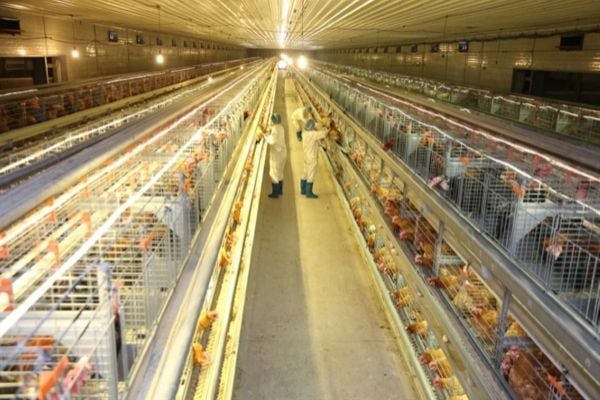
In recent years, Vietnam's livestock sector has undergone significant changes as a wave of large domestic industrial groups shifted investments toward agriculture. Previously, farming was mainly done by smallholder households, while the industrial-scale livestock segment was dominated by foreign-invested companies. Giants such as CP (Thailand), Japfa (Indonesia), De Heus (Netherlands) or CJ (Korea) had dominated, creating intense competitive pressure on domestic players. Many big industrial players enter the livestock sector. In that context, many domestic agribusinesses investing in large-scale farming faced difficulties and gradually faded; the case of Hoang Anh Gia Lai is often cited as a typical lesson. However, the landscape has seen a strong shift in the last decade. Domestic companies, previously in other industrial sectors, boldly ventured into farming, creating a new wave of investment. Names like THACO (automotive), Hoa Phat (steel) or Masan Group (fast-moving consumer goods) have joined the livestock market at scale, changing the competitive dynamics. However, this participation initially faced skepticism; many argued that these 'part-time' companies lacked farming experience and would not withstand pressure from long-standing, powerful foreign-invested groups. Hoa Phat Group began investing in livestock in 2015 via Hoa Phat Agricultural Development Joint Stock Company (HPA), implementing a comprehensive approach from feed production to pig, cattle and poultry farming. Meanwhile, in 2019 THACO established THACO AGRI, expanding agriculture investment on a scale of 84,000 hectares in Vietnam, Laos and Cambodia, and accelerating industrialized farming development. Within a few years, the involvement of large enterprises created a new 'race' in the industry, where technology, closed-loop production chains and modern governance became core competitive advantages. Names such as THACO AGRI, Hoa Phat, Dabaco Vietnam, BAF Vietnam or Masan MEATLife are continually increasing investments, gradually shaping the structure of the livestock sector. Notably, the market balance is tilting toward domestic enterprises, rather than relying on foreign capital as before. Hundreds of billions in investments. Dabaco Vietnam, as the first to announce Q1 2026 results, posted revenue of VND 5.6 trillion, pre-tax profit of about VND 400 billion and net profit around VND 370 billion. For the full year, the company targets revenue of VND 29.311 trillion and net profit of VND 1.117 trillion, up 2% and 11% respectively from 2025 – a record high to date. The strategic focus of Dabaco remains the '3F+' model (Feed - Farm - Food + Future), not only a closed-loop production chain but also integrated technology, value expansion and improved governance at every stage. Hoa Phat Agricultural adds a more cautious approach, planning 2026 revenue of VND 7.2 trillion and net profit over VND 1 trillion. Previously, the company reported 2025 revenue of VND 8.116 trillion and profit of VND 1.6 trillion, up 18% and 55% respectively from 2024. Notably, in four years, Hoa Phat Agricultural's profit has grown 73-fold, reflecting the gains from expanding the farming scale. BAF Vietnam aims for 2026 revenue of VND 8.431 trillion, up 70%, and net profit of VND 793 billion, six times higher than the previous year. The company is expanding its farm network in the Central Highlands and central region, raising breeding sow herd to 145,000, meat hogs to over 1.14 million, and sales to 1.2 million, up 60%. Notably, the high-tech vertical farm project in Tay Ninh with a total investment around VND 12,000 billion, in cooperation with Muyuan Group, is viewed as a strategic step, expected to generate about VND 10,000 billion in annual revenue once in stable operation from 2027. The pig, cattle and chicken are no longer just agricultural products but a foundation for an industry being reorganized with modern thinking, where the line between agriculture and industry is increasingly blurred. Thaco Agri aims to become the leading agribusiness group in Southeast Asia by 2027, with 2026 revenue target of VND 12,000 billion and investment up to VND 10,000 billion. The company is expanding both cropping and livestock, with current cattle stock of 200,000 and planned to 365,000, and developing large-scale pig farms with automation, ensuring environmental standards and biosafety. The current investment landscape shows a clear shift in the livestock sector, with a shared ambition to bring Vietnamese livestock products into high-end segments and value-added exports; value lies not only in the animals but in the post-slaughter processing, branding and distribution. This shift also prompts a strong selection process. Small-scale farming with weak linkages and lacking biosafety is narrowing. Conversely, large-scale, high-standard, well-planned enterprises will gain advantages, opening opportunities for Vietnam's livestock sector to participate more deeply in global value chains. Hoa Phat leads the feed market in Q1 with 11% growth.




Premium gym chains are entering a “golden era” that is ending or already in decline, as rising operating costs collide with shifting consumer preferences toward more flexible, community-based ways to exercise. Long-term memberships are shrinking, margins are pressured by higher rents and facility expenses, and competition from smaller, more personalized…