•
•
•
•
•
•
•
•
•
•
•
•
•
•
•
•
•
•
•
•
•
•
•
•
•
•
•
•
•
•
•
•
•


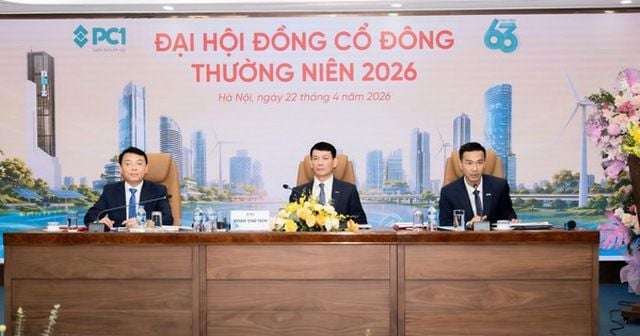
On April 22, PC1 Group Joint Stock Company (PC1) held its 2026 annual general meeting. Among the key items discussed was a plan to issue more than 148 million shares, combining a dividend payout, a rights issue to existing shareholders, and an employee stock option plan (ESOP).
PC1 said it plans to issue nearly 61.7 million shares to pay 2025 dividends at a 15% rate. In addition, the company intends to offer more than 74 million shares to existing shareholders at 10,000 VND per share, alongside more than 12.3 million ESOP shares.
If the plan is completed, PC1’s charter capital is expected to increase from 4,112 billion VND to nearly 5,594 billion VND.
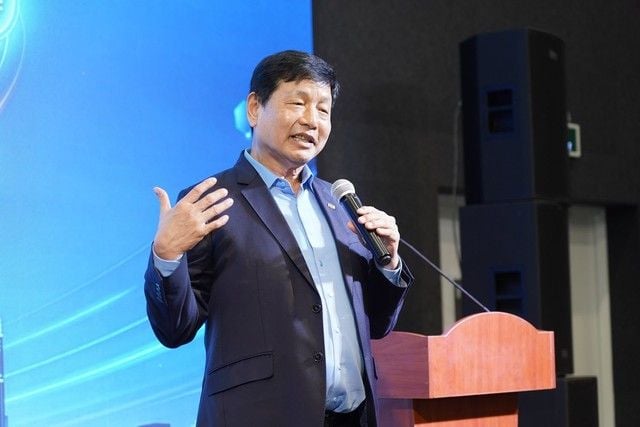
At the meeting, PC1’s Chairman of the Board, Trinh Van Tuan, said the capital-raising plan is part of a long-term roadmap. He stated that the company has planned for sources of capital, their intended use, and timing of potential capital shortages or surpluses through 2030.
“From now until 2030, we already have backups for where capital will come from, what it will be used for, and when shortages or surpluses will occur,” Mr. Tuan said.
Mr. Tuan said PC1 has a significant equity requirement to support its investment strategy, particularly in key infrastructure projects.
He highlighted that in industrial park real estate, the company is investing nearly 30,000 billion VND, including the Yen Phong cluster, VSIP, Nomura 1, and Nomura 2. For the energy segment, PC1 targets an additional 400 to 500 MW over the next five years.
He added that if equity is insufficient, the company cannot proactively secure funding for investments.
PC1’s leadership said the company favors issuing shares to existing shareholders to maintain ownership structure stability and reduce dilution risk.
“The market-public issuance story easily leads to dilution. We propose issuing to existing shareholders with low preferential rates because we need capital. Most importantly is to maintain control ratios of the group, especially for large shareholders, to ensure stable operations and strategy,” Mr. Tuan said.
The company also stated that if existing shareholders do not fully subscribe the offered shares, it will seek other partners with demand.
At the same meeting, PC1 approved its 2026 business plan amid multiple challenges. The company targets consolidated revenue of 15,618 billion VND, up 19%, and consolidated after-tax profit of 1,056 billion VND, down 22% from 2025. PC1 said the dividend payout ratio is expected to remain at 15%.
PC1 said it will continue optimizing its investment portfolio, prioritizing renewable energy projects, green and smart industrial parks, and real estate projects aligned with actual demand.
Operationally, the company plans to enhance total subcontractor capabilities, accelerate digital transformation, apply AI and lean operations, and strengthen financial governance with a focus on cash flow control and efficiency.
In 2025, PC1 reported revenue of 13,085 billion VND, roughly in line with its plan, while after-tax profit reached 1,356 billion VND, up 62% versus the target. The company also completed a capital increase from 3,580 billion VND to over 4,100 billion VND.

Premium gym chains are entering a “golden era” that is ending or already in decline, as rising operating costs collide with shifting consumer preferences toward more flexible, community-based ways to exercise. Long-term memberships are shrinking, margins are pressured by higher rents and facility expenses, and competition from smaller, more personalized…