•
•
•
•
•
•
•
•
•
•
•
•
•
•
•
•
•
•
•
•
•
•
•
•
•
•
•
•
•
•
•
•
•


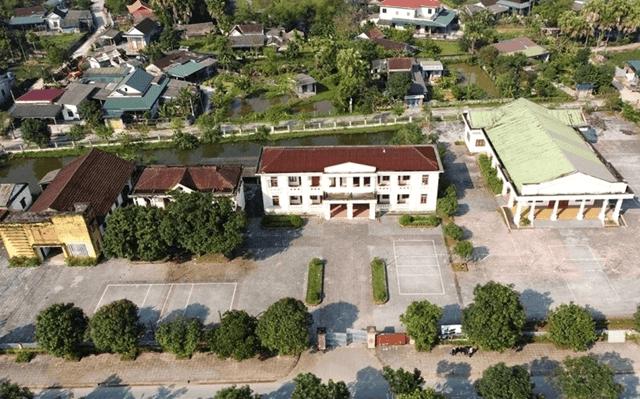
Draft proposals would allow local authorities to independently handle surplus land and housing after the reorganization of the public administration.
The Ministry of Finance is drafting a resolution to accelerate the disposal of surplus land and housing following the rearrangement of the public apparatus. Under the draft, assets would be transferred to localities for management in their original state, without requiring approval from the chair of the provincial People’s Committee as was previously the case.
According to the Ministry of Finance, a special mechanism is needed to remove obstacles and shorten the processing time for public assets that arise after streamlining the public apparatus and reorganizing administrative units.
A key feature of the draft is that it would permit the transfer of surplus land and housing to local management even when legal records are incomplete, or when the asset has been encroached upon or used for purposes other than its intended use. The delivering agency would be responsible for the asset’s legal status and current condition, and would coordinate with local authorities to address issues that arise.
For facilities no longer suitable for their function, the draft would allow demolition to convert them to public uses such as parks and playgrounds. This would apply even if the asset remains usable or its depreciation period has not expired, with the stated aim of avoiding the retention of assets that are not suitable and the waste of land.
Another provision would allow adjustments to land-use planning and construction planning after a transfer decision or change of use, rather than requiring planning to be completed beforehand as currently required. The Ministry of Finance says this is expected to shorten procedures and accelerate processing.
The draft also sets out financial obligations for disposing assets. If land and buildings are transferred or leased, the receiving unit must repay the remaining value of the asset to the state. If the asset has not yet been depreciated, the value would be determined according to regulations on public asset management and depreciation.
For assets built on land owned by another organization or individual, if the landowner requests to reclaim the land, they would take over the asset and repay the remaining value to the state. If there is no demand, the asset would be liquidated through demolition, returning the land.
The Ministry of Finance says the proposals are intended to create a more flexible mechanism for handling public assets, particularly because many localities hold large amounts of surplus land and housing after reorganizing the public sector.




Premium gym chains are entering a “golden era” that is ending or already in decline, as rising operating costs collide with shifting consumer preferences toward more flexible, community-based ways to exercise. Long-term memberships are shrinking, margins are pressured by higher rents and facility expenses, and competition from smaller, more personalized…