•
•
•
•
•
•
•
•
•
•
•
•
•
•
•
•
•
•
•
•
•
•
•
•
•
•
•
•
•
•
•
•
•


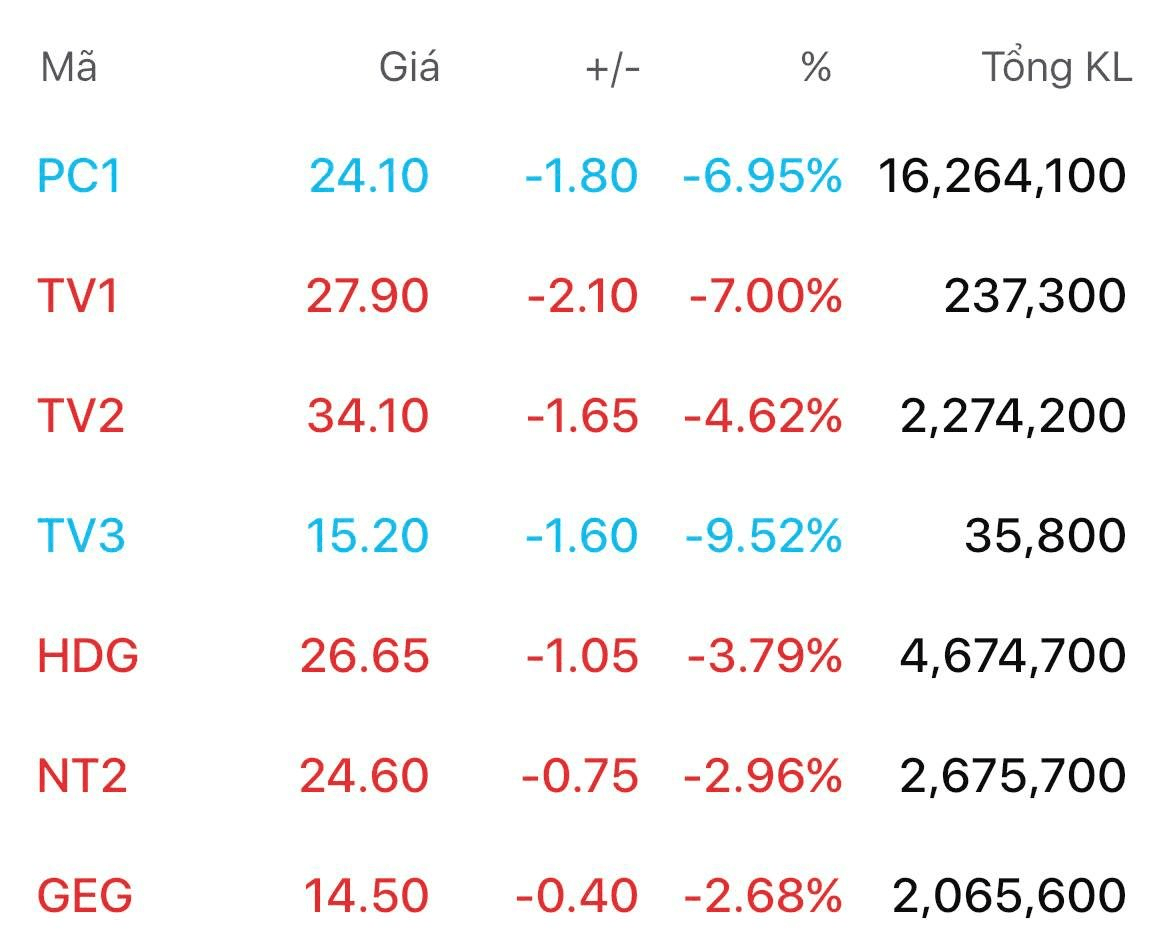
Market update: Electric-sector stocks fall sharply as investors weigh selling pressure. In the afternoon session on April 23, the electric sector group declined across the board, contrary to the sector’s defensive characteristics. Notably, PC1 shares of PC1 Group fell to the floor at 24,100 VND per share, with more than 14 million shares on offer. Liquidity surged to nearly 16 million shares, signaling intensified selling pressure. TV1, TV2, TV3 also declined steeply, with some codes hitting the floor, while other electric-sector stocks such as GEE, HDG, REE, POW, NT2 also fell significantly. At the annual general meeting on April 22, 2026, PC1 approved a business plan with consolidated revenue of 15,618 billion VND, up 19% year-on-year, but net profit of 1,056 billion VND, down 22% year-on-year. The group also set a dividend payout target of 15%. At the meeting, shareholders approved three capital-raising plans. PC1 proposed to issue over 12.3 million shares under an ESOP at 10,000 VND per share, aiming to raise about 123 billion VND to bolster working capital. The company also planned to issue nearly 62 million shares to pay the 2025 dividend at 15%, together with a plan to offer up to more than 74 million shares to existing shareholders. In total, PC1 plans to issue more than 148 million shares, lifting charter capital from 4,112 billion VND to about 5,594 billion VND. At the meeting, PC1 Chairman Trinh Van Tuan said the company faces substantial equity funding needs to support an ongoing investment strategy, especially in infrastructure. He said proactive capital mobilization is key to avoiding disruption to growth momentum. Specifically, in the industrial real estate segment, PC1 is implementing projects with a total investment of nearly 30,000 billion VND, including Yên Phong, VSIP, Nomura 1 and Nomura 2. In the energy sector, the company targets adding at least 400–500 MW over the next five years. When asked about not issuing to the public, management said they carefully considered but preferred to issue to existing shareholders in order to minimize dilution and maintain ownership structure stability. Maintaining control by major shareholders is seen as crucial to long-term strategic direction. If existing shareholders do not buy all of the offered shares, the company will seek suitable partners to distribute the remaining shares.

Premium gym chains are entering a “golden era” that is ending or already in decline, as rising operating costs collide with shifting consumer preferences toward more flexible, community-based ways to exercise. Long-term memberships are shrinking, margins are pressured by higher rents and facility expenses, and competition from smaller, more personalized…