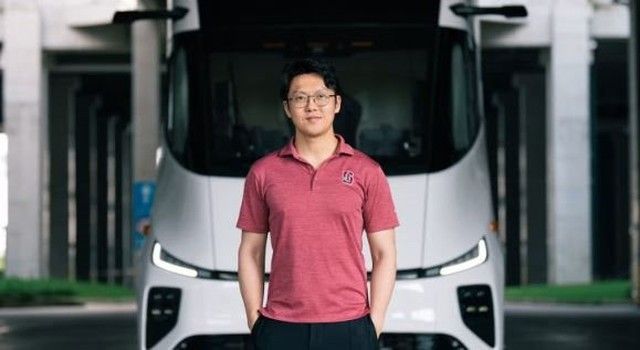
Windrose Electric, a Chinese electric truck startup, plans to list in the United States this year through a SPAC merger, seeking a valuation of at least $2 billion and more than $200 million in funding.
Windrose aims to capitalize on the electrification wave in the trucking market and to overcome tariff barriers that it says have not stopped its entry. CEO Wen Han told the Financial Times that tariffs are not high enough to block entry, citing ultra-cheap production costs and rapid technological advances in startups. He added that “Tariffs have never worked; they only hurt weaker players and conservative incumbents.” The company previously paid tariffs as high as 64% on the first China-built heavy-duty truck imported into the U.S. in April, along with tariffs on Chinese components, and recently recovered part of those duties after the Supreme Court ruled them illegal.
Windrose plans to list in the United States this year via a SPAC merger, with a valuation of at least $2 billion and aims to raise more than $200 million.
The company notes that tariff barriers have not prevented its entry, pointing to experiences with duties during import and noting a Supreme Court ruling that reduced those charges. It says US tariff barriers are not high enough to deter entry, aided by ultra-cheap production costs and rapid technological advances in a startup.
Founded in 2022 and headquartered in Belgium, Windrose employs most of its 113 staff in China. It has delivered 36 trucks to markets in Europe, North America, South America and Asia, and plans to produce 1,000 units for these four regions before year-end. The startup says it has cut costs by partnering with local assemblers rather than building its own factory and now focuses on a single model with a minimalist design, using fewer than 600 components—a modest figure compared with roughly 18,500 parts in a traditional diesel truck. This approach shortens research and development to around two years.
In the U.S., Windrose has established a distribution, sales and after-sales network through a partnership with Xos Trucks. In other markets the company has teamed with large logistics players such as Kuehne+Nagel. Simon Smith, CEO of Voltempo—a Windrose partner helping to build the U.K.’s largest truck charging network—said the breakthrough for this Chinese startup lies in its truck design: “It is born to optimize performance, extend range and achieve maximum charging speed.”
Windrose remains a young entrant in the U.S. market, where domestic rivals are well established. In the United States, BYD operates a heavy-truck assembly plant in Lancaster, California, and Tesla’s Nevada plant has a manufacturing capacity of up to 50,000 Semi vehicles. Windrose’s comparatively low-cost, simplified-design truck, if scaled, could intensify competition in the electric heavy-truck segment despite tariff and market-entry risks.
Simon Smith, CEO of Voltempo—a Windrose partner helping to build the U.K.’s largest truck charging network—said the breakthrough for this Chinese startup lies in its truck design: “It is born to optimize performance, extend range and achieve maximum charging speed.”
Source: Financial Times, Nikkei