•
•
•
•
•
•
•
•
•
•
•
•
•
•
•
•
•
•
•
•
•
•
•
•
•
•
•
•
•
•
•
•
•


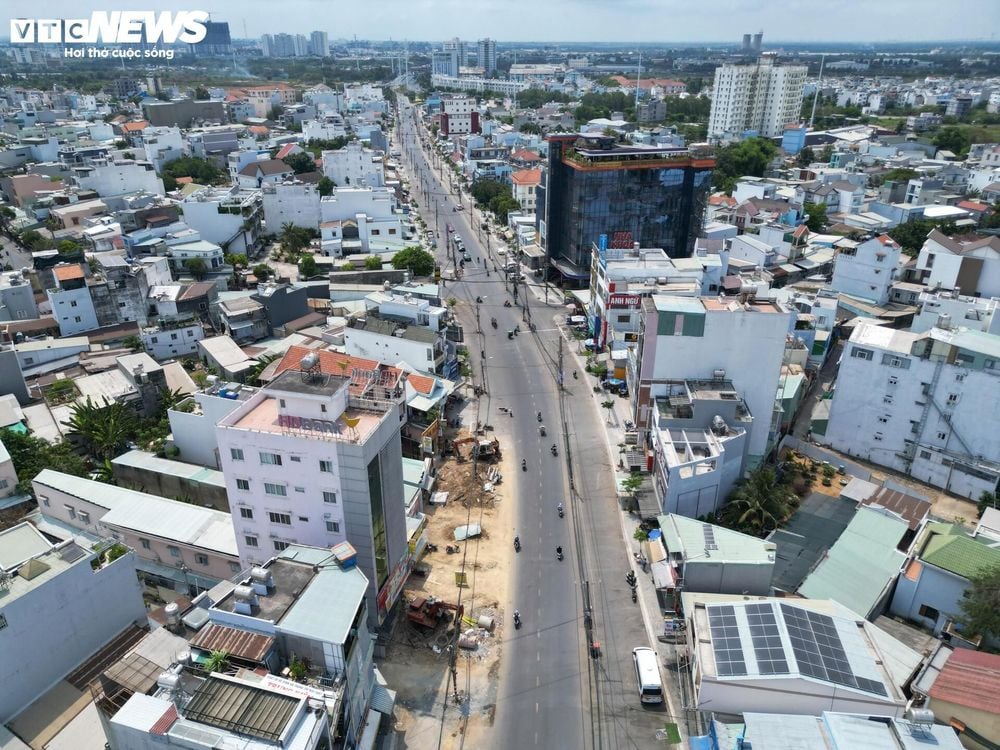
Hundreds of electrical poles that have not yet been relocated remain in the middle of Nguyen Thi Dinh Street in Cat Lai Ward, Ho Chi Minh City, even as an upgrade and widening project nears completion. The remaining poles are creating traffic-safety risks for road users along a nearly 2-kilometer stretch that is entering its finishing stage.
The Nguyen Thi Dinh upgrading project, running from Gio Ong To Bridge to My Thuy Bridge in Cat Lai Ward, covers a nearly 2-kilometer section with a total investment of over 2,000 billion dong. The road has been widened from about 10 meters to 30 meters, with the stated aim of reducing traffic pressure at the gateway to Cat Lai port.
In mid-April, observers reported that many sections had basically completed sidewalk and curb works. However, the full route still has numerous utility poles positioned in the middle of the roadway, raising safety concerns.
According to the Project Management Board for Investment and Construction in Thu Duc City (the investor), about 200 utility poles have not yet been relocated. Of these, roughly 150 poles are in Cat Lai Ward and about 50 are in Binh Truong Ward.
The investor cited two main reasons for the delay: compensation and site-clearance issues, and the procedural transfer of funds to the electricity sector.
Utility poles obstructing the middle of the road increase the risk of collisions and even traffic accidents. Some poles have also become locations for waste collection.
In addition, some traffic signs, signals, and bus stops are located in the roadway, which can pose further risks for traffic participants—particularly when passengers are picking up or dropping off.
While sidewalks along the project section have been completed, some households have encroached on them for commercial use. Residents said they have handed over land and moved back their properties to support the project.
They also noted that the relocation of poles has hindered progress and affected business activities. Residents said they want the project to complete soon to restore smooth traffic and stable commerce.
Overall, the project’s current progress is about 70%. The investor said around 10 households have not yet handed over their land, affecting synchronized construction—especially the relocation of technical infrastructure.
The Nguyen Thi Dinh corridor is described as a vital artery leading to Cat Lai Port, the country’s largest container port. Previously, the segment from Gio Ong To Bridge to My Thuy Bridge had a narrow cross-section through densely populated areas and schools, forcing heavy trucks to detour and increasing traffic pressure in the area.
The project was approved in principle around ten years ago by Ho Chi Minh City but was delayed due to compensation and site-clearance issues. In 2023, the project was adjusted to match actual implementation conditions.
Of the total investment, nearly 1,800 billion dong is allocated to compensation and site clearance.
It is expected that once the relocation of the poles is completed, the project will continue to finish remaining components to bring the project into operation. The upgrade is intended to help reduce congestion and improve urban planning in eastern Ho Chi Minh City.





Premium gym chains are entering a “golden era” that is ending or already in decline, as rising operating costs collide with shifting consumer preferences toward more flexible, community-based ways to exercise. Long-term memberships are shrinking, margins are pressured by higher rents and facility expenses, and competition from smaller, more personalized…




