•
•
•
•
•
•
•
•
•
•
•
•
•
•
•
•
•
•
•
•
•
•
•
•
•
•
•
•
•
•
•
•
•


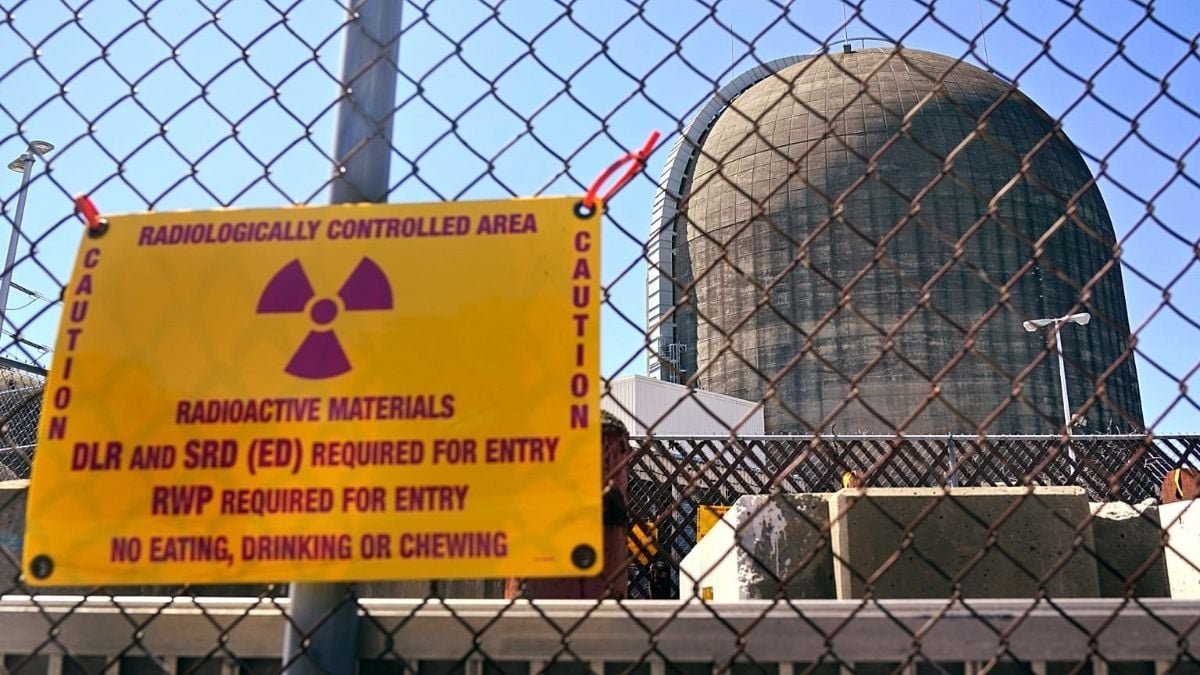
The EU is rebalancing its energy strategy in response to global supply shocks and geopolitical pressures, restoring a role for nuclear power alongside renewable energy to support security of supply, cost control and emissions targets. While renewables are expanding quickly, they are not yet sufficient to reliably power an industrial economy. The bloc is moving toward a more balanced energy mix that combines nuclear power, renewables and auxiliary sources such as LNG and green hydrogen.
The EU’s renewed push for nuclear energy follows energy crises and the limits of renewables in providing stable power. The article points to a severe disruption of global energy supply, including the closure of the Hormuz Strait. The International Energy Agency warned of a shortfall of about 13 million barrels per day.
In the first 17 days of the Iran conflict, the EU spent an additional €6 billion on importing fossil fuels as prices surged, highlighting the vulnerability of Europe’s energy system to external shocks.
To address this, Brussels is adjusting its strategy to improve energy independence and manage costs. In a March 2026 speech, European Commission President Ursula von der Leyen said Europe’s turn away from nuclear energy was a strategic misstep. Rosita Zilli, Policy Director at the European Energy Research Alliance, said the effects are still early: “The energy system has a lag, so supply shocks will ripple over time.”
Through diversification policies and renewable promotion, the EU has reduced energy imports. In 2025, the import value reached €336.7 billion, down from €693.4 billion in 2022. Despite this, the bloc remains heavily dependent on imported fossil fuels.
After reducing dependence on Russian gas, the EU turned to LNG. The US provided up to 58% of total LNG supply in 2025.
The US–Iran conflict has continued to add pressure. The article states that the EU has spent an additional €24 billion on importing energy. In response, Brussels launched AccelerateEU with five pillars, including coordinated gas storage, relaxing state aid rules, and establishing a market-surveillance framework for fuels.
Social support measures have also been deployed, including income subsidies, energy vouchers and electricity tax relief, to protect consumers and businesses. At the same time, the EU is pushing electrification and grid modernization to integrate renewables. However, Zilli said current policies remain reactive to geopolitical pressures, with no fully stable long-term strategy yet.
Nuclear is being repositioned as a strategic energy source, but scaling it requires an industrial ecosystem and a complex supply chain. The article describes nuclear power as produced through controlled nuclear fission, generating heat that drives steam turbines.
For large-scale deployment, the EU must maintain the full fuel cycle—from uranium mining and conversion to enrichment and fuel fabrication—followed by reactor operation, primarily using pressurized-water reactors. It cites 98 reactors across 12 countries with total capacity of about 96.2 GW, supplying roughly 24% of EU electricity. France accounts for 58% of EU nuclear output, followed by Spain, Sweden, Finland and Belgium.
The article notes that expansion depends on synchronized supply chains, governance, a skilled workforce, waste handling and long-term capital. It says the EU would need to extend operations of existing plants, invest in new reactors and strengthen fuel security.
On policy, the article recalls that the EU promoted nuclear energy under Euratom (1957) and expanded it during 1970–1990. Later, some countries withdrew: Italy (1987) and Germany (completed in 2023 after Fukushima 2011). The revival trend began in 2023 when the EU included nuclear in the “green taxonomy” to attract investment. In 2024, the Net-Zero Industrial Act granted strategic status to nuclear projects and shortened licensing times.
By March 2026, the article says the SMR (Small Modular Reactors) strategy was announced with a €200 million investment-guarantee package to accelerate deployment of modular, flexible small reactors. Total investment in this area is estimated at around €241 billion. A Franco-led alliance aims for 150 GW of nuclear capacity by 2050.
The article also highlights opposition from a group of renewables proponents led by Germany, who argue against placing nuclear on equal footing with wind and solar due to concerns about high costs, long build times and waste.
Renewables remain central to the transition. The article states that the share of green energy reached 25.2% in 2024 and is projected to rise, with a 2030 target of at least 42.5% (aiming for 45%). In 2025, the EU invested about €333.4 billion in clean energy.
It provides the electricity mix as 37.5% wind, 27.5% solar, 25.9% hydro and 8.5% biomass. However, grid infrastructure is described as a major bottleneck. Many systems are aging 40–50 years and are not well suited to a more decentralized energy model. Zilli called this “one of the most important bottlenecks of the energy transition.”
The EU is also promoting LNG and green hydrogen as supplementary solutions. LNG is presented as continuing to replace Russian gas, while green hydrogen is viewed as a potential option for hard-to-electrify industries. Zilli said neither nuclear nor renewables alone can guarantee energy security, arguing that the EU needs a mix of solutions and higher energy efficiency within the system.
The article frames the overarching message as not about reducing economic output, but about using energy more efficiently within the system. It quotes Zilli: “The overarching message is not about reducing economic output, but about using energy more efficiently within the system.”
It concludes that while the EU is on the right track, it still faces a major challenge in meeting renewable energy targets by 2030, particularly because grid infrastructure lags behind. In the combined energy-security and carbon-neutral challenge, nuclear energy is described as likely to continue playing the role of a “technical backbone” for Europe’s grid alongside renewables in an increasingly diverse and complex energy mix.
Premium gym chains are entering a “golden era” that is ending or already in decline, as rising operating costs collide with shifting consumer preferences toward more flexible, community-based ways to exercise. Long-term memberships are shrinking, margins are pressured by higher rents and facility expenses, and competition from smaller, more personalized…