•
•
•
•
•
•
•
•
•
•
•
•
•
•
•
•
•
•
•
•
•
•
•
•
•
•
•
•
•
•
•
•
•


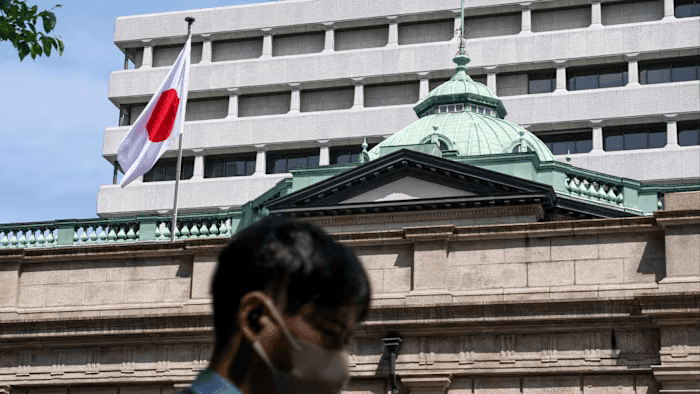
The Bank of Japan (BOJ) kept its policy rate unchanged at about 0.75% on Tuesday, 28 April, even as it raised its inflation outlook. The decision came amid the ongoing Middle East conflict, which is adding uncertainty to the global economy and increasing pressure on Japan, given its heavy reliance on energy imports.
The BOJ’s hold at around 0.75% matched market expectations. However, the vote highlighted divisions within the central bank: six members backed keeping rates unchanged, while three members preferred an immediate rate hike. The split was the widest on the BOJ’s Policy Board under Governor Kazuo Ueda and the highest since the BOJ began its negative-rate policy in 2016.
The three dissenting members argued that the BOJ should raise rates now to 1%. Following the decision, market participants increasingly priced in a potential rate hike at the next meeting in June as the BOJ continues its normalization after decades of ultra-low rates and persistently low domestic inflation.
In its accompanying outlook, the BOJ warned that Japan’s economic growth could slow in the fiscal year ending March 2027. It also lifted its inflation forecast for the same period.
Specifically, the BOJ now expects core CPI (excluding fresh food) to rise 2.8% in the current fiscal year, compared with a 1.9% forecast in January.
The BOJ said: “Rising oil prices due to the Middle East conflict could dampen corporate profits and households’ real incomes.” It also noted that growth risks are skewed to the downside, while inflation risks are skewed toward higher outcomes.
The central bank said the decision to hold rates was intended to allow more time to assess the impact of the Middle East conflict, particularly the oil-price shock on Japan’s economy.
Japan is particularly vulnerable to energy shocks because it depends heavily on imported fuel. More than 90% of its crude oil imports come from the Middle East.
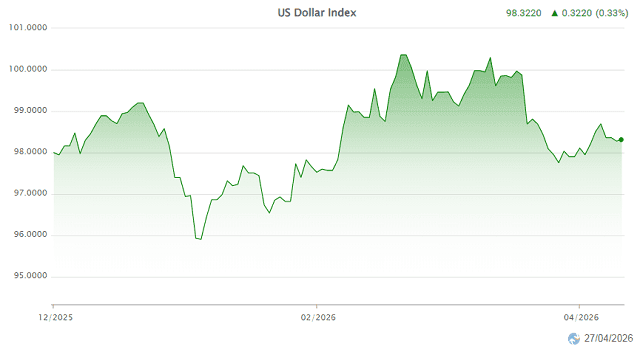
The BOJ’s report indicated a tilt toward tighter policy, which could support a higher yen against the dollar. It also warned of risks from the conflict, including potential disruptions to supply chains and significant effects on Japanese manufacturing, with some material-makers already trimming operations.
The BOJ has kept the policy rate at around 0.75% for three straight meetings since the start of 2026. Still, the internal balance is shifting toward a harder stance: dissent increased from one member in January and March to three members in the April meeting.
The BOJ was the first of four major central banks to set rates this week. The US Federal Reserve, the European Central Bank, and the Bank of England are expected to follow similar approaches—holding off on rate changes while waiting for clearer signals on whether inflation remains elevated due to the Middle East conflict.
Marcel Thieliant, head of Asia-Pacific at Capital Economics, said the key point was that the BOJ raised its inflation forecast. Under the new forecast, inflation in Japan could average 2.2% in fiscal 2028. “Unless the Middle East situation escalates again, the BOJ could lift policy rates at the next meeting in June,” Thieliant said in a client note dated 28 April.






Premium gym chains are entering a “golden era” that is ending or already in decline, as rising operating costs collide with shifting consumer preferences toward more flexible, community-based ways to exercise. Long-term memberships are shrinking, margins are pressured by higher rents and facility expenses, and competition from smaller, more personalized…