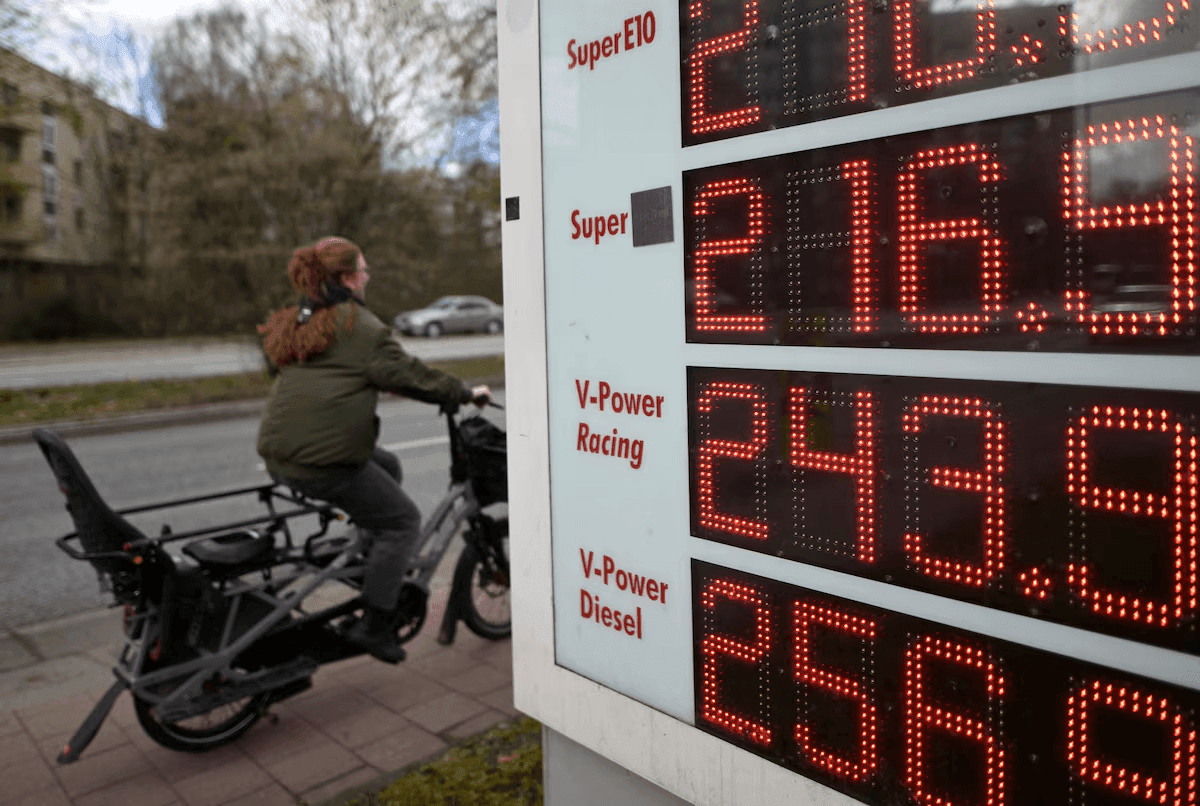
European government bonds have been selling off recently as government bonds worldwide have struggled to act as safe-haven assets amid the US–Iran conflict, instead facing downward pressure from rising inflation expectations tied to higher oil prices. The sell-off has pushed yields higher, implying higher borrowing costs for many European countries to multi-decade highs.
Last week, the 10-year yield on Germany’s benchmark Bund rose to its highest level since mid-2011, at the peak of the eurozone debt crisis. On March 27, the yield climbed by 6 basis points to 3.1228%, the highest in 15 years. On the same day, the 10-year French government-bond yield rose by 9 basis points, also at its highest since 2011; in the prior session it had surged 14 basis points.
Source: CNBC.
Even the UK's 10-year gilt yield rose to the highest since the 2008 financial crisis, jumping 10 basis points to 5.07% on March 27 after rising 83 basis points over the past month.
At the start of trading on Monday, March 30, European government bonds recovered modestly. The German 10-year Bund yield fell by more than 3 basis points to around 3.065%. The French 10-year yield fell by nearly 5 basis points to around 3.8%. The UK 10-year gilt yield declined to around 4.95%.
Source: CNBC.
In an interview with The Economist, ECB President Christine Lagarde stressed that the market’s view of a rapid rebound from the Iran conflict is “too optimistic,” and warned that there is no quick way to restore Gulf energy supply. The disruption could last for years.
Before the Iran escalation in late February, euro-area inflation had fallen below the central bank’s 2% target. However, in February, inflation rose to 1.9%.
The war and the closure of the Hormuz Strait, a key shipping route, pushed global oil and gas prices higher and disrupted euro-area inflation forecasts. The region remains heavily dependent on energy imports and is still feeling the impact of the energy shock from the Russia–Ukraine conflict and sanctions on Russian energy exports.
Currently, markets are pricing in more than a 90% probability that the ECB will raise rates at its June meeting.
There are early signs that the war is beginning to affect economic activity across Europe. A GfK survey last week showed German consumer confidence deteriorating, with respondents expecting their real incomes to fall as inflation rises. In the UK, consumer expectations of higher price growth have sparked a “wave of fear” among some households, according to the survey researchers.
A Deutsche Bank report noted increasing concerns about a stagflation shock weighing on the European bond market, particularly government bonds. Deutsche Bank also raised its March euro-area inflation forecast to 2.58% year-on-year from 1.89%.
James Bilson, global bond strategist at Schroders, told CNBC that energy-price dynamics remain the single most important factor shaping European bond market moves; however, he cautioned that it is not straightforward to conclude that yields will peak when energy prices peak.
“ECB has published three scenario paths—base, adverse, and severely adverse. With current oil prices, we are between base and adverse, moving toward adverse. We expect the ECB to raise rates at least a few times. If energy prices drive us into the severely adverse scenario, none of the forecasts will hold,” Bilson said.
Similarly, U.S. Treasuries have also sold off recently. The 10-year U.S. Treasury yield is trading around 4.37%, up from below 4% before the conflict.
Monetary markets are pricing a 93.8% probability that the Federal Reserve will hold rates at its next meeting in April, according to CME Group’s FedWatch Tool.