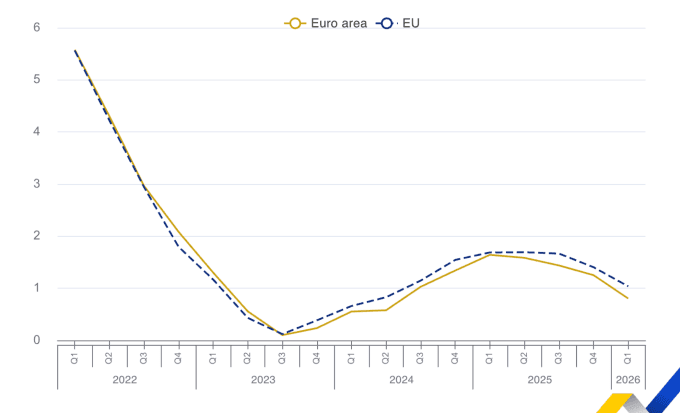
GDP in the
euro area and the EU rose 0.1% in the first quarter from the fourth quarter of 2025. Germany posted 0.3% growth, while Spain remained high at 0.6% and France stagnated at 0%. According to Peter Vanden Houte, Chief Economist at ING, the Q1 result does not yet reflect energy shocks and supply disruptions from the Middle East conflict. There are signals of growing challenges ahead. The European Commission noted weaker PMI and business sentiment from April. 'It's too early to say whether the situation will lead to negative growth, but impacts on inflation are clear,' said Mr. Vanden Houte. Eurostat shows eurozone inflation at 3% in April, up from 2.6% in March, driven by energy prices rising 10.9% due to Middle East disruptions. The combination of slow growth and high inflation—stagflation—becomes a difficult problem for the ECB. Despite inflation surpassing the 2% target, the ECB on 30 April left rates at 2%. 'The longer the conflict lasts and energy prices stay high, the greater the impact on inflation and the economy,' the ECB said. ING expects inflation in Europe to rise gradually to around 4%, with energy contributing further to overall inflation. Fertilizer shortages could push food prices higher toward year-end. 'We cannot rule out indirect effects from the energy shock, as price expectations have started to emerge across all sectors,' Vanden Houte said.