•
•
•
•
•
•
•
•
•
•
•
•
•
•
•
•
•
•
•
•
•
•
•
•
•
•
•
•
•
•
•
•
•


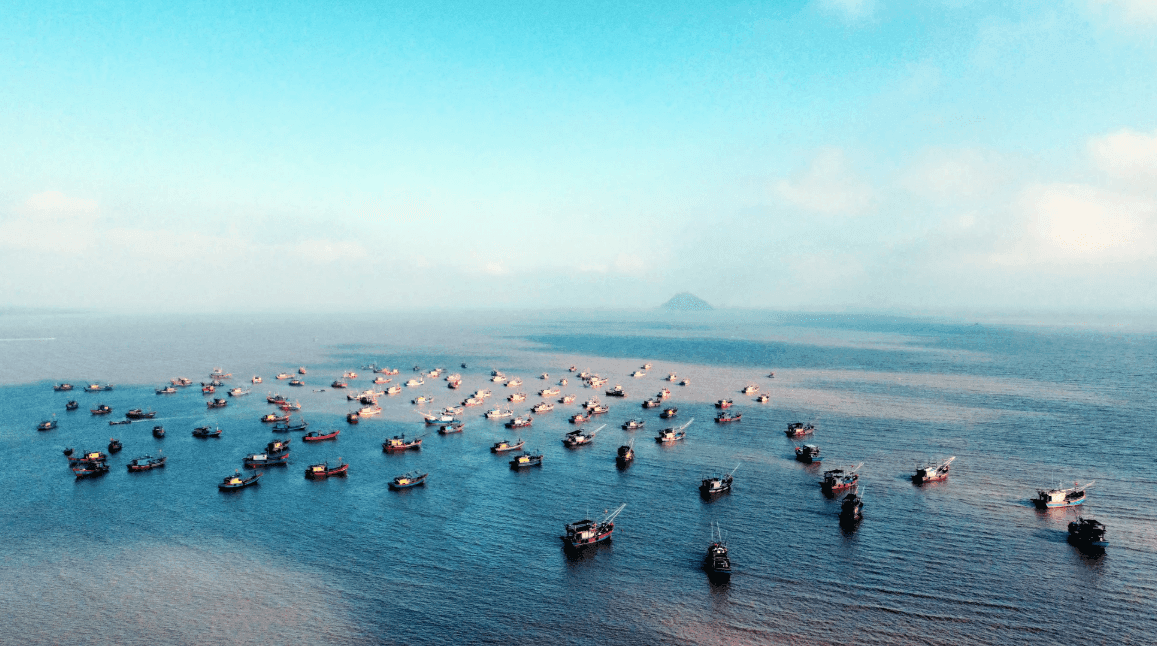
Thanh Hóa Province has a coastline of about 102 km and a sea area of around 17,000 square kilometers, with rich fishery resources and biodiversity. The province views fisheries as a priority economic sector that supports growth while also contributing to the defense of national sovereignty over sea and islands.
Against the backdrop of climate change and increasingly urgent sustainable development goals, Thanh Hóa is shifting to a new approach: expanding production scale while prioritizing efficiency, value addition, and integration into international markets.
According to the Thanh Hóa Department of Agriculture and Environment, the local sea area hosts up to 426 species of seafood across 203 genera and 101 families, accounting for about 68.7% of the species recorded in the Gulf of Tonkin. The total estimated stock is 140,000–165,000 tons. Hon Me Island area is noted for rare, high-value species such as abalone, groupers, and lobsters, forming a foundation for developing fishing, aquaculture, and large-scale processing.
Thanh Hóa aims to become a center of marine economy. With a coastline over 100 km and a large sea area, the province is building development pillars across fisheries and coastal tourism, offshore industries, and port infrastructure—while also facing sustainability and competitiveness challenges.
The province has more than 6,500 fishing boats of various types, including over 1,100 offshore fishing vessels and nearly 900 operating in nearshore waters. The remainder fish along the coast. The fishery logistics system includes 8 fishing ports and 4 anchorage areas with capacity for over 2,000 vessels, supporting unloading, procurement, and storm avoidance.
Annual catch remains steady, with 2025 output exceeding targets and supporting livelihoods for about 25,000 coastal workers.
Alongside fishing, aquaculture is described as essential for sustainability. Thanh Hóa has 19,200 hectares of aquaculture: 14,000 ha freshwater, 4,200 ha brackish water, 1,000 ha seawater, and more than 5,700 cages. Localities such as Hau Loc, Quang Xuong, and Sam Son have shifted from extensive farming to intensive models using high-tech applications.
One example cited is a shrimp farming model in Quang Phu Ward. Mr. Tran Cong Phong invested 4 billion VND to build 10 high-tech whiteleg shrimp ponds, with pond sizes ranging from 140 m2 to 800 m2. Each harvest yields about 5 tons of shrimp, generating nearly 1 billion VND in annual profit. The model is described as allowing seed release at any time and stabilizing income, while each pond includes sedimentation and wastewater treatment systems to reduce environmental pollution.
Value addition is a major step for Thanh Hóa’s fisheries sector. The province currently has about 80 seafood processing companies with total capacity of around 280,000 tons per year. Among them, six main export-oriented enterprises serve demanding markets including Japan, Korea, and the EU.
In 2024, Thanh Hóa’s seafood exports exceeded USD 110 million, contributing significantly to the province’s overall export turnover. Leading export products include surimi fish cakes, frozen cockles, dried cockles, frozen seafood, fish meal, fish sauce, and shrimp paste. These products are exported to China, Korea, Japan, Thailand, the EU, and the United States.
Le Gia fish sauce and shrimp paste is highlighted as a representative OCOP 5-star product, available through major distributors such as Vinmart, Big C, Aeon, and Mega Market, and exported to Japan, Korea, Russia, and South Africa. The fish sauce line intended for children is described as a best-seller in maternal and baby product chains including Concung, Bibomart, and Kidplaza.
Mr. Le Anh, Director of Le Gia Food and Trading Co., Ltd., said that products have been welcomed in over 10 countries, including the US, Japan, Korea, Australia, Singapore, New Zealand, and South Africa. He noted that while export scale remains small, each market entry is a step toward expanding the brand internationally.
FXPT Co., Ltd. (Sầm Sơn) is cited as a unit that buys and processes squid for export. In an interview with VnEconomy, Nguyen Huu Hoang, Head of the General Department, said the company processes on average about 700 tons of sushi and sashimi from squid annually for export to Japan. For product diversification in 2025–2026, the company plans to launch new items such as squid tentacles, octopus, sea bream, and prawns, while expanding exports to China and several European countries.
In total, Thanh Hóa hosts 28 seafood processing, trading, and export companies with combined capacity of 280,000 tons per year. The sector is positioned as critical to increasing seafood value and reducing reliance on raw exports.
Despite positive results, the fisheries sector still faces challenges. Production is described as fragmented and small-scale, with limited numbers of boats capable of offshore fishing. Some fishermen’s technical capacity remains constrained. The province also faces ongoing concerns related to illegal, unreported, and unregulated (IUU) fishing, which can affect export credibility.
In addition, many processing facilities operate on a small scale with limited product variety, lack closed supply chains, and use outdated technology—leading to modest value addition.
To address these issues, Thanh Hóa Province has issued policies to support fisheries development. Since 2021, more than 876 fishing vessels have been assisted to install voyage data recorders, 1,626 boats have received satellite communication service subsidies, 35 offshore vessels have been upgraded with cold storage, and 24 vessel owners have been supported for licensing and documentation. The province also encourages investment in aquaculture infrastructure so farms and cooperatives can access land, capital, and technical support.
Looking ahead, Thanh Hóa plans to support enterprises in market forecasting, trade promotion, product redesign, and brand development, and to promote international production standards such as HACCP and GMP. Core tasks include legal advocacy, applying science and technology, expanding exports, and ensuring traceability to support sustainable and competitive fisheries development.
Resolution No. 58-NQ/TW of the Politburo defines Thanh Hóa’s responsibility to develop the coastal region in a breakthrough and sustainable manner, with two growth poles at Nghi Sơn and Sầm Sơn. In line with this, the province is implementing synchronized measures including developing premium and diverse coastal tourism; attracting offshore industrial investment (including refining, metallurgy, and renewable energy); expanding and upgrading port and logistics systems and developing Nghi Sơn into a special port; applying high-tech in aquaculture and processing; and promoting sustainable development linked to resource protection.
The resolution also emphasizes training human resources and improving the investment climate while aligning economic development with defense and security at sea and on islands.
With advantages in fishing grounds and ongoing policy support, Thanh Hóa’s fisheries are moving toward becoming one of the nation’s more competitive seafood hubs with the capacity to expand its global market share.


Premium gym chains are entering a “golden era” that is ending or already in decline, as rising operating costs collide with shifting consumer preferences toward more flexible, community-based ways to exercise. Long-term memberships are shrinking, margins are pressured by higher rents and facility expenses, and competition from smaller, more personalized…




