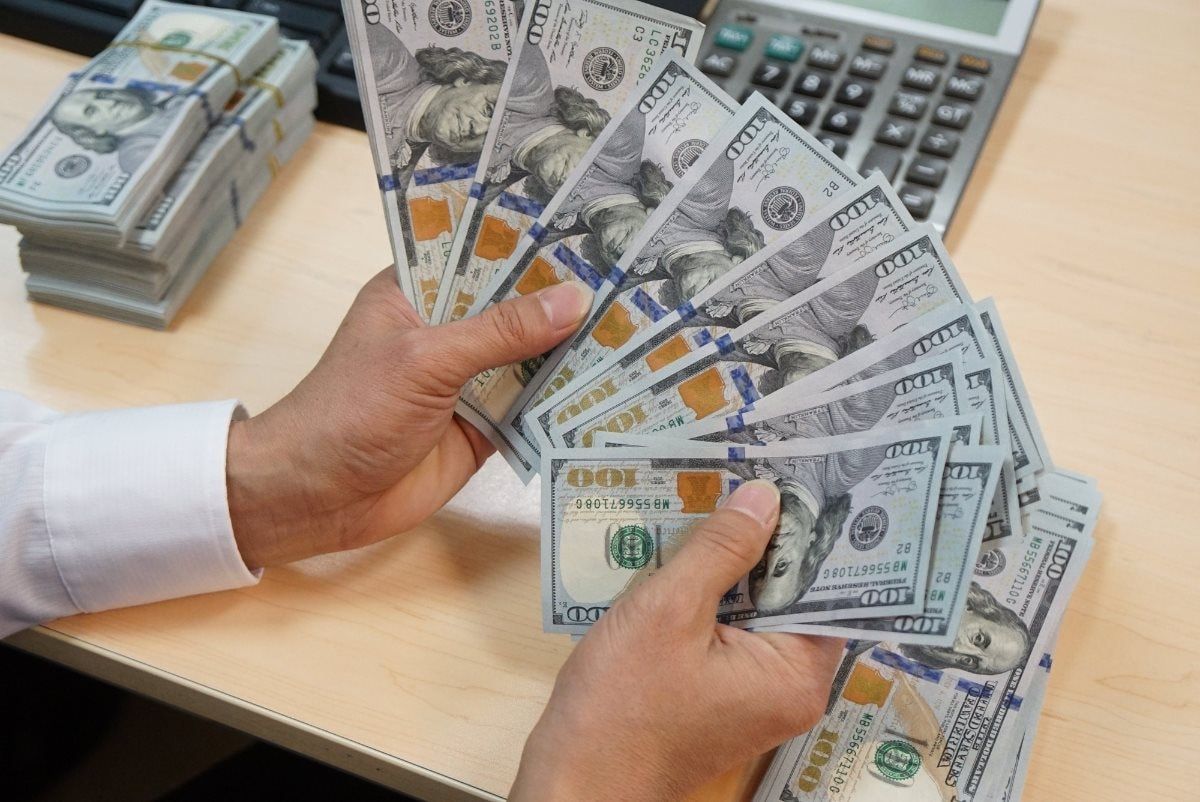
Exchange-rate pressure is expected to persist. In a newly published macroeconomic analysis, Vietcombank Securities (VCBS) said the USD/VND exchange rate declined in February but pressure rose again in March and at the end of Q1 2026.
Compared with end-Q4 2025, the central rate fell by 19 dong to 25,102 VND/USD, while the selling rate at banks also declined to 26,357 VND/USD (down 20). By contrast, the free-market rate rose sharply by about 520 dong to 26,920 VND/USD by the end of Q1.
VCBS said the rate cooled in February but strengthened again toward the end of the quarter amid concerns that the US Federal Reserve would delay easing monetary policy longer than expected, alongside rising geopolitical risks. This supported the USD as a safe haven and contributed to pressure on domestic rates.
To respond to the pressure, the State Bank of Vietnam (SBV) implemented a 180-day USD sale facility with non-cancelable terms at 26,850 VND/USD for banks with negative foreign-exchange positions. VCBS said the instrument allows banks to access foreign currency in the future to balance positions, while meeting import payments and maturing debt obligations.
VCBS expects currency pressure to continue into Q2 2026, citing several factors. First, in an uncertain geopolitical environment, global capital flows tend to move toward safe-haven assets such as gold, USD and US Treasuries, supporting the short-term DXY index. Second, markets still expect the Fed to keep rates at 3.5%–3.75% at Q2 FOMC meetings with limited room to cut in 2026, which would further strengthen the USD.
VCBS also pointed to high global oil prices, which increase foreign-currency needs for importers in the petroleum and power sectors. In addition, domestic gold-price spreads are about 20% higher than world levels, sustaining demand for USD to import gold.
Based on these drivers, VCBS projected that the VND could depreciate about 3–5% against the USD in 2026.
VCBS said deposit rates are unlikely to rise further. From the start of the year to end-March 2026, deposit rates increased by about 0.2–0.6 percentage point, mainly in 6–12 month terms. Some banks raised rates by 1–1.5 percentage points, lifting 12–24 month rates to 8–9% to improve medium- and long-term funding. However, at the start of April, under macro-stability policy guidance, banks collectively trimmed deposit rates by 0.1–0.5%, especially for 12–24 month terms.
VCBS said the SBV’s overarching policy is to maintain macro stability and support growth. It noted that reducing deposit rates is a prerequisite for lowering lending rates, helping businesses, while credit growth remains controlled in risk-prone sectors and prioritized for new growth drivers such as small and medium-sized enterprises, high tech and the green transition.
Despite the rate trimming, VCBS said funding pressures persist. Medium- and long-term capital demand rose as large-scale infrastructure projects rolled out, while credit growth has remained higher than deposit growth for an extended period, resulting in high loan-to-deposit ratios (LDRs) at many banks. FX pressure also requires maintaining a reasonable VND–USD spread to stabilize capital flows.
VCBS said system liquidity is no longer abundant and interbank rates remain high. It noted that the banking system experienced moments of strain after the SBV shifted to net withdrawals via open market operations (OMO) following a period of intense liquidity injection during Tet. This caused pledged lending to fall by almost half, pushing interbank rates higher at some points in March.
At the same time, credit demand remained strong while deposit growth lagged, indicating constrained funds in the system and a funding structure heavily reliant on short-term deposits, making liquidity vulnerable to regional strains in March. VCBS added that FX pressure also contributed to tighter liquidity in March.
In response, the SBV flexibly regulated by selling foreign currency and injecting liquidity back on the OMO channel, mainly on 7–14 day maturities. VCBS said this helped interbank rates cool quickly to around 4–5% by the end of the month.
Looking ahead to Q2 2026, VCBS forecast that system liquidity will remain under pressure as disbursement accelerates. It also said the reduction in deposit rates could slow funding improvement for some banks, particularly mid- and small-sized banks or those with high credit growth. Additionally, large OMO maturities in April are expected to add to liquidity pressure.
VCBS concluded that system liquidity will not be very abundant and interbank rates may continue to hover at relatively high levels in the near term, especially for medium- and long-term maturities.