•
•
•
•
•
•
•
•
•
•
•
•
•
•
•
•
•
•
•
•
•
•
•
•
•
•
•
•
•
•
•
•
•


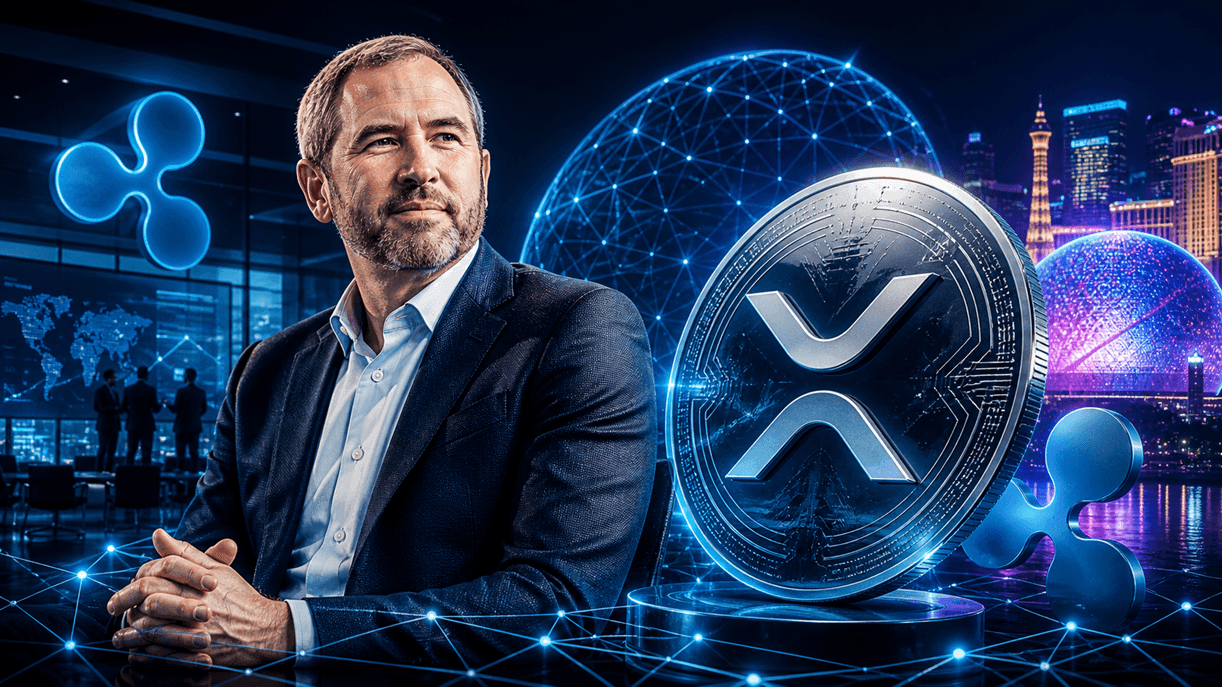
Ripple CEO Brad Garlinghouse used an appearance at XRP Las Vegas on April 30 to push back against doubts about the company’s alignment with XRP, arguing that Ripple remains economically and strategically tied to the asset as it expands deeper into institutional finance, stablecoins and regulated US infrastructure.
Speaking on stage, Garlinghouse said he has long found criticism of Ripple’s commitment to XRP “funny and strange,” citing the company’s direct exposure to the asset and its role in building products around liquidity, utility and trust.
“Today, Ripple is still the largest holder of XRP on the planet. We are the most interested party in seeing XRP be successful. We will continue to be the most interested party in seeing XRP be successful,” Garlinghouse said.
He added that when people question Ripple’s motives, it “doesn’t make sense logically,” framing the remarks as part of a broader panel discussion that ranged from Ripple’s advertising push in Las Vegas to US policy, the Clarity Act, stablecoin regulation, Ripple’s private-market valuation and the company’s relationship with the XRP community.
Garlinghouse said Ripple’s strategy is centered on making XRP “the most useful digital asset,” “the most liquid digital asset” and “the most trusted digital asset.” He linked those goals to Ripple’s enterprise business, including products and services for financial institutions and capital markets under what he referred to as Ripple Prime, as well as Ripple Treasury.
Addressing a recurring concern among XRP holders—whether Ripple’s stablecoin work, including RLUSD, could reduce XRP’s importance—Garlinghouse said Ripple does not always publicly explain every strategic step because doing so could disclose too much to competitors. He argued that even initiatives that do not appear directly connected are still intended to support XRP’s long-term role.
“We’re going to do things that may not at first blush make crystal clear sense,” he said, adding that actions may be “point A to point B to point C” in service of expanding “liquidity, utility, and trust in XRP.”
Garlinghouse said Ripple is no longer only defending XRP in court or promoting a single payments narrative. Instead, he described building across custody, treasury, stablecoins, prime brokerage-style services and institutional market infrastructure, while asking the XRP community to view those efforts as connected to a broader liquidity network.
Garlinghouse said Ripple has around 1,500 employees and is having a record year across multiple areas. He also pointed to tokenization as a major area where the XRP Ledger could matter, even in cases where Ripple is not the direct operator of every use case.
He cited bond settlement as an example of a market still constrained by slow and outdated processes, saying it is “only a matter of time” before assets such as bonds move on-chain.
The policy portion of the remarks focused on the Clarity Act and whether US market-structure legislation can still advance before the midterm election cycle disrupts the process. Garlinghouse said Ripple had been close to the finish line months earlier, but the legislative process slowed after Coinbase, led by Brian Armstrong, urged caution.
He said his frustration was less about Ripple’s own regulatory status and more about the broader industry. Garlinghouse argued that XRP already has the legal clarity others are seeking due to the court ruling in Ripple’s dispute with the SEC.
“XRP has clarity. XRP fought a very painful fight to get clarity… We have a federal judge said in her opinion, XRP in and of itself is not a security,” he said.
Ripple supports the Clarity Act, Garlinghouse said, because it would help the US crypto industry and give large financial institutions more confidence to participate. He separated that broader policy objective from XRP’s own status, adding that if the bill does not pass, “XRP is going to be okay no matter what.”
Still, he warned that the legislative window is narrow: if the bill does not move out of the Senate Banking Committee by the end of the third week of May, “we’re in real trouble.” If it clears committee, he said he believes it can pass the Senate due to bipartisan support at that stage.
Garlinghouse also said Ripple’s conditional OCC trust charter approval is tied to its stablecoin strategy, particularly RLUSD. He described dual oversight from the New York Department of Financial Services and the OCC as a “belt and suspenders” approach, and said Ripple wants to be “the most white hat around stablecoins as possible” given its institutional customer base.
He further confirmed that a Federal Reserve master account is “very much on our radar,” calling it a potential “big unlock” for Ripple and arguing that improved financial services infrastructure would benefit the United States.
At press time, XRP traded at $1.37.



Premium gym chains are entering a “golden era” that is ending or already in decline, as rising operating costs collide with shifting consumer preferences toward more flexible, community-based ways to exercise. Long-term memberships are shrinking, margins are pressured by higher rents and facility expenses, and competition from smaller, more personalized…