•
•
•
•
•
•
•
•
•
•
•
•
•
•
•
•
•
•
•
•
•
•
•
•
•
•
•
•
•
•
•
•
•


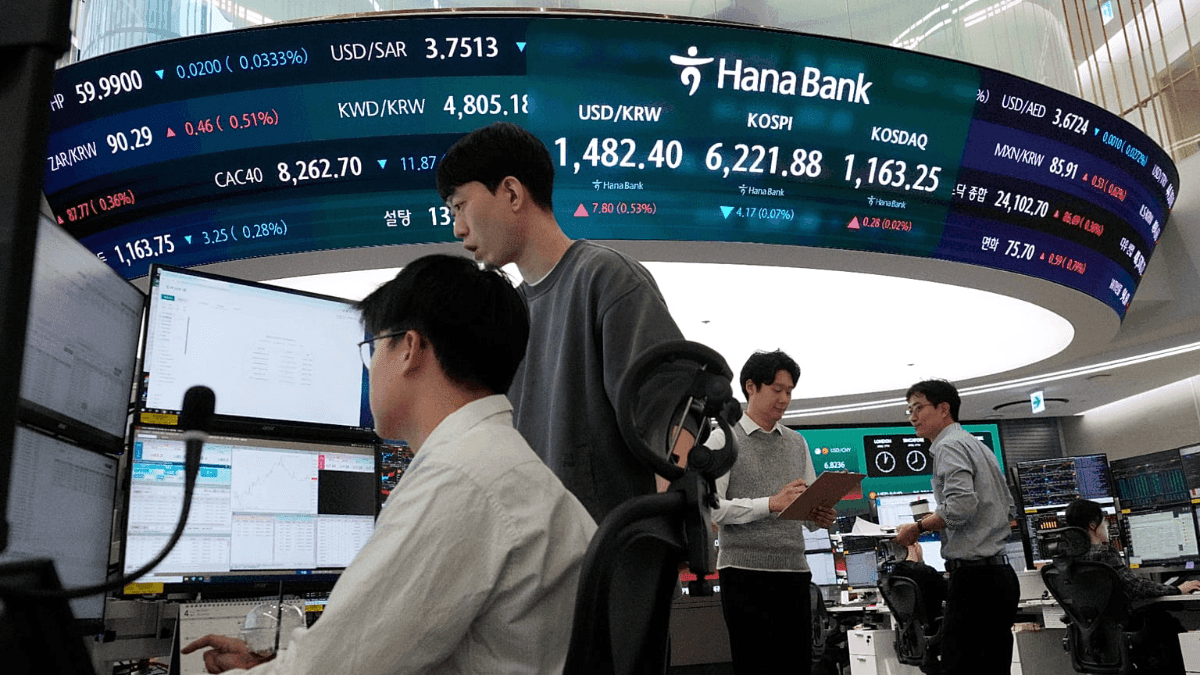
After the Hormuz Strait scare in March, global stock markets rebounded sharply, producing one of the most notable recoveries in years. Euronews said market developments this year can be divided into three stages, with volatility rising over time.
Phase one (January to end-February): Global stocks rose on expectations that central banks would cut rates, alongside a strong upcycle in semiconductors. Major indices in Korea and Taiwan reached record highs.
Phase two (from February 28): Markets turned volatile after the US and Israel launched air strikes targeting Iran.
Phase three (early April to present): A ceasefire agreement between the US and Iran, mediated by Pakistan, helped markets recover from the earlier shock.
Between the three phases, markets recorded heavy losses. After the Hormuz Strait closed on March 4, Brent crude briefly traded above $120 per barrel.
In Korea, the KOSPI fell 19% in March, after rising more than 50% in the two preceding months—its steepest monthly drop since October 2008. In the US, the S&P 500 approached correction territory. In Europe, many indices fell as economists warned of rising risks of stagflation, defined as slow growth with inflation still elevated.
Sentiment improved after Pakistan proposed a five-point peace plan on March 31, calling for the parties to cease hostilities immediately. The next morning, US President Donald Trump wrote on Truth Social that Iran had proposed a ceasefire. By April 7, Trump officially announced a two-week ceasefire with Tehran.
Since then, oil prices have fallen nearly 25%, helping create room for a strong rebound in global equities.
Using data from Investing.com, the strongest year-to-date gains through April 21, 2026 show South Korea at the top.
The KOSPI’s performance is described as far ahead of other major markets, with the gain roughly 13 times that of the S&P 500 and nearly twice the pace of Turkey, where stocks rose mainly on inflation.
The report attributes Korea’s outperformance to a heavy concentration in a few “pillar” stocks. Samsung Electronics and SK Hynix together account for about 41% of the index’s total market value, and both have climbed roughly 80% since the start of the year.
Samsung’s preliminary Q1 2026 operating profit reached 57 trillion won, a record and up 185% from the previous quarter, largely linked to DRAM used for AI and high-bandwidth memory rising strongly.
SK Hynix has also signed numerous long-term contracts with cloud computing and AI customers, where demand for graphics memory and memory chips is rising. Analysts cited in the article say memory-chip demand remains very strong and that supply constraints could persist rather than being temporary.
Because Korea’s market is concentrated in chip stocks, the article says it has been more sensitive to swings: it led globally before the Iran conflict, fell hardest when tensions rose, and recovered most strongly once sentiment stabilized.
It also notes that in a report published March 6, Goldman Sachs analysts suggested the sell-off was primarily a consolidation and likely to be followed by a rebound to new highs after that consolidation phase.
CountryETFTracker data cited in the article lists the 10 market-tracking ETFs with the highest returns since the close on February 27, 2026—the last session before the US and Israel launched air strikes on Iran.
One key observation is that the iShares MSCI South Korea ETF was almost flat since the conflict began, indicating that Korea’s earlier rally had been largely given back after the March decline.
Based on the ETF measure, the article groups markets into three clusters:
When measured from the trough just before the ceasefire announcement, the rebound was described as even stronger. Since the close on March 30, many market-tracking ETFs posted strong gains.
CountryETFTracker data shows Korea with the strongest returns in this phase, followed by Taiwan. The article says both are major Asian manufacturing hubs and were among the markets hit hardest earlier due to dependence on Middle Eastern crude.
Greece ranks third, attributed in the article to a large weight of bank stocks. It says the rally was supported by the ceasefire, lower oil prices, and expectations that the European Central Bank would be less likely to start an interest-rate hike due to the war.
Poland, the Netherlands, Sweden, and Austria also show similar trends, though the magnitude and drivers vary.
The article says the broader 2026 market ranking appears to reflect three factors: which markets had the strongest fundamentals at the start of the year, which were least hurt by the shock, and which had the greatest room to rebound afterward. It adds that Korea is the only market leading in two of these three criteria.
On April 21, when the ceasefire ended, President Trump decided to extend it by two weeks to allow for continued negotiations toward long-term peace. As of April 21, the article notes that the Hormuz Strait had not fully reopened and both sides accused each other of violating the agreement.
Korea remains the strongest performing stock market in 2026, but the article says the next two weeks will determine whether April marks the start of a fresh rally or the peak of the current rebound.




Premium gym chains are entering a “golden era” that is ending or already in decline, as rising operating costs collide with shifting consumer preferences toward more flexible, community-based ways to exercise. Long-term memberships are shrinking, margins are pressured by higher rents and facility expenses, and competition from smaller, more personalized…



