•
•
•
•
•
•
•
•
•
•
•
•
•
•
•
•
•
•
•
•
•
•
•
•
•
•
•
•
•
•
•
•
•


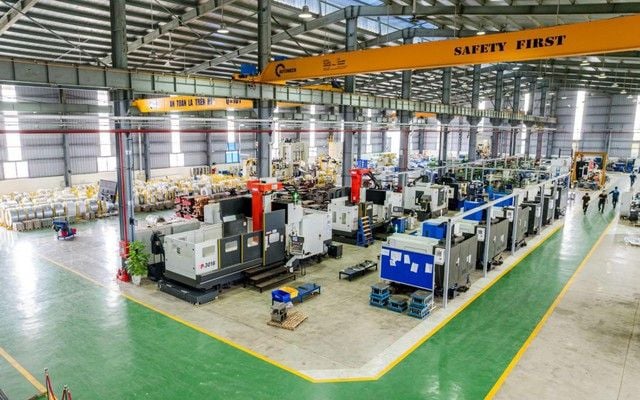
As multinational corporations seek new production centers, Vietnam has emerged as a promising destination, supported by stable policies, competitive costs, and the maturation of its manufacturing ecosystem.
After the Covid-19 pandemic and amid global geopolitical fluctuations, many large manufacturing groups began restructuring supply chains to reduce reliance on a single country. The relocation trend has encouraged manufacturers to expand into new markets in Southeast Asia, with Vietnam increasingly viewed as a production destination for electronics, automobiles, household appliances, and supporting industries.
Within this shift, the development of Vietnam’s supporting industry is described as foundational—helping the country move beyond assembly toward producing components and technical solutions for multinational corporations.
Vietnam has issued multiple policies to promote the supporting industry (CNHT). These include Decree 111/2015/NĐ-CP on CNHT development, which provides tax or credit incentives. The government has also set a target through Resolution 115/NQ-CP, aiming that by 2030 Vietnamese enterprises will be able to supply highly competitive products and participate more deeply in the global value chain.
However, the article notes that policy is only a necessary condition, while enterprise action is the decisive factor during supply chain relocation.
Automech is presented as a typical case of how a Vietnamese mechanical engineering company is adapting to the relocation wave. The company specializes in supplying mechanical processing equipment and automation solutions for manufacturing and serves as a supplier of machinery and technology to domestic manufacturing plants.
In working with large manufacturers, Automech found that supplying equipment alone is not sufficient to create substantive change in mechanical engineering. The article says domestic producers need a realistic and complete production model to build confidence in technology solutions and attract international demand.
Based on existing technology, Automech built and operates Plant No. 1, focusing on demonstrations and building models of next-generation mechanical manufacturing, including precision machining, mold production, jigs, and industrial components. The company has participated in producing stamping dies, fixtures, and stamping components for automobiles, weld assemblies, and related parts.
The manufacturing process begins with design and structural modeling. Engineers create drawings, assess strength, and simulate loading conditions to ensure products meet technical requirements when assembled into a vehicle cabin system.
After design, stamping dies are machined on CNC systems and adjusted to ensure stability in mass production. Parts are then stamped into shape on high-capacity presses, followed by finishing operations.
For automotive component assemblies, loose stamped parts are assembled and welded into a complete frame using fixtures designed by Automech. The welding stage is performed fully automatically by robots.
The article emphasizes that automotive component assemblies are complex and typically produced only by capable suppliers, so domestic mastery of such production technology is described as an important step toward joining the global auto supply chain.
As domestic automotive brands invest in manufacturing and increase localization, supporting industries are expanding to meet rising demand. Automech’s Plant No. 2 is in the finalization stage and is planned to become operational in April 2026. The plant is described as integrated with stamping presses, CNC machines, modern metrology equipment, and automated welding robots, aiming to raise production capacity and expand high-value component lines.
The company also plans to start Plant No. 3 in Q3 2026 to anticipate demand growth in new industries such as EVs, smart devices, and automation systems.
The article argues that supply chain restructuring creates real opportunities only when enterprises build internal strength. To participate more deeply in the value chain, it says companies must invest in technology, plants, technical human resources, and quality management capabilities.
In this context, Automech is portrayed as more than an equipment or solution supplier. The company’s shift toward a deeper manufacturing model—directly engaging in domestic localization of components and strengthening industrial capabilities—is presented as aligned with Vietnam’s supporting industry needs for practical models that can build market confidence.
Enterprises investing in plants, technology, and manufacturing capacity, the article concludes, can become key “nuclei” that help Vietnam’s supporting industry move faster and more securely into the global supply chain.





Premium gym chains are entering a “golden era” that is ending or already in decline, as rising operating costs collide with shifting consumer preferences toward more flexible, community-based ways to exercise. Long-term memberships are shrinking, margins are pressured by higher rents and facility expenses, and competition from smaller, more personalized…


