•
•
•
•
•
•
•
•
•
•
•
•
•
•
•
•
•
•
•
•
•
•
•
•
•
•
•
•
•
•
•
•
•


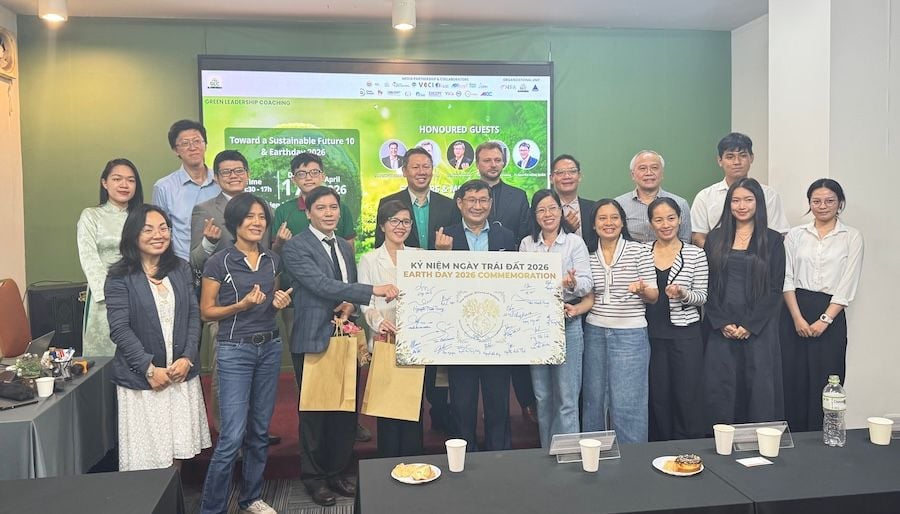
At an international conference held on April 17, lawyer Nguyen Trung Nam, founder of EPLegal, discussed how Vietnamese small and medium-sized enterprises (SMEs) face non-tariff barriers during the green transition required to reach the 2050 Net Zero target. He focused on “Greentech Barriers” (GTB), or green technical barriers, which can be as consequential as—if not more than—traditional tariff obstacles.
Nam said Vietnamese SMEs are concentrated in logistics, agriculture, footwear and export-oriented sectors, with agriculture being predominant. In the global shift toward green development, these sectors encounter GTB, which he described as technological barriers tied to production processes and operational requirements.
“Previously, enterprises competed based on advantages such as cheap labor and abundant resources. But when the issue moves to production processes, company or plant operations must change, and SMEs face major problems that may be insurmountable. These are technological barriers,” Nam said.
He noted that GTB differs from tariff barriers. Tariffs can be offset by raising selling prices, whereas GTB is not a tax. As an example, Nam referenced export compliance signals such as ESG-related requirements demanded by certain markets, explaining that meeting them requires companies to align their supply chains and reduce carbon emissions.
According to Nam, GTB can be divided into two categories.
The first category is a tax system targeting polluting activities, where higher emissions lead to higher charges. Nam cited the UK as an example, saying that driving into city centers can involve parking fees and environmental charges totaling roughly the equivalent of four to five subway fares, while electric vehicles incur no such tax.
He added that imported goods can face similar regimes designed to reduce reliance on products with high carbon emissions.
The second category involves standards—technical requirements that enterprises must implement to avoid environmental harm. Nam pointed to Vietnam’s energy planning as an illustration of how policy and standards evolve: Vietnam previously planned as many as 90 power plants, but after credit tightening in 2017, there were no favorable credit or commitments for coal projects. After COP26, Vietnam committed to Net Zero by 2050, with a roadmap stating that by 2030 no new coal plants will be built.
Nam said coal-fired plants already in operation must close by 2050, and if they are not closed by then, they will be dismantled. He also said the life cycle of high-emission plants will face bans, underscoring the need for clear criteria and technical standards.
Nam said SMEs are particularly exposed because they are small-capital businesses that often struggle to meet technical standards. He described strict standards as potentially destabilizing for firms that rely on low-cost operations.
“In essence, these are the most vulnerable groups. If a strict standard is imposed, they cannot adapt,” he said, citing examples from Bac Ninh where small wooden and textile workshops have high pollution potential. Nam said that if non-polluting, environmentally compliant standards are imposed, such businesses could nearly go bankrupt because they survive on low costs, while adopting modern green technology requires large upfront investment.
He also said there are global funds attempting to support SMEs by financing green technology upgrades, but access remains limited in Vietnam. Nam noted that while banks frequently discuss green lending, actual funding levels are not substantial.
“Earlier, processes that caused pollution and higher carbon would now be financed to switch to better technology. SMEs can receive favorable loans, with very low or even zero interest. The difficulty lies in current access in Vietnam; banks talk a lot about green, but actual funding is not substantial,” he said.
Nam said Vietnam is positioned to lead in COP26-style Net Zero efforts, but highlighted a major weakness: the lack of an effective measurement mechanism. He said carbon reduction cannot be achieved instantly and requires a roadmap from 2025 through 2030 and onward to 2050.
He stated that seven years after COP26, Vietnam remains in Phase 1 (assessment). He said the roadmap requires three additional phases: digitalizing data by placing electronic data into enterprise measurement and reporting, and then reorienting strategies so Vietnamese enterprises can integrate into global supply chains that apply green standards.
Nam added that obtaining EU green seals for Vietnamese enterprises is relatively rare, largely because the process requires substantial money and effort to standardize and export. He described this as a crucial non-tariff barrier that, in the future, SMEs will need to meet.
(Note: this article is authored by Châu An.)








Premium gym chains are entering a “golden era” that is ending or already in decline, as rising operating costs collide with shifting consumer preferences toward more flexible, community-based ways to exercise. Long-term memberships are shrinking, margins are pressured by higher rents and facility expenses, and competition from smaller, more personalized…