•
•
•
•
•
•
•
•
•
•
•
•
•
•
•
•
•
•
•
•
•
•
•
•
•
•
•
•
•
•
•
•
•


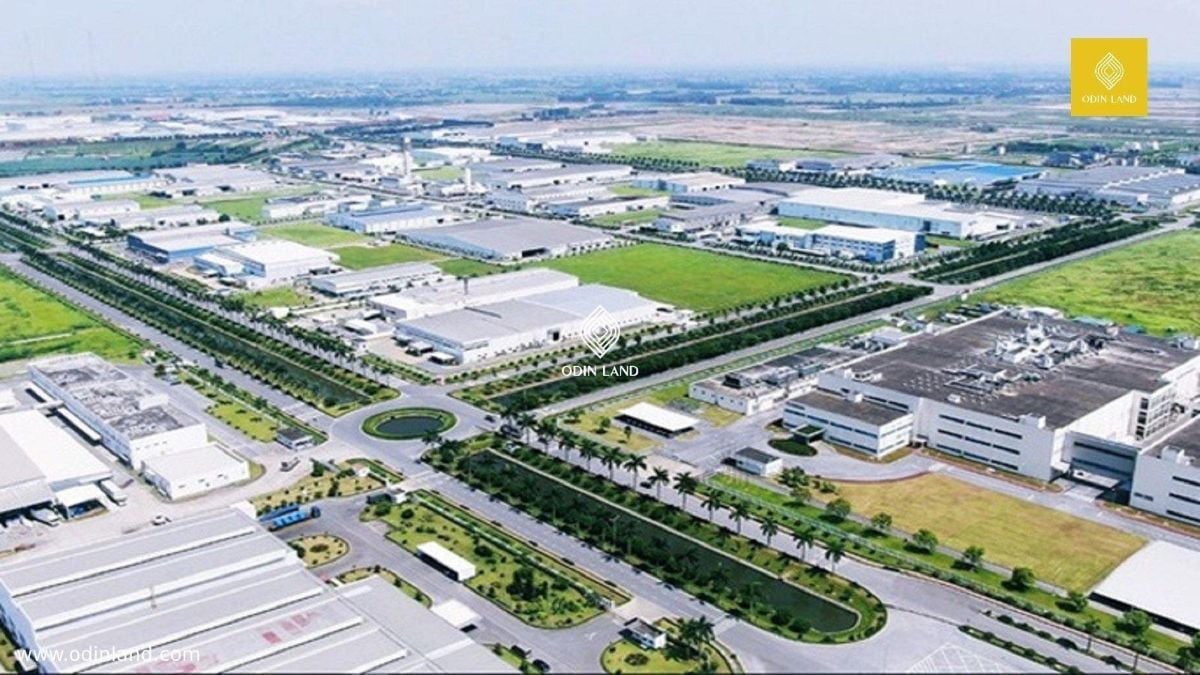
In a new policy and investment context, Hanoi is pursuing a major reform: converting existing industrial parks into an eco-friendly, high-tech and service-oriented urban ecosystem. The shift is not only about improving environmental appearance, but also about changing management thinking—using data and technology to reposition the capital in the global value chain.
After more than 30 years of development, Hanoi’s industrial parks have contributed to GDP growth, job creation and economic restructuring. However, the current growth model—built on scale and resource intensity—has clear constraints.
At a scientific workshop on transforming Hanoi’s existing industrial zones into an eco-high-tech “industrial-urban-service” model, Tran Anh Tuan, Deputy Head of the Management Board of Hanoi’s high-tech zones and industrial parks, said: “Industrial parks have fulfilled their historical mission, but the current model reveals many constraints. Data show only about 20-25% of enterprises are truly high-tech; most remain focused on processing and assembly.”
Weakly linked supply chains and low domestic value-added are also bottlenecks that limit Vietnamese firms’ ability to enter the global value chain. In parallel, environmental pressures are increasingly weighing on infrastructure.
Environmental challenges include wastewater of around 70,000–80,000 cubic meters per day and hundreds of thousands of tons of solid waste annually, which create major difficulties for logistics and waste management in older industrial parks.
Social infrastructure remains another issue. Only about 20-25% of workers’ housing needs are met. For example, at Thang Long Industrial Park, the Kim Chung housing area has deteriorated after 20 years, with shortages of schools and hospitals affecting workers’ lives.
As of February 2026, the Hanoi Management Board manages 2 high-tech parks, 1 IT park and 24 industrial parks, with nearly 1,000 projects and about 200,000 workers. This scale requires a more modern, transparent and sustainable governance approach.
In the climate-change era, major global investors increasingly assess industrial parks beyond land rents. ESG standards and net-zero pathways are becoming key performance benchmarks.
Pham Hoai Trung, ESG expert and Vice President of the Vietnam Green Transformation Association (VGA), said: “International investors increasingly look at the quality of the entire production ecosystem. They want to know if a park supports clean-energy usage, whether it has emission measurements, credible ESG data, and whether it aligns with their Net Zero strategy.”
Trung argued that Hanoi should not compete on “low cost” alone. Its advantage, he said, lies in building parks with stronger institutional quality, modern infrastructure and deeper technology integration. He added that leading in the next-generation industrial park model could create a platform for climate finance and help upgrade Hanoi’s position in the value chain.
At the same time, he cautioned against misinterpretation: “New-generation industrial parks should not be understood simply as more greenery or ‘eco-labels.’ The core is the shift from ‘growth through scale’ to ‘growth through efficiency.’ In the new model, success is not just occupancy rate, but how much electricity and water is consumed to create a unit of value, and how transparent those data are.”
The article outlines five infrastructure layers intended to underpin a smart ecosystem:
Technology is described as essential, but innovation is not limited to purchasing new machines. It also requires rethinking how data is created, managed and used. At the park level, applying technologies such as AI for load analysis, centralized data systems and Digital Twin tools can help coordinate ecosystem flows more effectively.
The MRV system—measurement, reporting and verification—is presented as a governance foundation. Without real data, the article notes that Net Zero and ESG goals risk becoming slogans.
The transformation is framed as a foundational platform for the circular economy. Related developments and future policy directions mentioned include solar energy, environmental management and governance models that support the shift toward eco-friendly, high-tech and service-oriented industrial ecosystems across Hanoi’s 14 planned zones.




Premium gym chains are entering a “golden era” that is ending or already in decline, as rising operating costs collide with shifting consumer preferences toward more flexible, community-based ways to exercise. Long-term memberships are shrinking, margins are pressured by higher rents and facility expenses, and competition from smaller, more personalized…




