•
•
•
•
•
•
•
•
•
•
•
•
•
•
•
•
•
•
•
•
•
•
•
•
•
•
•
•
•
•
•
•
•
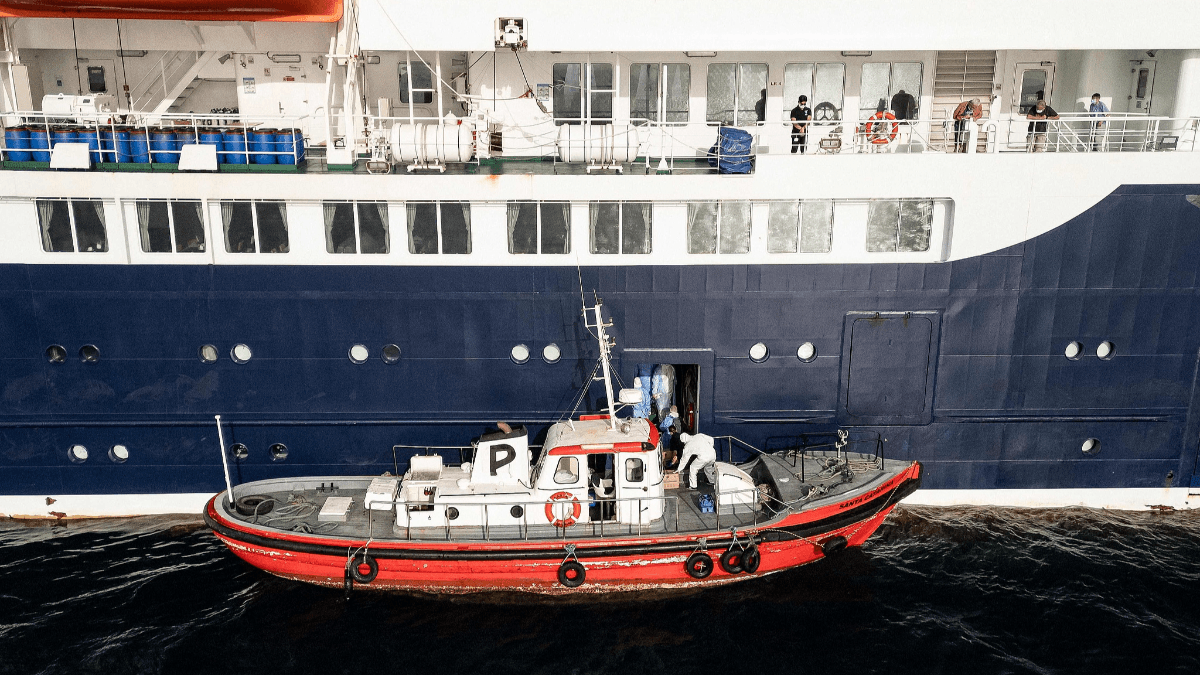
According to the New York Post, the hantavirus outbreak on the Hondius cruise may have originated with Dutch ornithologist Leo Schilperoord, 70, and his wife Mirjam Schilperoord, 69. The couple, who are prominent in European bird‑watching circles, were on a five‑month trip to South America when exposure likely occurred. They arrived in Argentina on November 27, 2025, then travelled through Chile and Uruguay before returning to Argentina at the end of March 2026. Before boarding the Hondius in Ushuaia on April 1, they reportedly visited a landfill near the city to observe birds, a site popular with birdwatchers for rare species such as the white‑throated caracara. On April 6 Leo developed fever, headache, abdominal pain and diarrhea and died on the ship on April 11. When the ship stopped at Saint Helena on April 24, Mirjam left with the body to return to the Netherlands. While awaiting a connection at Johannesburg airport, her health deteriorated and she died the following day. Investigations focus on Ushuaia, but local authorities say the chance the couple contracted the virus during their 48‑hour stay before boarding is nearly zero. Tierra del Fuego officials believe Leo became ill about five days after leaving the port, while WHO notes hantavirus incubation is typically two to three weeks. Officials say Tierra del Fuego has had no hantavirus case since 1996; Andes virus is carried by the long‑tailed pygmy mouse, a species found in northern Argentina. Nevertheless, concerns persist for local tourism operators; Angel Brisighelli, manager of a tour company, said that linking a destination to disease spread is not desirable. WHO’s Olivier Le Polain noted that the early phase of the disease is when transmissibility is highest and the ship environment may facilitate spread. Infected individuals typically develop symptoms after about three weeks, though the virus can persist longer in a dormant state. He urged authorities not to wait for symptoms to isolate potentially exposed people, and WHO warned of more cases related to the ship outbreak in days or weeks ahead. Cases of suspected hantavirus infection have appeared in 13 countries across four continents, and on May 11 France’s health ministry confirmed a woman repatriated from Tenerife is in critical condition after Andes virus infection. The patient is among five French citizens repatriated on May 10. Media reports say the woman had no abnormal symptoms before the flight, but symptoms escalated during the return flight to Paris. Health authorities are closely monitoring the group of returnees to prevent spread. To date, the outbreak has 11 suspected or confirmed hantavirus cases, with nine confirmed. The latest infection is a Spanish passenger isolated at a military hospital in Madrid. Express and Daily Mirror list 13 countries affected or at risk: the United States, the United Kingdom, Spain, the Netherlands, Denmark, Germany, Switzerland, France, South Africa, Singapore, the Philippines, Argentina and Cape Verde. WHO says the risk to the wider community remains minimal as hantavirus rarely spreads person‑to‑person. Dr. Abdirahman Mahamud, WHO Director of Response and Alert, said: We believe this will be a limited outbreak if public health measures are implemented rigorously and countries cooperate. Vietnam’s health ministry has stated that no Vietnamese citizens have been linked to the cluster, and urged heightened border control, hospital surveillance, sanitation and disinfection; vector control and proactive prevention measures. Vietnam has not recorded Andes virus; some science indicates other hantaviruses such as Seoul or hantaviruses found in wildlife. Public should follow official information and not speculate on domestic spread from the ship. Health authorities recommend continuing environmental hygiene and rodent control, along with guidance from the Ministry of Health.








Bitcoin (BTC) investors who use steady dollar-cost averaging (DCA) may be underperforming versus strategies that adjust exposure to the market’s cycle, according to new research arguing that Bitcoin’s behavior differs from traditional long-duration assets.
In a report cited by Markus Thielen of 10x Research, Bitcoin’s market…