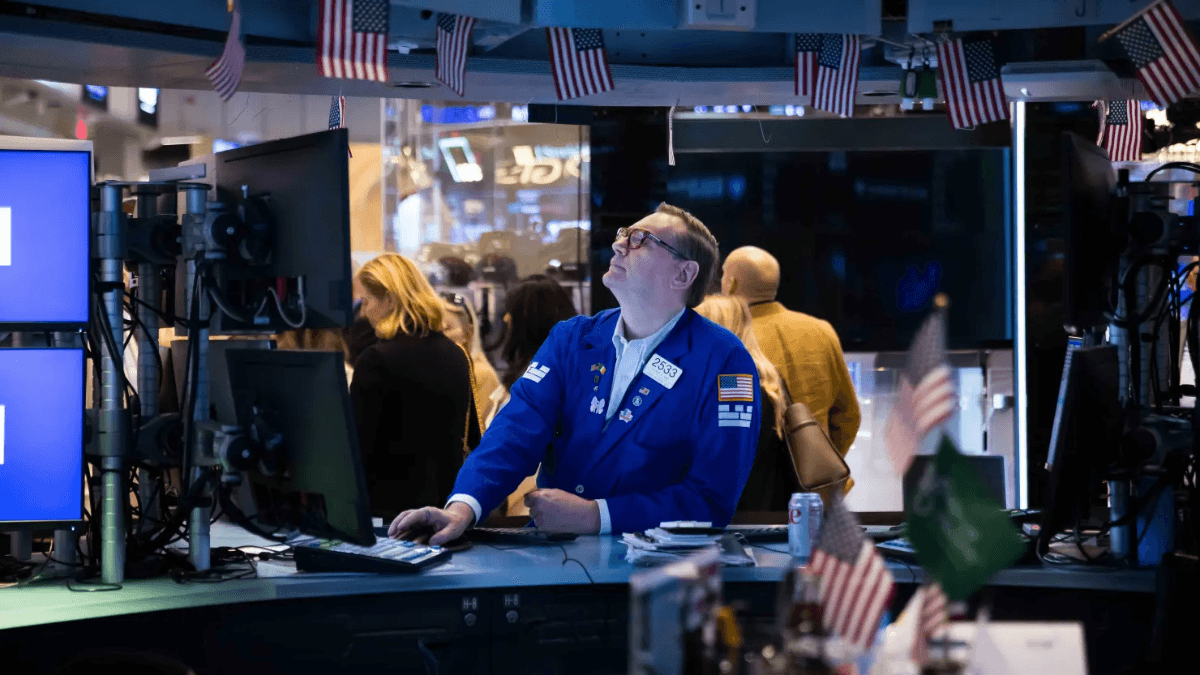
U.S. stock markets rose on Wednesday, May 13, as tech shares were broadly bought, pushing the S&P 500 and Nasdaq to intraday and closing records.
Crude oil fell as investors awaited news about President Donald Trump’s trip to China and digested a hotter-than-expected U.S. inflation report. At the close, the S&P 500 rose 0.58% to 7,444.25, and the Nasdaq gained 1.2% to 26,402.34, with both indexes posting intraday and new closing records for the session. The Dow Jones Industrial Average fell 67.36 points, or 0.14%, to 49,693.2. Tech stocks outperformed other groups in the session, as inflation concerns rose due to energy prices stemming from the U.S.–Iran conflict, pressuring other groups such as retail and banks. Nvidia closed over 2% higher, Micron up more than 4%, and the VanEck Semiconductor ETF (chip-focused) up 2%. With gains concentrated in technology, about two-thirds of S&P 500 components finished the session lower. “Chip stocks are on a separate path. Investors may believe that demand and growth in this group are structural enough that cyclical forces can’t really alter the momentum,” said Ross Mayfield, an investment strategist at Baird, in an interview with CNBC. A key catalyst for the tech rally, particularly for semiconductors, was news that Nvidia CEO Jensen Huang was named to a list of U.S. corporate leaders accompanying President Trump on the China trip. Investors see this as a positive sign that Nvidia could sell AI chips in China, Mayfield noted, though he did not expect much from the summit. Chip stocks have been leading the market as investors remain excited about AI trading. Yet Mayfield warned that the uptrend could be overextended and did not believe the upside momentum could continue. “There will come a time when investors look back and, if they see a macro environment against them, they’ll feel it’s time to take profits,” he said. Data from the U.S. Labor Department on Wednesday showed the producer price index (PPI) rose 1.4% in April from March, far above the 0.5% forecast by economists in a Dow Jones survey and the 0.7% increase in March after revisions. This was the largest monthly gain since March 2022. Year over year, April PPI rose 6%, the largest since December 2022. Core PPI, which excludes energy and food, rose 1% from the prior month, above the 0.4% expectations. The figures add to fresh evidence that higher energy prices driven by the U.S.–Iran conflict are fueling inflationary pressures in the U.S. economy. Earlier in the week, CPI also rose more than expected. Higher inflation dampened expectations for the Federal Reserve to cut rates this year. Markets currently expect the Fed to hold rates at 3.5–3.75% into 2027, with some investors even fearing a rate hike. This risk pressured oil prices, with Brent crude futures in London down $2.00 to $105.63 a barrel and WTI futures in New York down $1.16 to $101.02. A higher-for-longer interest-rate environment could slow economic growth and dampen oil demand. On Wednesday, Boston Fed President Susan Collins said the Fed could need to raise rates if inflation pressures do not ease. President Trump and a delegation of U.S. officials and business leaders landed in China on May 13 local time for an official visit on May 14–15. Global investors are watching to see how this visit may affect major issues such as U.S.–China trade tensions and the U.S.–Iran conflict. On Tuesday, Trump said he did not think he needed China’s help to end the war with Iran. Experts say with the Hormuz Strait still closed, global oil supply will tighten. “There could be a structural supply crunch in oil markets, at least this year,” said Janiv Shah, an analyst at Rystad. In a monthly report released on May 13, the IEA said global oil supply this year would not be enough to meet demand due to the war reducing oil production in the Middle East.