•
•
•
•
•
•
•
•
•
•
•
•
•
•
•
•
•
•
•
•
•
•
•
•
•
•
•
•
•
•
•
•
•


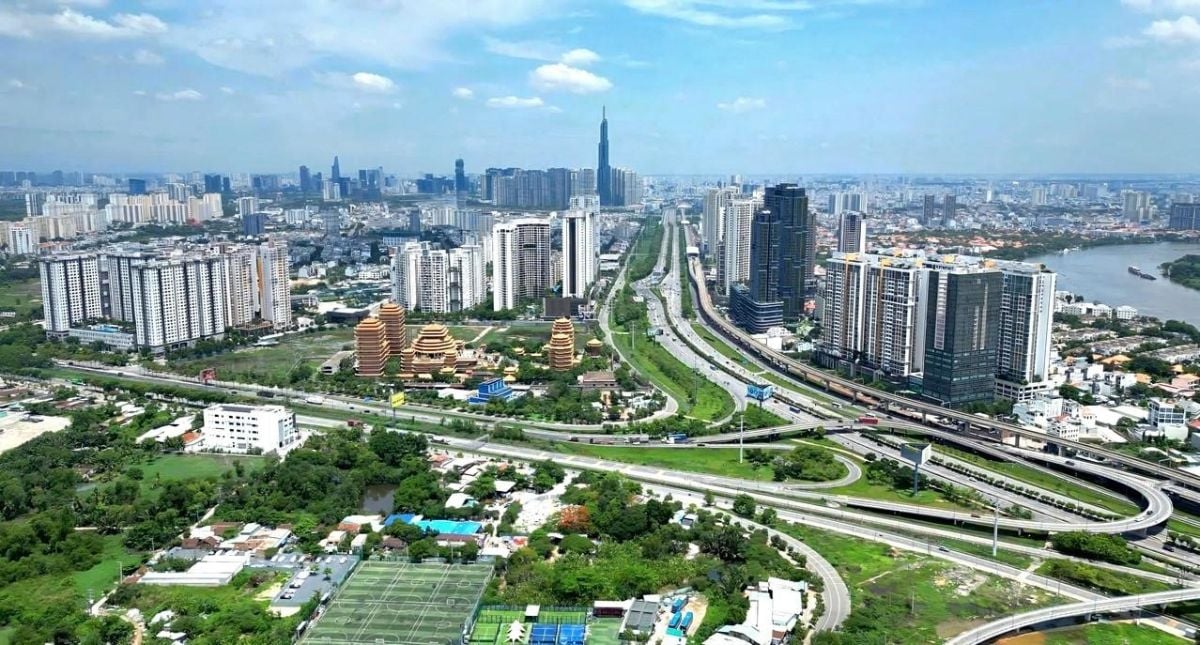
Delegates in Ho Chi Minh City reviewed and approved the investment policy for the Central City Square and City Hall project under a public-private partnership (PPP) model, including build-transfer (BT) contracts. The project has a total investment of nearly VND 29,600 billion and will be implemented in the 2026–2028 period on a land area of 46.7 hectares. The project is divided into four component projects.
Component 1 focuses on technical infrastructure construction, ancillary works, and an underground parking garage for the park area. The estimated investment is over VND 3,500 billion, with capacity to serve 1,000 to 3,000 visitors per day and employment for about 1,000 workers.
Component 2 is the City Administrative Center, with total investment of nearly VND 18,500 billion. It is designed to serve 6,000–8,000 civil servants and public employees, and to receive 1,500–2,000 visitors and business representatives daily.
Component 3 is the Conference and Performance Center, with a capacity of 2,000 seats and investment of VND 6,856 billion.
Component 4 is the Central Square, with capacity for about 268,000 people for political events and about 500,000 people for cultural festivals. Total investment for this component exceeds VND 733 billion.
According to the Ho Chi Minh City People’s Committee, implementing the projects through public investment would create a significant burden on the state budget due to high investment demands for 2026–2030 and limited budget allocations. While the project provides public facilities and administrative-service public goods of national and community interest, it does not have self-recovery. The committee noted that public investment progress is often slow, which can increase social costs and opportunity costs. It also stated that public investment is not necessarily the optimal option when private participation is feasible.
Therefore, applying PPP is considered appropriate to reduce budget pressure and mobilize resources from non-state actors. The committee also said PPP can help leverage private-sector technology, management capacity, and experience to improve project quality.
At the meeting, Vice Chairman of the Ho Chi Minh City People’s Committee, Nguyễn Công Vinh, presented a report on a list of 33 land plots proposed for compensating investors for BT projects in the city. The list includes 33 plots, with 17 managed by the Ho Chi Minh City Land Development Center and the remainder managed by local authorities.
Among the plots cited as having been vacant for years are Nos. 8–12 Le Duan; 2–3–4 Hai Bà Trưng; 10 Hàm Nghi; 33 Nguyễn Du; 34–36–42 Chu Mạnh Trinh (Ward Saigon); 200 Võ Văn Tần (Ward Bàn Cờ); 152 Trần Phú (Ward Chợ Quán); 120 Trần Hưng Đạo (Ward Bến Thành); 420 Nơ Trang Long (Ward Bình Lợi Trung); 129 Đinh Tiên Hoàng (Ward Gia Định); 602 Võ Văn Kiệt (Ward Cầu Kho); 123 Nguyễn Khoái (Ward Vĩnh Hội); and 462–464 Nguyễn Thị Minh Khai.
The city stated that the land-payment list must ensure value and fair pricing to attract capable investors and limit budgetary obligations.
The committee also referenced investor proposals for additional PPP and BT projects, including Metro Line 2 from Bến Thành to Thủ Thiêm and from Thủ Thiêm to Long Thành; road and bridge connections for Can Giờ – Vũng Tàu; the Ho Tram – Long Thành expressway; wastewater treatment plants in West Saigon and North Saigon 1 and 2; the Central Plaza and New Administrative Center; Ben Nghe – Khanh Hoi Green Space and riverside green spaces. The proposed projects are expected to apply PPP and BT methods with total investments exceeding VND 366,000 billion.
The People’s Committee said investment needs are very large and concentrated over a limited period, while the city’s budget balance is constrained. It noted that critical infrastructure projects are planned under BT contracts to address environmental, wastewater, flooding, and traffic congestion issues, with large investments and corresponding counterpart funding. As a result, the land-payment lists must not only meet the required scale but also include commercially valuable plots with high exploitation potential to attract capable investors, ensure payment price equality, and curb new budgetary obligations.




Premium gym chains are entering a “golden era” that is ending or already in decline, as rising operating costs collide with shifting consumer preferences toward more flexible, community-based ways to exercise. Long-term memberships are shrinking, margins are pressured by higher rents and facility expenses, and competition from smaller, more personalized…




