•
•
•
•
•
•
•
•
•
•
•
•
•
•
•
•
•
•
•
•
•
•
•
•
•
•
•
•
•
•
•
•
•


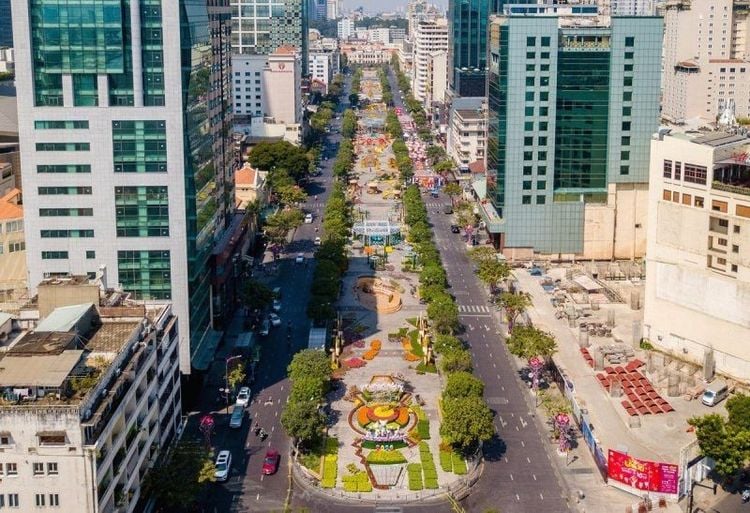
In the context of rapid urbanization, managing urban order has become a major challenge for Ho Chi Minh City. The City Party Committee’s Standing Board has issued a directive to strengthen the Party’s leadership over this work, emphasizing the combination of communication, mobilization, and inspection and supervision. Party cells, authorities, and political-social organizations are required to coordinate closely to strictly handle violations of urban order.
A key focus of the strategy is the development and expansion of model communes/wards for urban civilization. The initiative is intended to improve the effectiveness of urban order management while creating favorable conditions for the city’s sustainable development.
In the near term, localities including Con Dao Special Administrative Region, Can Thanh commune, Xuan Hoa ward, and Sai Gon ward will be piloted.
To maintain order on roads and sidewalks, the City Party Committee directed the expansion of decentralization and the empowerment of People’s Committees of wards, communes, and special zones. These units will proactively publish lists of routes where sidewalks are used temporarily beyond their normal traffic purposes.
The approach is designed to support more effective management while creating conditions for residents and businesses to operate legally.
The Ho Chi Minh City People’s Committee is tasked with directing relevant agencies, schools, training facilities, hospitals, and health facilities to coordinate with local authorities to implement solutions to ensure order and traffic safety in front of their premises.
Measures include studying and arranging shuttle buses for officials, workers, and students, building smart parking facilities, organizing parking areas, setting up student pick-up/drop-off areas, and providing dining services within campus grounds.
The city also prioritizes developing smart parking projects, particularly in the city center. The goal is to address parking shortages, reduce traffic congestion, and improve residents’ access to public transport.
In parallel, the City Party Committee directs strict handling of violations in the execution of public duties, including interference in the process of handling violations by authorities. A mechanism is in place to encourage citizens to be mindful, self-disciplined, and voluntarily contribute to urban renewal and a civilized urban lifestyle.
Ho Chi Minh City police are directed to decisively handle encroachments on roads and sidewalks used for business purposes that disrupt order, aesthetics, and hygiene. They will also strictly address parking points and lots that do not comply with regulations or lack licenses to operate.
The directive also emphasizes building additional walking streets in central areas. This is intended to reduce traffic congestion while creating public space for residents and promoting a civilized urban culture.
Through these efforts, Ho Chi Minh City is working to reinforce its status as a modern, civilized, and safe urban area. The policies and measures being implemented are aimed at addressing current issues and laying groundwork for sustainable development in the future.


Premium gym chains are entering a “golden era” that is ending or already in decline, as rising operating costs collide with shifting consumer preferences toward more flexible, community-based ways to exercise. Long-term memberships are shrinking, margins are pressured by higher rents and facility expenses, and competition from smaller, more personalized…




