•
•
•
•
•
•
•
•
•
•
•
•
•
•
•
•
•
•
•
•
•
•
•
•
•
•
•
•
•
•
•
•
•


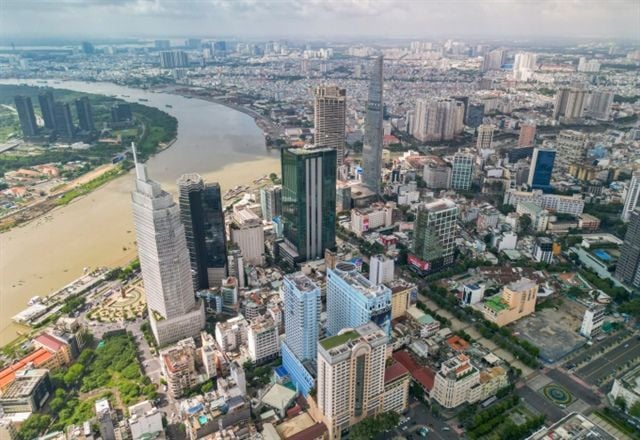
Ho Chi Minh City People’s Committee has issued a decision on the list of investment-attractive projects in the city for the 2026-2030 period, totaling 250 projects across multiple key sectors. The list is divided into nine main groups, crafted to align with the city’s development orientation through 2030 with a vision to 2045, prioritizing high-tech, innovation, the digital economy, the green economy, and the circular economy. The groups and project counts are: Housing & Urban Areas – 98; Industry & Environment – 41; Commerce, Services and Tourism – 26; Transport Infrastructure – 22; Culture & Sports – 21; Healthcare – 17; Education – 12; High-Tech – 7; Seaports & Logistics – 6. In the Seaports & Logistics group, the city calls for investment in port facilities, international cruise ports, and a logistics center at My Xuan, Long Son, Long Binh, and the Ba Ria–Vung Tau region. The High-Tech group focuses on the Ho Chi Minh City High-Tech Park (SHTP) with projects in semiconductor research and manufacturing, electronics, and data centers. The Healthcare group includes general hospitals in Di An, Phuoc Thang, Binh Chau and Long Hai. Central Ho Chi Minh City real estate sector, July 2025. Photo: Quynh Tran The Industry & Environment sector includes large-scale wastewater treatment plants such as Tham Luong – Ben Cat, Nam Sai Gon, Bac Sai Gon, together with industrial parks and clusters such as VSIP 5 (1,000 ha), Bo La, An Lap, Dat Do. Meanwhile, transport infrastructure includes major capital projects such as the Ben Thanh–Song Tau line connecting Vung Tau – Ba Ria – Phu My (VND 127.645 trillion), the Ben Thanh–An Ha urban railway line (VND 86.521 trillion), and Ring Road 4 (VND 14.083 trillion). The Housing & Urban group includes large-scale projects such as Binh My Urban Area (586 ha) and Tan Uyen Urban Area (299 ha, investment about VND 33.822 trillion), along corridors along Ring Roads 3 and 4 and numerous social housing and mixed-use residential projects. The Commerce - Services & Tourism sector focuses on developing resort areas, luxury hotels, shopping centers, and eco-tourism zones such as Tha La Island, a hotel complex in Thu Thiem New Urban Area, and commercial-service complexes in central Ho Chi Minh City tied to major transport corridors and the metro line... In terms of scale, projects range from several thousand square meters to thousands of hectares. Some large industrial zones and urban areas such as Phu Giao 4 (1,000 ha), while industrial clusters typically span 30-75 ha; health and education projects typically range from 1.5-4 ha. The total investment per project ranges from hundreds of billions to tens of thousands of billions of dong. The city People’s Committee assigns the Department of Finance to lead guidance, investor support, and updates to the project list; and to publicly publish on the portal to promote investment. Related units may propose adjustments or additions to the list during implementation. According to the February socio-economic report by the city People’s Committee, the economy shows positive signals with a string of high-growth indicators compared with the same period last year. The Industrial Production Index (IIP) is expected to rise by about 14.6%; total retail sales and consumer service revenue up over 13%; tourism revenue exceeding VND 125,000 billion, welcoming over 14.1 million visitors. The city aims for an average GRDP growth of 10–11% per year, with per capita income expected to reach about USD 14,000–15,000 by 2030. To realize two-digit growth, Ho Chi Minh City estimates capital needs of around VND 1.2 quadrillion per year.
Premium gym chains are entering a “golden era” that is ending or already in decline, as rising operating costs collide with shifting consumer preferences toward more flexible, community-based ways to exercise. Long-term memberships are shrinking, margins are pressured by higher rents and facility expenses, and competition from smaller, more personalized…