•
•
•
•
•
•
•
•
•
•
•
•
•
•
•
•
•
•
•
•
•
•
•
•
•
•
•
•
•
•
•
•
•


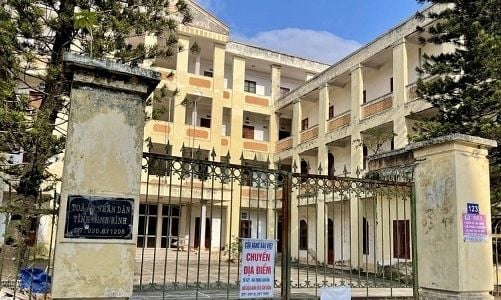
Ho Chi Minh City’s People’s Committee has issued a directive on state management of old housing assets under the city’s jurisdiction, aiming to enforce comprehensive reform from inventory and classification through to sanctions for violations, while improving the effective use of the public housing stock.
The directive requires organizing a full survey and inventory of old state-owned housing across the city, including rental housing, unallocated housing, and properties that have been encroached upon or used for improper purposes. This is intended to establish a synchronized database to support long-term management.
It also notes that many houses in this category have been used improperly, such as illegal subletting, unauthorized extensions, changes of use, or remaining vacant—leading to waste of public assets. Some cases have not completed legal procedures, leaving properties in a “half public - half private” status and complicating enforcement.
Under the directive, relevant departments, agencies, and localities are required to focus on decisively resolving outstanding issues, particularly long-running violations, following the principle of ensuring proper use, correct targeting, and alignment with planning.
The City-owned Housing Management Company and the Housing Management and Construction Inspection Center are tasked with tightly managing the old housing stock under public assets assigned to them. They must report to commune-level People’s Committees to review cases involving government-managed houses that have been allocated for use but lack an ownership title established by the city, so that public ownership can be declared for the housing stock under their management. They are also required to exercise the rights and responsibilities of the unit managing the old housing under public assets as defined in Clause 2 of Article 59 of Decree 95/2024/ND-CP dated July 24, 2024.
For district-level public service companies, the directive requires direct tight management of old housing stock in areas not yet included in the transfer list. They must coordinate with commune People’s Committees to survey housing stock already state-managed and allocated but with incomplete ownership procedures, in order to establish public ownership. They must also proactively implement the rights and responsibilities of the unit managing the operation of old housing under public assets as per Clause 2, Article 59 of Decree 95/2024/ND-CP dated July 24, 2024.
The directive calls for increased housing classification efforts. Houses that meet the conditions will be considered for sale under regulations. Those that do not meet the conditions must have management and usage plans, or their handling must follow the appropriate process, including revocation where required.
The delegation of authority and assignment of concrete responsibilities to each unit and locality is specified in Official Dispatch 3041/UBND-ĐT. Ward and commune People’s Committees are required to directly inspect current housing usage, promptly detect violations, and address them.
The Department of Construction serves as the lead unit, coordinating with relevant entities to guide, inspect, and compile reports. It is also responsible for proposing solutions for complex cases beyond local authority.
The Department of Construction is required to coordinate in collecting, updating, managing, and exploiting the database on old housing under public assets in the Housing and Real Estate Information System in accordance with regulations. If necessary, it must advise the City People’s Committee to issue directives suited to the system’s operation and legal provisions.
The city requires decisive revocation of houses that are encroached upon, misused, or no longer needed. Reclaiming must be accompanied by a reasonable relocation plan to avoid disputes.
Financial management related to the housing stock will also be tightened. Revenues from rent or sale must be collected according to regulations to prevent budget leakage, given that the old housing stock is a valuable public asset.
The directive sets a long-term objective of efficiently exploiting the housing stock by bringing unused houses into use, using them for social welfare or urban development, and strengthening management of old housing to restore order in public asset management. It also aims to generate additional resources for the budget and improve asset utilization.
Ho Chi Minh City is accelerating urban modernization efforts, and addressing issues related to old housing is expected to contribute to urban appearance and improve residents’ quality of life.




Premium gym chains are entering a “golden era” that is ending or already in decline, as rising operating costs collide with shifting consumer preferences toward more flexible, community-based ways to exercise. Long-term memberships are shrinking, margins are pressured by higher rents and facility expenses, and competition from smaller, more personalized…