•
•
•
•
•
•
•
•
•
•
•
•
•
•
•
•
•
•
•
•
•
•
•
•
•
•
•
•
•
•
•
•
•


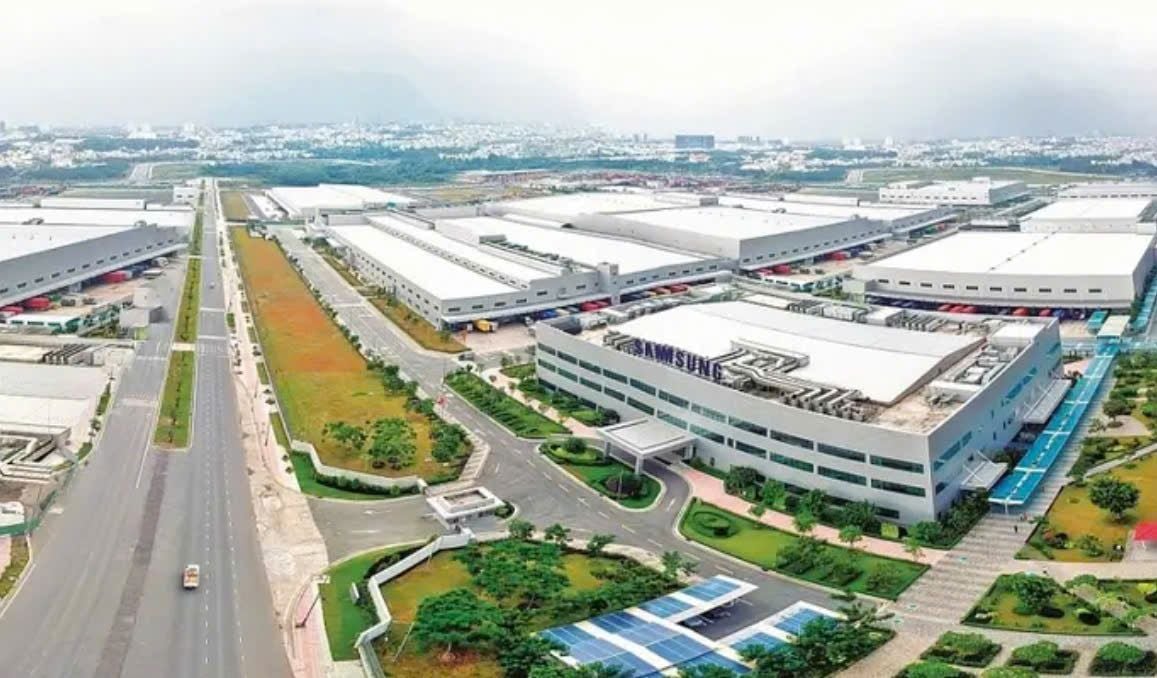
Some industrial zones in Hanoi still host enterprises operating in “low-tech – high-emission” sectors. Officials say the pattern reflects earlier priorities that focused on filling industrial land and creating jobs, rather than upgrading technology and increasing value.
The Hanoi Authority for High-Tech and Industrial Zones held a conference on digital transformation of industrial zones under an eco–high-tech ecosystem model. The event aimed to review current operational realities and set directions to improve the quality of industrial zone development in the near future.
Speaking at the conference, Tran Anh Tuan, Deputy Head of the Authority, said that as of February 2026, the unit directly manages two high-tech zones, one information technology park, 24 industrial zones (nine active, five with infrastructure investors, and ten planned at a 1/2000 scale).
He added that Hanoi records 999 active projects. Hoa Lac High-Tech Park accounts for 115 projects, while the remaining industrial zones account for 884 projects. The total number of experts and workers in high-tech and industrial zones is about 200,000 people, including 1,350 foreign workers.
Mr. Tuan said the management board also recognizes several shortcomings. In particular, a number of industrial zones have a non-trivial share of enterprises in the “low-tech – high-emission” group, accounting for about 29.6%.
He attributed this to past practices that prioritized land filling and job creation, resulting in a relatively low project screening threshold and a lack of mechanisms requiring periodic upgrades. He also pointed to weak post-investment and post-licensing controls, noting that conditions for land extension and continued operation of high-emission facilities, as well as inspection-and-sanction processes, lack interconnection and deterrence.
Another issue cited was that environmental infrastructure in some industrial zones formed early—especially those upgraded from clusters—was designed to older standards, while newer monitoring and treatment requirements have become stricter.
On management modernization, Mr. Tuan said digital transformation has not been uniform. There is a lack of real-time operating data, which leads to processing lagging behind reality.
Vương Thị Minh Hiếu, Deputy Director of the Foreign Investment Department (Ministry of Finance), said international markets are introducing new rules, including ESG standards from multinational supply chains and national commitments toward zero-net emissions. She said this creates an urgent need for industrial parks to shift quickly from a traditional multi-sector model to eco-industrial, urban-service, and smart industrial zones that apply big data.
Leaders said Hanoi is determined to transform existing industrial zones based on directives from the City Party Committee and the City People’s Committee. The Hanoi board is focusing on “clearing the project list - restoring discipline in technology, environment, and site” as a mandatory governance requirement.
Mr. Le Thanh Son, Deputy Head of the Hanoi Management Board for High-Tech and Industrial Zones, said results will be measured by KPI and updated on schedule, with the goal that by 2026 visible changes can be observed.
He emphasized that Hanoi cannot compete with an approach of “cheap land - cheap labor.” Industrial land rents in the capital are much higher than in neighboring areas, and attracting low-tech assembly projects could lock land into an old growth model with environmental and social consequences.
“Transforming existing industrial zones into a new-generation eco-industrial zone model is no longer a choice, but an essential requirement,” Mr. Son said. He added that the restructuring should position industrial zones not only as production spaces, but as part of Hanoi’s new urban development framework, connected with innovation centers, growth poles, economic corridors, and the technology–knowledge ecosystem.
To implement these directions, the Hanoi board has developed a detailed action plan with clear outputs. It includes green–smart–eco transformation criteria for industrial zones covering planning, technical and digital infrastructure, environment, energy, sector composition, circular economy, social infrastructure, and governance. Officials said the criteria will function both as an evaluation tool and a screening filter to select investment projects, improve land-use efficiency, raise output value per unit area, and support long-term sustainable development.
Leadership also said it wants feedback to propose breakthrough mechanisms, including a “green lane” to mobilize social resources, PPP models, and measures to screen, upgrade, or replace low-tech, high-emission projects. The aim is to build a coherent ecosystem of solutions, including technical infrastructure, digital infrastructure, social infrastructure, housing, services, and training for high-quality human resources.
Dr. Nguyễn Trâm Anh of the Foreign Investment Department (Ministry of Finance) assessed that transforming industrial zones into eco-industrial and urban-service models is no longer limited to theory. She said that, based on successful cases, Vietnam is gradually shaping a new generation of industrial zones that are smarter, more sustainable, and closely tied to human values.



Premium gym chains are entering a “golden era” that is ending or already in decline, as rising operating costs collide with shifting consumer preferences toward more flexible, community-based ways to exercise. Long-term memberships are shrinking, margins are pressured by higher rents and facility expenses, and competition from smaller, more personalized…