•
•
•
•
•
•
•
•
•
•
•
•
•
•
•
•
•
•
•
•
•
•
•
•
•
•
•
•
•
•
•
•
•


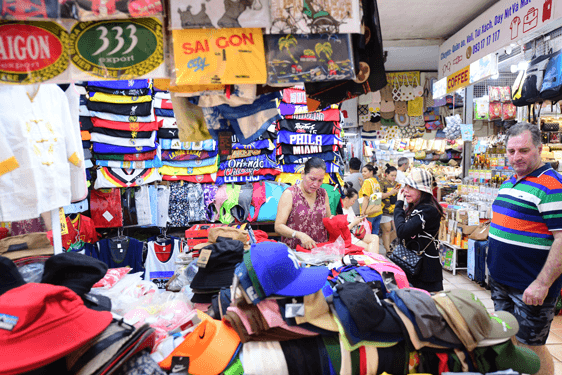
Small business owners are calling on tax authorities to set the tax-exempt threshold based on actual profits rather than fixed revenue levels. In draft amendments to the Personal Income Tax Law, Corporate Income Tax Law, and Value-Added Tax Law, the Ministry of Finance proposes removing a hard revenue threshold for tax exemption for individuals and household businesses in the law, leaving the specific level to be determined by the Government.
Under the 2025 Personal Income Tax Law (amended), the current tax-exempt revenue threshold for individuals and household businesses is 500 million dong per year. The draft amendments would remove this fixed figure, with the Government to set an appropriate threshold.
Mr. Phan Văn Mãi, Head of the Economic and Financial Committee of the National Assembly, said the reviewing body broadly agrees with the direction to amend these laws. However, he stressed that authorities must carefully consider the specific revenue level to exempt households and small and medium-sized enterprises.
Historically, the exempt revenue threshold has been 100 million dong/year, then proposed to rise to 300 million, and later 500 million. Many opinions argue that 500 million dong is still too low compared with current business realities.
The Small and Medium Enterprise Association proposed raising the threshold to 3 billion dong. The reviewing body suggested studying a minimum around 2 billion dong per year to better match current conditions.
Several household business owners said taxing based on revenue above the 500 million dong threshold is not realistic when profit margins are thin.
Mr. Nguyễn Thế Dũng, owner of a home goods shop in Ho Chi Minh City, said wholesale items typically generate profits of about 0.5% to 1%, while retail can range from 5% to 10%. He gave an example of large lots such as 1,000 cases of ceramic tiles, where profits may be only around 1 million dong, making revenue-based taxation impractical. He proposed that authorities calculate the tax-free threshold based on actual profits and reference the current monthly personal deduction of about 15.5 million dong (roughly 186 million dong per year).
Mr. Trương Phát, a trader at Bình Tây Market, said raising the revenue threshold from 500 million dong to 1–2 billion dong per year would help small traders stabilize operations and reduce tax obligations. He also noted that filing taxes under the new regime remains challenging.
Mr. Công Thành, owner of a small grocery store in Hiệp Bình Ward, said that taxing on revenue above 500 million dong/year is not reasonable. He argued that a grocery business with revenue up to 2 billion dong can face high costs, with real profit potentially only about 200 million dong—just enough to cover expenses. He suggested thresholds around 2 billion dong per year would be more appropriate given cost-of-living increases.
He added that after the shift to electronic invoicing for businesses with revenue above 500 million dong/year, he invested in software costing over 1.5 million dong per year, but the process remains complex and many still struggle to use it.
Meanwhile, Mrs. Đàm Vân, Deputy Head of the Diên Hồng Market Management Board in Ho Chi Minh City, said most small-market vendors have annual revenue under 500 million dong and therefore pay less attention to raising the threshold to 1–2 billion dong.
There are also concerns about access to technology and electronic tax declaration. Mrs. Đàm Vân said many small traders are older and fear incomplete or erroneous records. Although training has been provided, she noted it is difficult to guide every scenario in detail, and some people may still forget steps.
Some local tax officers in Ho Chi Minh City said many household businesses are self-employed and take risks to support their families. While revenue varies by industry, if an average profit of about 10% is assumed on 2 billion dong/year, each household would net around 200 million dong. This level is not significantly higher than the personal deduction for employees, which is why raising the tax-free threshold to 2 billion dong is viewed as practical.
Mr. Nguyễn Ngọc Tịnh, Vice Chairman of the Ho Chi Minh City Tax Advisory and Agency Association, suggested that raising the tax-free threshold to 2 billion dong could encourage household businesses to declare honestly and comply more fully. He also urged authorities to require all household businesses to issue invoices to create a concrete basis for determining revenue, VAT, and taxable income, supporting a more transparent and reasonable tax policy.
Mr. Lê Văn Tuấn, Director of Kế toán Thuế Keytas, argued that the appropriate threshold should be raised to at least 1 billion dong/year to give household businesses room to profit and meet tax obligations. He said this aligns with Decree 70/2025, which requires household businesses with revenue from 1 billion dong/year to use electronic invoicing connected to the tax authority.
From another perspective, TS Nguyễn Hồng Trang, Director of Linh Phong Tax Agency, said adjusting the revenue threshold and tax administration is necessary. However, she emphasized that continual policy shifts can make it hard for households to adapt. She argued that households need a stable policy with clear solutions for specific problems.
Trang suggested keeping the 500 million dong/year threshold for classification purposes while adding a flexible mechanism allowing below-threshold businesses to issue invoices if they have proper accounting records. She said this would respect business rights and promote transparency rather than creating barriers.
The Ministry of Finance said the tax-law amendments are needed because input costs are rising and purchasing power is reduced in 2026. It said adjusting the non-taxable threshold is essential to support the sector, especially in areas with low profit margins.
The Ministry noted that raising the threshold could reduce short-term state revenue for tax that would otherwise be collected. However, it said that in the long term, a stable and compliant tax base would be strengthened as businesses grow.
If the draft laws pass, the new provisions would apply from the 2026 tax year.
At a group meeting on April 21, Prime Minister Lê Minh Hưng said personal income tax, VAT, and excise taxes are newly raised issues following laws passed at the end of 2025. He said the current personal income tax threshold for household businesses is 500 million dong, but difficulties have emerged due to fluctuations in fuel prices and impacts on affected groups.
The Prime Minister said the Government has directed the Ministry of Finance to urgently study options to report to the National Assembly and propose adjustments if possible during the session. Based on the Ministry of Finance’s assessment, the threshold for household businesses could be raised to 1 billion dong/year. Under this proposal, households with revenue up to 1 billion dong/year would be exempt from tax.
He also said the policy would consider raising thresholds for small businesses and that the Government will issue guiding decrees promptly after the National Assembly approves the laws.





Premium gym chains are entering a “golden era” that is ending or already in decline, as rising operating costs collide with shifting consumer preferences toward more flexible, community-based ways to exercise. Long-term memberships are shrinking, margins are pressured by higher rents and facility expenses, and competition from smaller, more personalized…