Huawei Technologies, the Chinese tech group, is facing major challenges in Europe as the European Commission steps up measures to exclude suppliers deemed “high risk” from the region’s telecom infrastructure, within the framework of revising cyber security laws.
Huawei has become subject to mounting regulatory pressure in Europe. The EU’s move to tighten restrictions and even consider banning Huawei and ZTE from participating in telecom networks signals a tougher regulatory stance.
Europe is a key market for Huawei. In 2025, the company’s revenue in Europe, the Middle East and Africa reached around 161 billion yuan (about €20 billion, or $21.6 billion), accounting for 18% of global revenue.
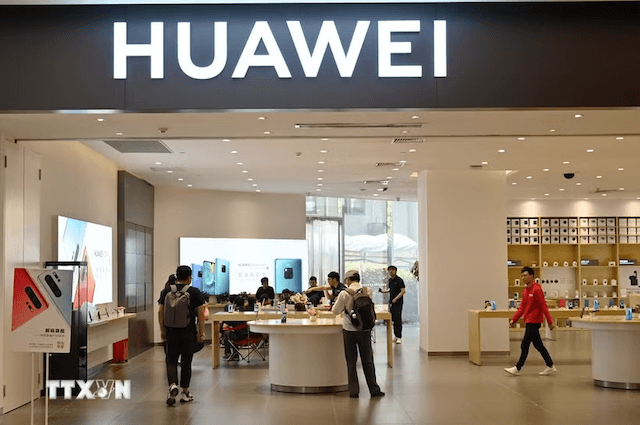
An image caption: A Huawei store in a shopping mall in Shanghai, China - Photo: AFP/TTXVN
Since 2019, the US government under President Donald Trump has banned Huawei from participating in domestic telecom networks and restricted access to US technology due to security concerns. These measures have significantly impacted the company’s operations, with revenue in 2019-2021 down about 25%.
European countries have taken different approaches. Some, including the UK, Sweden and France, have restricted Huawei equipment in 5G networks. Others, such as Germany, Italy and Spain, maintain some level of cooperation, citing economic interests and ties with China.
Facing the risk of exclusion, Huawei has increased investments and lobbying in Europe. This includes a planned telecom equipment manufacturing plant valued at about €300 million in Alsace, France, and expanded research activities.
However, amid mounting regulatory pressure, the company is reportedly reconsidering its investment plans.
Removing Huawei from telecom networks would pose significant cost challenges for European operators. The European Commission estimates replacement costs could reach €3.4-4.3 billion per year over three years.
Some operators, including Orange, say actual costs could be higher. There are also concerns that narrowing the supplier base mainly to Ericsson and Nokia could reduce competition and push up equipment prices.