•
•
•
•
•
•
•
•
•
•
•
•
•
•
•
•
•
•
•
•
•
•
•
•
•
•
•
•
•
•
•
•
•


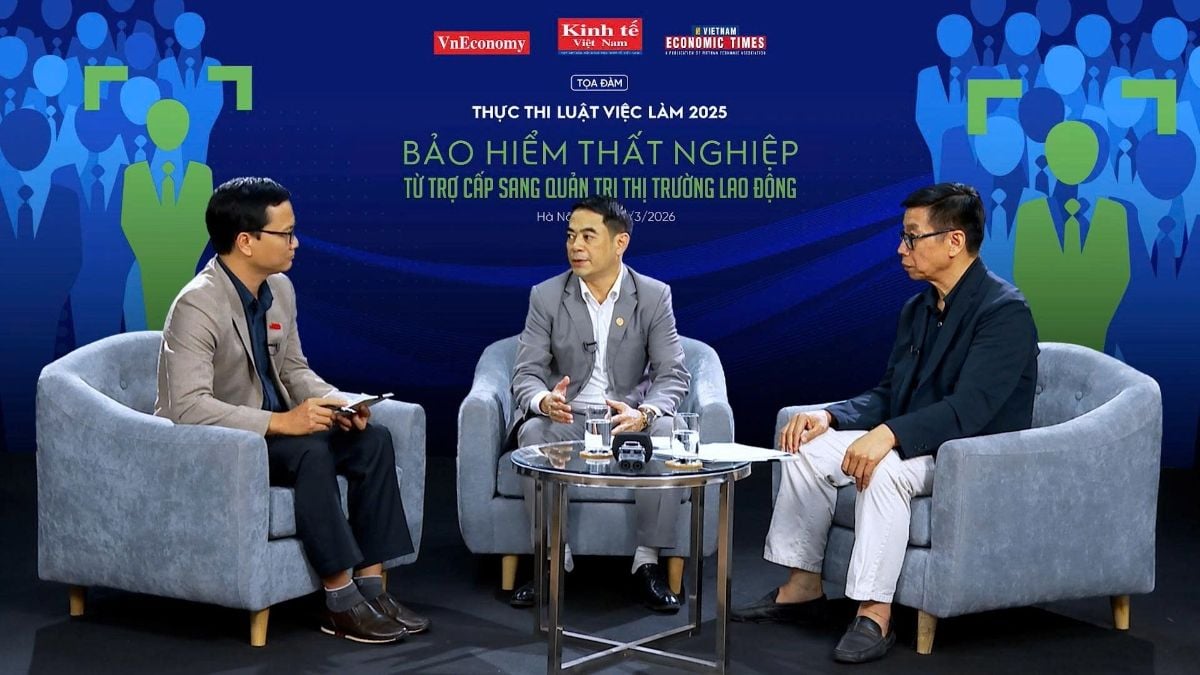
Experts at a thematic seminar on the implementation of Vietnam’s 2025 Employment Law discussed how the updated unemployment insurance policy is designed to better support workers and strengthen labor-market governance. The seminar, organized by Vietnam Economy/VNEconomy magazine on the morning of March 27, 2026, focused on new coverage rules, contribution mechanisms, eligibility for benefits, and the operational steps needed to put the policy into practice.
Mr. Tran Tuan Tu, Head of the Unemployment Insurance Department under the Employment Agency (Ministry of Internal Affairs), said the Employment Law 2025 takes effect on January 1, 2026 and addresses shortcomings of the previous framework.
A key change is the expansion of mandatory unemployment insurance coverage. Under the 2013 Employment Law, unemployment insurance applied only to fixed-term employment contracts of at least three months. From January 1, 2026, workers on fixed-term contracts with a duration of at least one month will be covered.
The law also clarifies that coverage applies even if the parties use a different label for the job, as long as the arrangement reflects employment with pay, salary, and management, operation, and supervision by one party.
In addition, the law codifies unemployment insurance participation for managerial positions within enterprises, cooperatives, and individuals who represent enterprise capital and receive salaries, ensuring they are included in the unemployment insurance system in case of risk.
The law further assigns the Standing Committee of the National Assembly the role of deciding participation for other groups that have employment and stable income based on government proposals, creating a mechanism to continue expanding coverage in the future.
Contribution levels under the new law are designed to be more flexible. Employees contribute up to a maximum of 1% of monthly wages, while employers contribute up to 1% of the payroll for participating employees. The State supports up to 1% of the payroll contributed by employees, with the central budget responsible for this support.
Speakers noted that the maximum contribution rate of 1% and a government directive to provide detailed guidance—rather than a rigid ceiling—are intended to preserve policy flexibility and allow operational discretion, particularly during natural disasters, pandemics, crises, economic downturns, and potential surpluses in the Unemployment Insurance Fund.
The policy also broadens the conditions for support to workers. Instead of focusing only on training courses, the new framework emphasizes training, upskilling, and improving vocational skills to help both unemployed workers and workers at risk maintain employment and re-enter the labor market.
Eligibility for unemployment benefits is also strengthened through greater use of information technology. The policy enables workers to file applications and access benefits more flexibly in the context of digital transformation and the nationwide public service ecosystem.
Experts said the new law addresses issues seen under earlier rules, but effective implementation will require coordinated action. Mr. Tran Tuan Tu described the policy as oriented toward greater proactiveness and anchored in risk-sharing: many participate in unemployment insurance, but only a subset will receive benefits.
He explained that unemployment benefits are temporary financial support provided for a defined period to help workers stabilize their lives while seeking new employment and re-entering the market.
To avoid a purely passive approach, the law expands training and skill upgrading to meet changing market demands. The employment service system is expected to strengthen its role in connecting labor supply and demand so workers can access suitable jobs faster.
Mr. Tu added that the law includes multiple supporting components for implementing unemployment insurance, and that comprehensive solutions—covering labor-market governance, employment services, supply-demand matching, and market information—should be aligned with targeted groups and unemployment insurance to make the policy effective.
Le Quang Trung emphasized the importance of labor-market forecasting to guide training and human-resource utilization decisions. He said forecasting should cover the short to mid-term and eventually extend to the long term to reflect the rapid and often unpredictable changes in the labor market.
To bring the law into effect, officials called for clear institutional frameworks, transparent implementation processes, and simplified documentary requirements. For workers, speakers highlighted the need for a mindset shift to avoid over-reliance on unemployment insurance, noting it is a short-term policy.
They also recommended continuing to refine institutional aspects, clarify guidelines, and improve information dissemination to all groups through accessible channels aligned with individuals’ rights and benefits.
Preparation for implementation—resources, personnel, information technology, and a national IT-enabled declaration system—was also cited as a way to facilitate administration and reduce bureaucratic procedures.
Following the seminar, live coverage and related updates were scheduled in subsequent sessions and articles.



Premium gym chains are entering a “golden era” that is ending or already in decline, as rising operating costs collide with shifting consumer preferences toward more flexible, community-based ways to exercise. Long-term memberships are shrinking, margins are pressured by higher rents and facility expenses, and competition from smaller, more personalized…