•
•
•
•
•
•
•
•
•
•
•
•
•
•
•
•
•
•
•
•
•
•
•
•
•
•
•
•
•
•
•
•
•


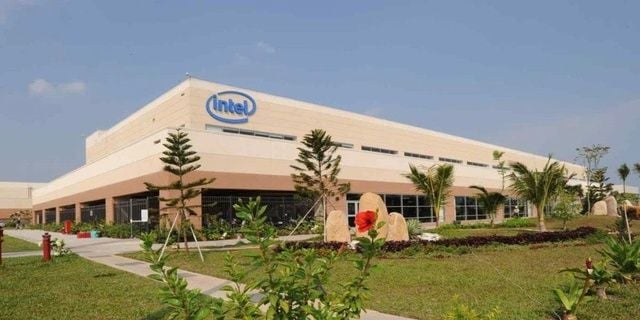
On May 5, Intel said it had completed the handover of 31 chip assembly and testing devices to Ho Chi Minh City's High-Tech Park (SHTP) and Hanoi National University. These are chip manufacturing devices repurposed for training and semiconductor research. Intel said it was the first company to carry out this conversion in Vietnam, under a cooperation agreement signed with SHTP. The event comes as Vietnam's semiconductor industry is growing rapidly. In two years, the number of integrated circuit design firms rose from about 40 to nearly 60. In packaging, testing and production, the number of firms also rose from 7 to 15. Currently, Vietnam has about 15,000 semiconductor engineers, including about 7,000 design engineers and 7,000–8,000 engineers in other stages, not counting about 10,000 technicians. However, workforce demand in the coming years is forecast to rise sharply as global tech giants continue to expand investment in Vietnam. Mr. Kenneth Tse, Vice President and General Manager of Intel Products Vietnam, said that Vietnam is emerging as an 'important link' in the global semiconductor value chain. He noted that donating the devices will help training facilities implement hands-on programs aligned with real needs, while accelerating the readiness of the workforce to support Vietnam's long-term semiconductor development strategy. Notably, Ho Chi Minh City's High-Tech Park currently hosts Intel's largest chip-assembly and testing plant, accounting for more than 50% of the company's output and employing more than 6,000 jobs. As of Q2 2025, the plant in Vietnam had exported more than 4 billion products, with the cumulative export value surpassing USD 100 billion. Beyond scale, IPV is continuing to transfer technology to produce server chips, applying the most advanced 18A technology, and expanding cooperation into innovation, AI and renewable energy. Ho Chi Minh City's High-Tech Park is located in Thu Duc. According to the city’s People’s Committee, from agricultural land with little development, after 20 years Thu Duc has become a hub for research and development in science and technology and is one of three pillars of the East City Innovation Cluster. Today, the infrastructure and location of the High-Tech Park in Ho Chi Minh City are connected to Beltways 2 and 3 as they come online; the modern transport system connects directly to the metro, Long Thanh International Airport, Tan Son Nhat International Airport, and major ports such as Cat Lai and Hiệp Phước. The Park also connects with 40 industrial zones and export processing zones in Ho Chi Minh City and nearby provinces such as Binh Duong, Dong Nai, and Long An. Recently, Intel reiterated its commitment to expanding investment, training human resources and supporting the development of the semiconductor ecosystem. On May 8, Deputy Minister of Science and Technology Bui Hoang Phuong met with Intel Group, reaffirming that the ministry will continue to facilitate for Intel and supply chain companies to expand high-tech investment in Vietnam, contributing to making Vietnam a key link in the global semiconductor value chain. In the meeting, both sides reaffirmed their determination to make Vietnam a key node in the global semiconductor value chain and will continue to deepen cooperation in the new development phase.
Premium gym chains are entering a “golden era” that is ending or already in decline, as rising operating costs collide with shifting consumer preferences toward more flexible, community-based ways to exercise. Long-term memberships are shrinking, margins are pressured by higher rents and facility expenses, and competition from smaller, more personalized…