•
•
•
•
•
•
•
•
•
•
•
•
•
•
•
•
•
•
•
•
•
•
•
•
•
•
•
•
•
•
•
•
•


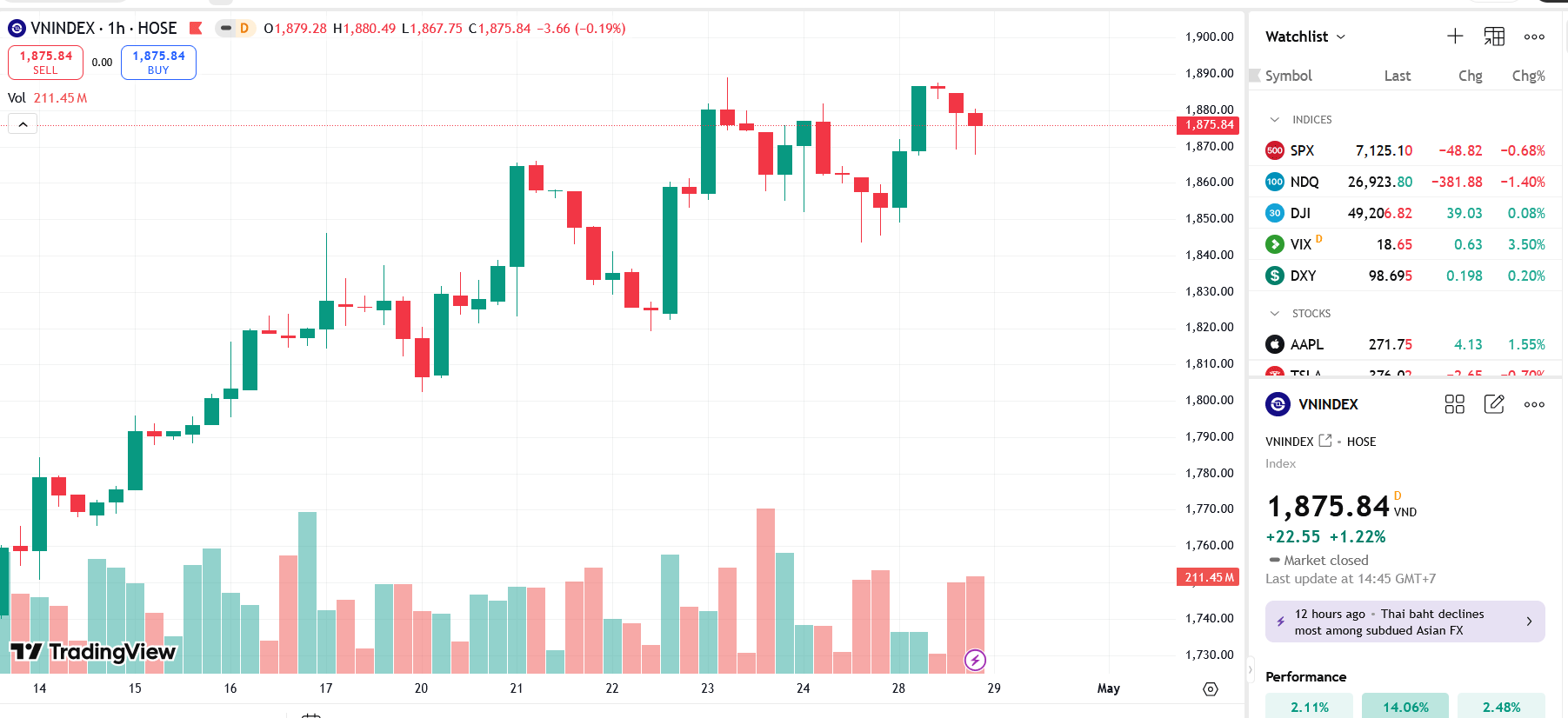
Vietnam’s VN-Index gained for the session, closing higher as liquidity was little changed from the previous day and trading continued to differentiate strongly across sectors, with activity concentrated in large-cap stocks.
At the close on April 28, the VN-Index rose 22.55 points, or 1.22%, to 1,875.84. By contrast, the HNX-Index fell 2.51 points, or 1%, to 249.44.
Multiple brokerage notes pointed to support from a group of large-cap stocks as the key factor behind the VN-Index’s rise. With this support, the market could remain elevated into the session’s close.
However, the index is trading near the high area around the old peak, which can increase volatility. Risks may rise if negative information emerges. In addition, ETF activity—occurring amid cautious domestic liquidity—was cited as a potential source of further volatility.
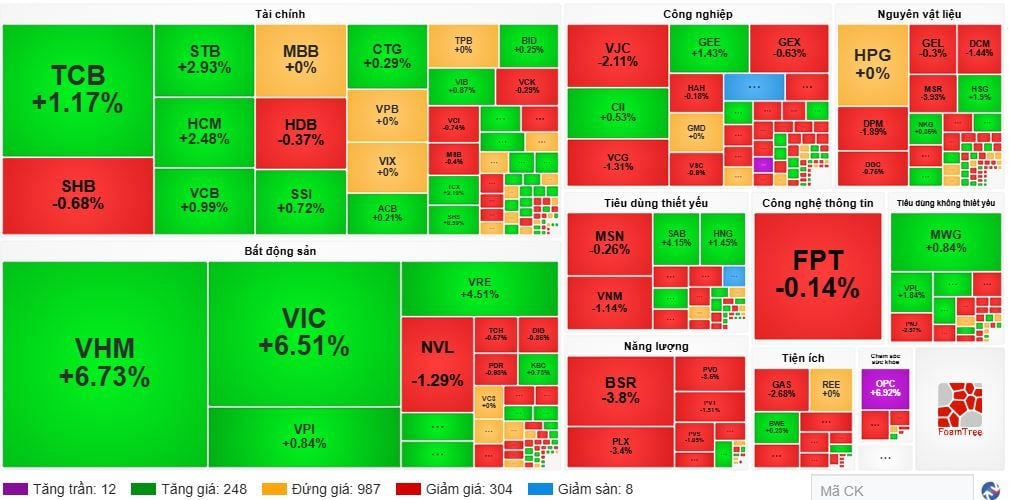
From BSC, the VN-Index rose nearly 23 points and closed at 1,875.84. Market breadth leaned negative, with 11 of 18 sectors down. The Oil & Gas sector declined the most, followed by Utilities. Real estate rose more than 5%, while Retail also increased.
Foreign investors sold net across all three exchanges. While money flowing into other sectors began to spread, overall activity still appeared to depend on a specific group of stocks rather than broad-based consensus, keeping sentiment cautious.
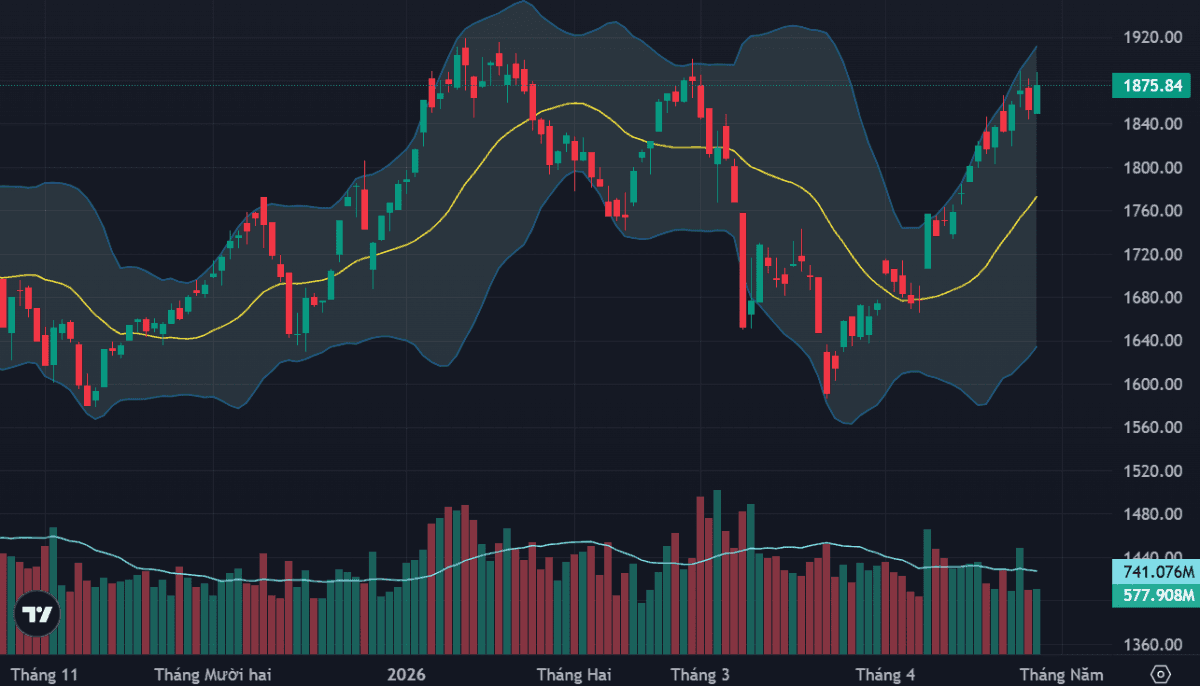
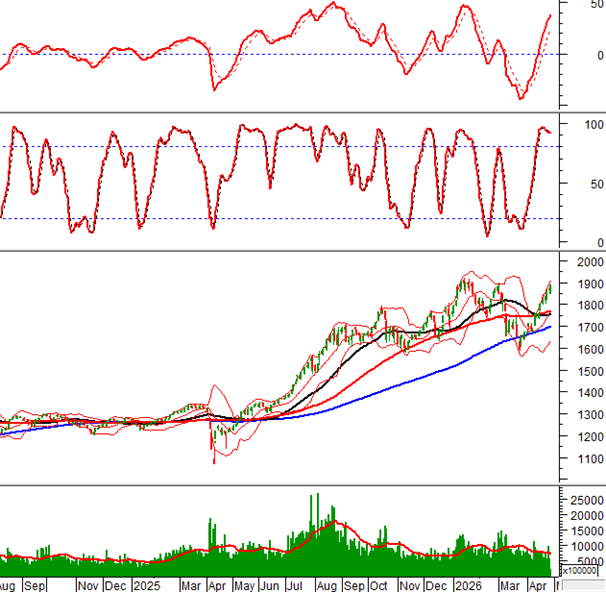
SHS said the short-term trend remains upward, supported around 1,820. The index is testing the peak region of 1,890–1,900 (seen in late February and early March 2026) before the market fell due to the Middle East conflict. SHS also noted that indicators remain near-term overbought, and rising prices may face selling pressure near 1,890 for three consecutive sessions.
SHS further highlighted that the VN-Index has been driven by VinGroup, rising from around 1,600 to the recent peak before the market fell. The brokerage said differentiation remains high, with breadth deteriorating as most sectors underperform the index while VinGroup outperforms. It advised maintaining a safe equity allocation and monitoring index movements closely, avoiding new purchases in the near term.
VCBS reported that the VN-Index closed with a green candlestick and reversed the prior session’s decline, supported by persistent demand in large-cap stocks. On the daily chart, RSI and MACD both pointed upward, indicating upside momentum, though RSI is approaching overbought territory, which may increase volatility. VCBS expected the index to consolidate in the short term before targeting the nearest peak around 1,920.
On the intraday chart, VCBS said the index showed signs of a pullback near the upper Bollinger Band. It added that RSI and MACD weakened, suggesting the pace of the uptrend could slow and volatility may appear in upcoming sessions.
From SSI, the VN-Index turned positive again, but breadth remained limited. The near-term objective is around 1,880–1,920, with support around 1,840–1,850. SSI said retesting the old peak is likely to come with volatility and would require clearer improvements in breadth and liquidity to sustain the trend.
With the index under selling pressure near 1,890 for three consecutive sessions, several brokerages emphasized risk management. Investors were advised to adjust portfolio structure toward an appropriate cash balance to avoid margin risk and potential negative information during the holiday period.
For existing positions, guidance included taking profits when prices meet expectations or exiting if prices breach trailing stops. Given the market’s reliance on stock-specific dynamics and limited breadth, investors were also advised to maintain cautious trading sentiment and keep risk controls in place.
One note from VCBS added that, despite the meaningful gain, liquidity was marginally unchanged and money flow remained highly differentiated across sectors with a focus on large-cap stocks. It recommended temporarily reducing leverage or pursuing short-term trading to lower the cost basis on existing holdings, prioritizing sectors with strong cash flow such as banks, real estate, and retail.



Premium gym chains are entering a “golden era” that is ending or already in decline, as rising operating costs collide with shifting consumer preferences toward more flexible, community-based ways to exercise. Long-term memberships are shrinking, margins are pressured by higher rents and facility expenses, and competition from smaller, more personalized…