•
•
•
•
•
•
•
•
•
•
•
•
•
•
•
•
•
•
•
•
•
•
•
•
•
•
•
•
•
•
•
•
•


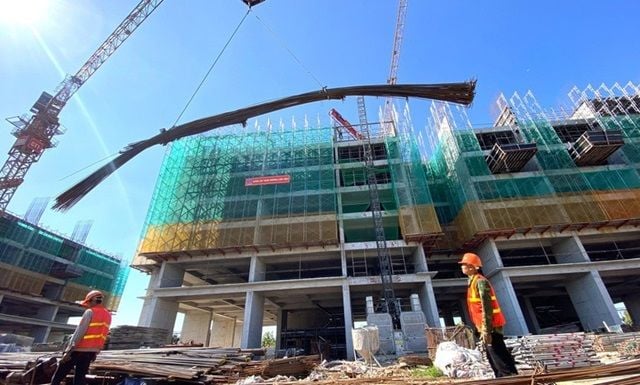
The Ministry of Construction has proposed a package of measures to reduce and simplify administrative procedures in the construction sector, applying a single-procedure principle from project preparation through the start of construction. Under the proposal, projects whose feasibility study reports have been appraised by the competent construction authority would be exempt from a separate construction permit.
In Document No. 6854/BXD-VP sent to the Ministry of Justice on the continued review to cut and simplify administrative procedures, the Ministry of Construction said the reform is directed under Prime Minister’s Office Document No. 3905/VPCP-CDS dated May 2, 2026.
At present, construction licensing procedures are carried out under the 2025 Construction Law, the 2014 Construction Law (amended in 2020), and Decree No. 175/2024/NĐ-CP.
The Ministry’s review found that while many components of dossiers have been streamlined, overlap remains among base design appraisal, detailed design after base design, and licensing paperwork. Processing times currently range from 15 to 20 days depending on project type, and residents still have to submit two sets of paper documents.
The Ministry said it has implemented measures to cut procedures in line with Government Decree No. 78/CĐ-TTg dated May 29, 2025, and concretized in the Construction Law 2025.
As part of the reform, the Ministry reported that more objects exempt from construction permits have been added and clarified, including specialized construction works, defense and security facilities, airports and aviation safety facilities, and projects within the scope of electrical infrastructure governed by sector-specific laws.
A central principle is that “from the project preparation stage to the start of construction, each project must undergo only one administrative procedure.” Accordingly, projects whose feasibility reports have been appraised by the construction authority would be exempt from construction permits. Projects not subject to appraisal would proceed with licensing.
Under this approach, remaining applicants for construction permits are mainly single-family houses in certain urban areas, areas with planning and architectural control requirements, and a limited number of Category III and IV projects that are not subject to appraisal but still require licensing.
The Ministry proposed changes to detail a decree on construction management, to be submitted to the Government on May 6, 2026. The proposal would require eligible subjects to carry out procedures fully online, with applicants submitting one electronic dossier instead of two paper dossiers. Authorities would also not require duplication of documents already stored in the national database, such as land-use rights documents.
Beyond building licensing, the Ministry proposed additional reductions, including limiting the groups required to have feasibility study appraisal, reducing the content of feasibility study appraisal, and simplifying submission materials for appraisal. It also proposes shortening appraisal times.
The proposal further recommends eliminating the requirement to appraise design and implementation after the feasibility study, removing the requirement for organizations to obtain a construction-activity qualification certificate, and shifting to a model where enterprises self-certify their construction capacity.
A key proposal is to reduce license processing time by 50%, from the current 15–20 days to 7–10 working days. For single-family houses, the proposed timeline is 7 days; for other structures, up to 10 days.
The decree would also clarify the licensing authority for each body—such as the commune-level People’s Committee, industrial park authorities, high-tech zones, economic zones, and the Department of Construction—to avoid overlap and shorten processing times.
The Ministry referenced a Prime Minister’s proposal (No. 36/TTr-BXD dated May 6, 2026) to the Government regarding the detail decree, aimed at continuing administrative reform, improving the investment and business environment, and reducing compliance costs for people and enterprises.
The Ministry emphasized standardization and digitalization across the entire process, interconnecting and sharing data among agencies, and shortening both time and cost. It said these changes are intended to remove institutional bottlenecks and create a more open regulatory environment for construction investment in the new phase.
Premium gym chains are entering a “golden era” that is ending or already in decline, as rising operating costs collide with shifting consumer preferences toward more flexible, community-based ways to exercise. Long-term memberships are shrinking, margins are pressured by higher rents and facility expenses, and competition from smaller, more personalized…