•
•
•
•
•
•
•
•
•
•
•
•
•
•
•
•
•
•
•
•
•
•
•
•
•
•
•
•
•
•
•
•
•


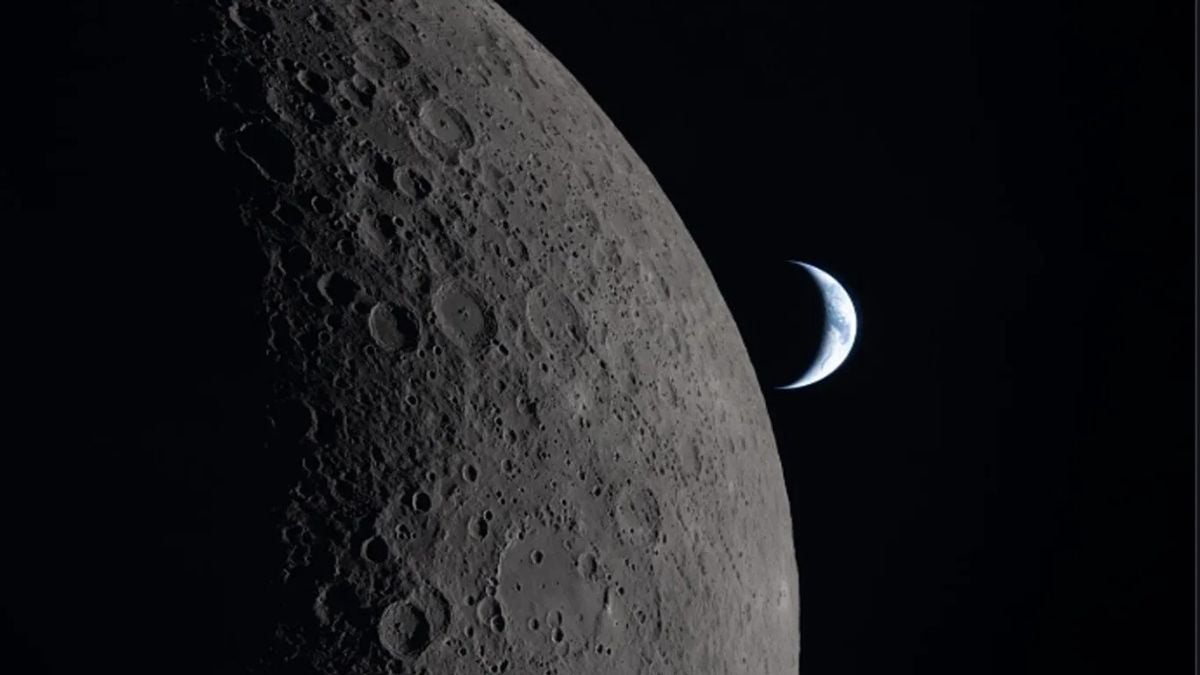
Nuclear energy on the Moon is being positioned as a way to address key limitations of solar power, particularly the long lunar night and the difficulty of sustaining power for extended periods. As space missions expand in scale and duration, energy availability is becoming central to enabling a sustained human presence beyond Earth, from the Moon to Mars.
One of the main challenges for long-term human presence on the Moon is the harsh day-night cycle. Each “Moon night” lasts up to 14 Earth days, during which solar panels become nearly unusable. In addition, current storage batteries are not able to provide enough power to run an entire base through cold and dark conditions.
Because of these constraints, NASA is shifting toward nuclear energy, which can provide continuous power regardless of light or environmental conditions.
Under the Fission Surface Power Project, NASA aims to place 40–100 kW nuclear reactors on the Moon by 2030. A mid-range reactor is planned to be tested in orbit in 2028.
The system is designed to operate autonomously, requiring minimal maintenance from astronauts. It is also intended to be expanded modularly to support multiple needs, including living areas, research activities, and resource extraction.
Unlike solar energy, a nuclear reactor can provide stable electricity for years through fission. This is particularly relevant for regions that remain in shadow, such as the Moon’s South Pole, where large water ice deposits are believed to exist.
If developed as planned, the power system could support drinking water production, fuel production, and life-support activities. However, mining operations would require a power source that does not depend on sunlight.
NASA’s nuclear effort is described as part of the Artemis program’s long-term strategy to return humans to the Moon and establish a permanent presence by the early 2030s. The program includes milestones: Artemis III, expected in 2027, to test key technologies, and Artemis IV in 2028, aiming to land at the South Pole.
A stable lunar outpost is also framed as a “springboard” for crewed missions to Mars. Beyond technology, the initiative is presented as reflecting intensifying competition between the US, China, and Russia in space. The ability to master off-Earth nuclear energy technology is described as important for maintaining leadership and setting standards for space resource exploitation, an area where the Outer Space Treaty is noted as leaving regulatory gaps.
In the longer run, deploying lunar nuclear power could support a broader “space economy” by enabling mining of resources such as water ice to produce fuel and help sustain longer journeys across the Solar System. If successful, the approach would represent a shift from isolated exploratory missions toward sustained human presence beyond Earth, while also advancing space technology and resource competition.
Premium gym chains are entering a “golden era” that is ending or already in decline, as rising operating costs collide with shifting consumer preferences toward more flexible, community-based ways to exercise. Long-term memberships are shrinking, margins are pressured by higher rents and facility expenses, and competition from smaller, more personalized…