Navitas trades near $17 after a sharp AI infrastructure rally. Its 800V-to-6V board targets AI data-centre power bottlenecks. Analyst targets have jumped, but Wall Street remains divided.
Navitas Semiconductor makes power semiconductors. As AI data centres scale, enormous amounts of electricity must be converted, stepped down and delivered efficiently inside server racks. If too much energy is lost along the way, data centres become more expensive, hotter and harder to scale.
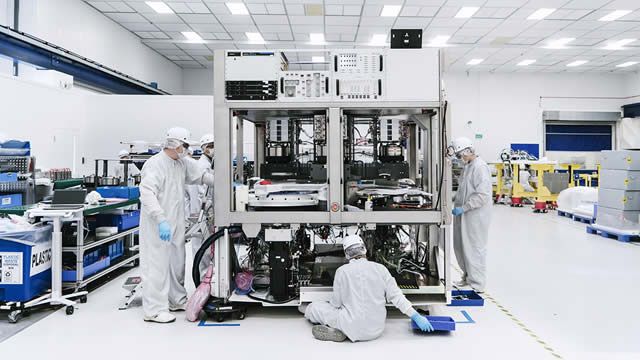
In March, the company introduced an 800V-to-6V DC-DC power delivery board, which converts very high-voltage power down to a level that can be used closer to the chips inside AI servers. The key point is that Navitas says it can do this in one stage, removing the traditional 48V intermediate conversion step. That matters because every efficiency gain counts when AI data centres are trying to feed more power into systems without wasting energy, space or cooling capacity.
That is also where the Nvidia comparison becomes more useful as Navitas is not competing with Nvidia, and it is certainly not a bigger AI business. Nvidia remains the centre of the AI chip universe, with a market value above $4.7 trillion, while Navitas is still a small-cap name worth roughly $4.3 billion. But in stock-market terms, Navitas has done something unusual in 2026: it has outpaced Nvidia while riding the same AI infrastructure wave. Navitas was up roughly 148% year-to-date as of June 29, far ahead of Nvidia’s roughly 8% to 12% gain over the same broad period.
The stock traces its strength to Navitas’ positioning at the intersection of AI infrastructure and energy efficiency. A company that can improve conversion efficiency inside AI racks has a clear investor narrative, even if the stock remains volatile and the valuation is rich relative to revenue.
Analysts have adjusted outlooks upward, but the overall view remains mixed. The stock trades at a substantial premium to historical valuations, reflecting expectations for AI data-centre demand. While targets have risen, the consensus price targets from some trackers still sit below the current share price, underscoring a tension between upside potential and the premium valuation.