•
•
•
•
•
•
•
•
•
•
•
•
•
•
•
•
•
•
•
•
•
•
•
•
•
•
•
•
•
•
•
•
•


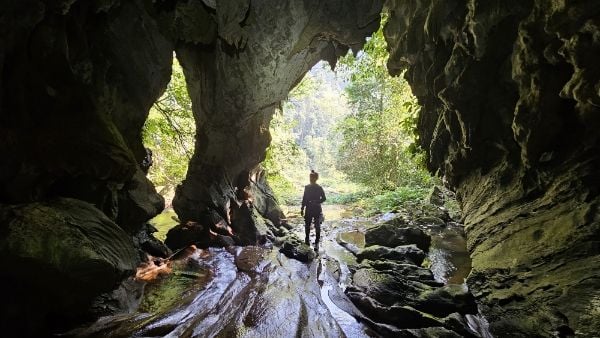
On the afternoon of March 24, the management board of Phong Nha – Kẻ Bàng National Park announced the results of a cave survey conducted from March 21 to April 11, recording 26 new caves and numerous findings of scientific value with potential for tourism development.
The survey involved ten international experts and many Vietnamese researchers. It was carried out across the communes of Phong Nha, Thượng Trạch, Kim Phú, Kim Điền, Tân Thành, Tuyên Lâm and Trường Sơn. The total mapped length of the caves reached 13,643 meters.
Among the discoveries, Thiên Cung Cave, with a length of 4,206 meters, was identified as the largest cave in the survey. The cave is described as large-scale, with a rich stalactite system. It develops nearly parallel to the Dark Cave system and has a hydrological connection to the Chày River. The cave entrance has also been identified as an ancient flow path of the Dark Cave river, with special geological and geomorphological significance.
Cha Nghéo Cave, located in Kim Điền commune, is 583 meters long. It features a deep vertical-sink entrance, waterfalls and a complex structure that leads to an underground stream. Initial assessments indicate the cave is still developing and may form a large cave system in the region.
Other recorded caves include Nước Lặn (2,721 m), noted for seasonal flow, and Má Dơm (1,257 m), with a depth of 102 meters below the surface.
In Kim Phú commune, the team discovered a chain of three caves with an underground stream behind Rục Mòn Cave, including an upper cave assessed to have potential for adventure tourism.
In the Trường Sơn area, the Sơn Bồi cluster consists of four small caves, three of which have been opened to tourism. Chạc Đen Cave near Route 20 is described as a deep vertical shaft of about 20 meters, leading to a large corridor. It could be a high branch of the Phong Nha cave system, suggesting ongoing potential for length expansion.
The survey results indicate that the cave system in the area is developing strongly along karst topography, with both vertical caves and large horizontal cave systems coexisting.
According to Phạm Hồng Thái, Director of the Phong Nha – Kẻ Bàng National Park Management Board, the 2026 results add important data to the cave system. The new discoveries continue to affirm the global value of the area’s geology and geomorphology.
The caves provide not only scientific value but also opportunities for conservation, research and sustainable tourism development, supporting efforts to further elevate the status of the Phong Nha – Kẻ Bàng World Natural Heritage site.
Premium gym chains are entering a “golden era” that is ending or already in decline, as rising operating costs collide with shifting consumer preferences toward more flexible, community-based ways to exercise. Long-term memberships are shrinking, margins are pressured by higher rents and facility expenses, and competition from smaller, more personalized…