•
•
•
•
•
•
•
•
•
•
•
•
•
•
•
•
•
•
•
•
•
•
•
•
•
•
•
•
•
•
•
•
•


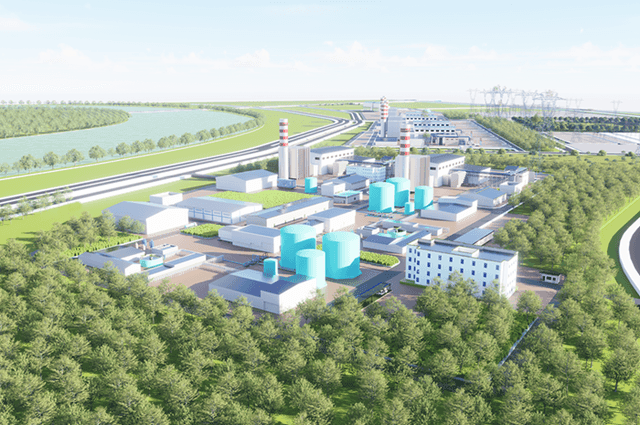
Policy liberalization has triggered a strong wave of investment in Vietnam’s electricity sector, with more established companies entering the market through large-scale projects. The government’s approval of adjustments to Power Plan VIII, together with Politburo Resolution 70 on ensuring national energy security through 2030 with a vision to 2045, points to the need to restructure the electricity sector and develop a transparent, competitive and efficient electricity market—creating conditions for wider participation.
In January 2026, the Gia Lai provincial People’s Committee issued two decisions approving the results of the investor interest invitation for the Vân Canh 1 and Vân Canh 2 wind power projects. Saigon – Bac Giang Industrial Park Joint Stock Company (SBG) was named as the investor meeting the requirements. Previously, SBG was the sole investor to submit registration for the two projects.
Vân Canh 1 has total investment of nearly VND 6,905 billion, covering about 56 ha in Canh Liên commune, Gia Lai. The project is designed with 160 MW capacity and is expected to generate about 502 million kWh/year.
Vân Canh 2 has investment of over VND 7,771 billion, covering about 62 ha in Van Canh and Canh Liên, Gia Lai. The project is designed with 180 MW capacity and is expected to generate about 623.2 million kWh/year.
SBG is a subsidiary of Kinh Bac Urban Development Corp. – JSC (KBC). As of 31 December 2025, KBC held 96.46% equity interest and 100% voting rights in SBG. SBG was founded in 2005 with charter capital of VND 3,400 billion. The company is also the investor of Quang Chau Industrial Park in Bac Ninh (formerly Bac Giang), with an area of 516 ha.
With SBG acting as investor for the two wind farms, KBC’s move signals a foray into renewable energy under the group’s leadership led by Chairman Dang Thanh Tam.
In March 2025, VinEnergo Energy JSC was established, marking expansion into renewable energy within the VinGroup ecosystem. As of October 2025, VinEnergo had charter capital of VND 28,335 billion, of which 44.59% (equivalent to VND 12,133.9 billion) was contributed in cash and 55.41% (equivalent to VND 15,701.1 billion) came from other assets.
By December 2025, VinEnergo changed the CEO and legal representative position from Ms. Nguyen Thanh Thúy (born 1974) to Mr. Nguyen Anh Khoa (born 1989). The company also adjusted its main business line from electricity production to generation from renewable energy. It additionally expanded into activities including wholesale of machinery and equipment and spare parts (code 4659), repair and maintenance of electrical equipment (code 3314), and retail of metal products, paints, glass, building materials, and installation of other building equipment (code 4752).
In early February 2026, VinEnergo was selected by Gia Lai Province to implement the Hon Trâu wind project Phase 1. The project has designed capacity of up to 750 MW and expected annual electricity production of about 2.8 billion kWh/year, connected to the national grid via a 220kV line. Total investment is nearly VND 48,400 billion.
The project includes a 220kV double-circuit line from Hon Trâu 1 Substation to Phù Mỹ Substation, and the construction of a new 220kV double-circuit line from Hon Trâu 1 (HT 1B) to Nhơn Hội Substation.
Under the decision, the plant will be located in two areas: HT 1A for offshore wind turbines, with substations and interconnections to the national grid in Phù Mỹ; and HT 1B for offshore wind turbines in Phù Cát, with interconnection in the Nhơn Hội economic zone covering Phù Cát, Tuy Phước, and Quy Nhơn. The sea (water) area is about 32.01 ha, and the land area is about 17.61 ha.
The province also requires investors not to transfer the project or ownership in any form without written approval; violations could result in termination with no compensation.
Within the Hoa Phát ecosystem, Hoa Phat Energy JSC formally added new business lines in September 2025. Notably, it added the electricity transmission and distribution line (code 3512) with full details from transmission to distribution to selling electricity directly to end users. The company also registered additional lines, including retail sale of other non-metallic construction materials (code 4799), including retail sale of electricity.
This change may indicate deeper participation in the electricity market, particularly in distribution.
Hoa Phat Energy JSC was established in 2007 and is headquartered in Hai Phong. As of October 2025, the company had 767 employees, led by Do Thi Thao as CEO and legal representative.
Hoa Phat already has an internal electricity production base. The group’s iron-and-steel complexes are equipped with modern lines and equipment designed to optimize production and recover heat and byproducts to generate electricity. The thermal power plant at the Hoa Phat Dung Quat steel complex (Quảng Ngãi) and the Haiphong (formerly Hai Duong) facilities help the company nearly self-supply electricity for steel production. The plant is developed and operated by Hoa Phat Dung Quat Steel Co., Ltd.
Since the first turbine began operating in July 2019, electricity output from the thermal plant at the Hoa Phat Dung Quat complex has risen steadily. By the end of 2025, output exceeded 3.3 billion kWh, meeting more than 90% of the electricity needs for steel production.
According to releases, as of 31/12/2025, the thermal plant—Hoa Phat Dung Quat—had accumulated electricity output of about 13 billion kWh after eight years of operation. At current electricity prices, this amount is worth over VND 23,400 billion.





Premium gym chains are entering a “golden era” that is ending or already in decline, as rising operating costs collide with shifting consumer preferences toward more flexible, community-based ways to exercise. Long-term memberships are shrinking, margins are pressured by higher rents and facility expenses, and competition from smaller, more personalized…


