•
•
•
•
•
•
•
•
•
•
•
•
•
•
•
•
•
•
•
•
•
•
•
•
•
•
•
•
•
•
•
•
•



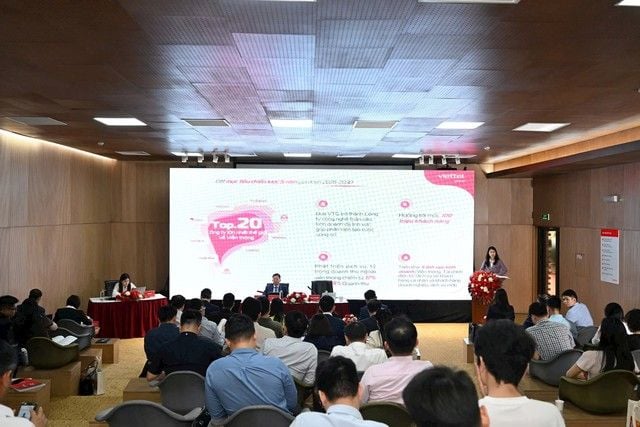
At SSI’s annual general meeting this afternoon, more than 1,550 shareholders attended—an attendance record for the company. Seats were added in the main meeting room at the Independence Palace, but dozens of shareholders still stood in aisles and outside while waiting for the question-and-answer session with Chairman Nguyễn Duy Hưng.
Over roughly an hour of discussion, shareholders asked more than 20 questions, mainly about why SSI did not pursue a digital asset exchange and about the competition for brokerage market share. Several long-term shareholders urged the chairman to find solutions to lift SSI’s stock price by several multiples, citing examples such as Vingroup.
On the question of why SSI was not included among the five companies eligible to pilot a crypto exchange, Mr. Nguyễn Duy Hưng said the screening and licensing process today is materially different from a year ago. He added that the more the company investigates, the more it sees no clear opportunity or a safe, efficient operating model, and SSI cannot yet visualize what a development model for the field would look like.
“That is why SSI proactively did not complete the dossier to proceed. However, this does not mean we stop paying attention to crypto assets,” Mr. Hưng said. He affirmed that SSI will participate when a clear opportunity emerges, to avoid falling behind competitors.
Mr. Hưng also noted that his earlier view—shared by many observers—that digital assets did not offer value has changed. He said that as some governments consider adding digital currencies to sovereign wealth reserves similar to gold, this is an inevitable trend that could contribute significantly to the economy and cannot be resisted.
SSI previously sent staff to work with the Ministry of Finance to study establishing a crypto asset exchange. Mr. Hưng described this as an initial learning step, with the decision on whether to participate and the level of involvement to be determined later. He said the company’s priority is to understand where financial value lies and where the risks are before deciding when to enter.
The competition for brokerage market share was another major topic. Shareholders pointed to SSI’s share in the stock brokerage market, which in the first quarter fell slightly to 11.1% from late 2025. At least four shareholders asked the chairman and management about plans to regain market share from rivals.
Mr. Hưng said SSI does not compete for market share through fees, but instead focuses on service quality. He argued that fluctuations—such as the rise over five quarters with one quarter of decline—do not necessarily indicate a trend of losing market share to other firms.
Mr. Bùi Thế Tân, SSI’s Director of Retail, said the company is maintaining traditional channels while accelerating online channels. He cited an example of a brokerage team “livestreaming on social networks from morning to night” to reach mass-market customers. For organized brokerage market share, SSI estimates it holds about 30%, leading the market, and aims to continue growing around 20%.
SSI set this year’s targets for revenue of 15,660 billion dong and pre-tax profit of 5,838 billion dong, up 19% and 15% respectively from last year. Some shareholders said the growth rate is modest given expectations that the stock market could surge when FTSE Russell confirms an upgrade by the end of September 2026.
CEO Nguyễn Đức Thông responded that while the growth rate may not be large, the absolute volatility is significant—especially because it follows the record revenue and profit achieved last year. In the first quarter, SSI reported revenue of 3,295 billion dong and pre-tax profit of 1,593 billion dong, placing it among the leading securities firms.
Management also said margin debt outstanding has at times reached 43,000 billion dong, and SSI expects to disburse at least 45,000 billion dong this year. It said funding to support margin is manageable due to relationships with many domestic banks and foreign financial institutions.
At the meeting, SSI approved a cash dividend of 10% and a stock dividend of 20%. The cash dividend marks the 20th consecutive year SSI has paid cash dividends, a rare record in Vietnam, where the stock market has operated for just over 25 years.

Premium gym chains are entering a “golden era” that is ending or already in decline, as rising operating costs collide with shifting consumer preferences toward more flexible, community-based ways to exercise. Long-term memberships are shrinking, margins are pressured by higher rents and facility expenses, and competition from smaller, more personalized…