•
•
•
•
•
•
•
•
•
•
•
•
•
•
•
•
•
•
•
•
•
•
•
•
•
•
•
•
•
•
•
•
•
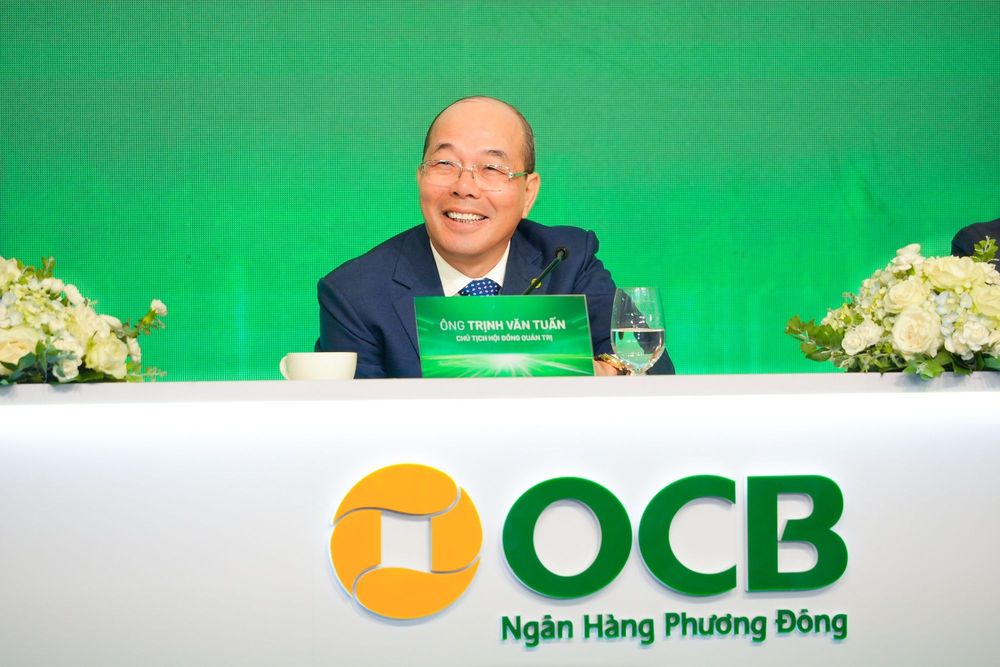
At the 2026 annual general meeting of Orient Commercial Joint Stock Bank (OCB) on April 15, many shareholders raised concerns that the bank’s share price has traded at a low level compared with the broader market and the banking sector for months. At the close of trading on April 15, OCB shares were 11,500 dong per share, down 0.88% from the previous session, while the VN-Index rose by 25 points to surpass 1,800 points. The closing price marked OCB’s lowest level since July last year.
Chairman Trinh Van Tuan said OCB has maintained transparency in recording and provisioning, with reported figures reflecting the bank’s true business performance. He noted that before listing in 2021, ROE was sustained at above 20–25%, but later declined.
“OCB aims to restore growth momentum, bringing ROE back to above 15% once the issues in the recent business cycle have been resolved. I believe the stock price will improve and reflect the true value, as the asset quality of OCB is very good,” Mr. Tuan said.
For 2026, OCB targets pre-tax profit of 6.96 trillion dong, up 39% from the previous year, citing a backdrop of global economic volatility including geopolitical tensions and higher energy prices.
OCB’s CEO Pham Hong Hai said loan growth remains the main driver of profitability. In addition to traditional business lines, the bank plans to expand into agriculture, services and technology, areas it described as having substantial growth potential in 2026.
The bank said retail activities are showing signs of improvement. OCB plans to increase lending for high-yield products within an acceptable risk framework, while restructuring interest-earning assets to prioritize higher-yield loans. The goal is to improve net interest margin (NIM) and scale.
Debt management and resolution will continue to be a focus. OCB reported that in 2025, the value of debt recovery and resolution almost doubled compared with the prior year. The bank expects this trend to continue in 2026 due to tighter controls, which it said would help lower bad debt provisions and improve income.
OCB also outlined the following 2026 targets:
Bitcoin (BTC) investors who use steady dollar-cost averaging (DCA) may be underperforming versus strategies that adjust exposure to the market’s cycle, according to new research arguing that Bitcoin’s behavior differs from traditional long-duration assets.
In a report cited by Markus Thielen of 10x Research, Bitcoin’s market…