•
•
•
•
•
•
•
•
•
•
•
•
•
•
•
•
•
•
•
•
•
•
•
•
•
•
•
•
•
•
•
•
•


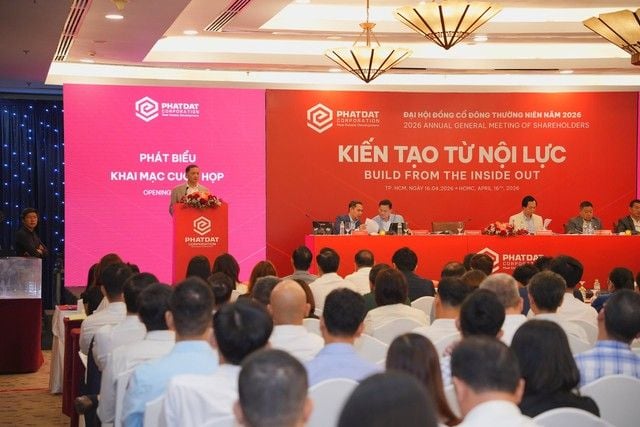
Information presented by Phat Dat’s leadership at the annual general meeting of shareholders on April 16 outlined a strategy to concentrate resources on Ho Chi Minh City, described as the company’s growth engine given a population of more than 14 million and consistently high housing demand.
Under the plan, Phat Dat will implement and launch six key projects in 2025, with expected total revenue of 35.525 trillion dong. Four of the six projects are located in Ho Chi Minh City, reflecting a strong focus on the core market.
Management highlighted that the transfer of the Thuận An 1 project to a partner, Mitsubishi (Japan), generated nearly 1.902 trillion dong in the initial tranche. The company said this is expected to act as a key catalyst by improving cash flow and creating financial room to roll out large projects in the next period.
On implementation progress, the Quy Nhon Iconic project is targeted to complete sales within 2026. The 239 August Revolution project, with total investment of about 5.5 trillion dong, is expected to complete legal work, start construction in the year, and begin sales from late 2026 to early 2027.
Other projects mentioned include Serenity Phuoc Hai, which is completing construction procedures, and La Pura, expected to be completed within 12–18 months.
For 2026, Phat Dat targets revenue of 8.83 trillion dong and after-tax profit of 868 billion dong, representing an increase of about 69% versus the prior year. The company also stated it expects to maintain a minimum dividend policy of 8%, aiming to balance growth with shareholder value.
In its longer-term outlook for 2026–2030, Phat Dat targets consolidated revenue of about 44.848 trillion dong (about 1.7 billion USD) and cumulative profit of 11.812 trillion dong. Development, according to the company, will continue to center on Ho Chi Minh City and satellite provinces including Binh Duong, Dong Nai, and Ba Ria-Vung Tau, areas benefiting from urbanization and infrastructure expansion.
By end-2025, Phat Dat’s land bank reached about 6,655 hectares, with Ho Chi Minh City and Dong Nai accounting for about 3,400 hectares. Alongside portfolio expansion, the company also plans to restructure by selling several projects in Da Nang and Quy Nhon, while strengthening collaboration with partners to optimize capital use.
At the meeting, Chairman Nguyen Van Dat said 2025 was a turning point as the company began comprehensive restructuring across governance, finance, and the investment portfolio. In an environment of rising cost of capital and interest-rate pressure, Phat Dat said it will continue project disposals to recover cash while seeking appropriate capital-raising channels.
Management emphasized that the next phase’s focus would be sustainability rather than short-term growth. With the restructuring foundation and support from shareholders and partners, Phat Dat expects to return to a more robust growth trajectory in the new real estate market cycle.






Premium gym chains are entering a “golden era” that is ending or already in decline, as rising operating costs collide with shifting consumer preferences toward more flexible, community-based ways to exercise. Long-term memberships are shrinking, margins are pressured by higher rents and facility expenses, and competition from smaller, more personalized…




