•
•
•
•
•
•
•
•
•
•
•
•
•
•
•
•
•
•
•
•
•
•
•
•
•
•
•
•
•
•
•
•
•


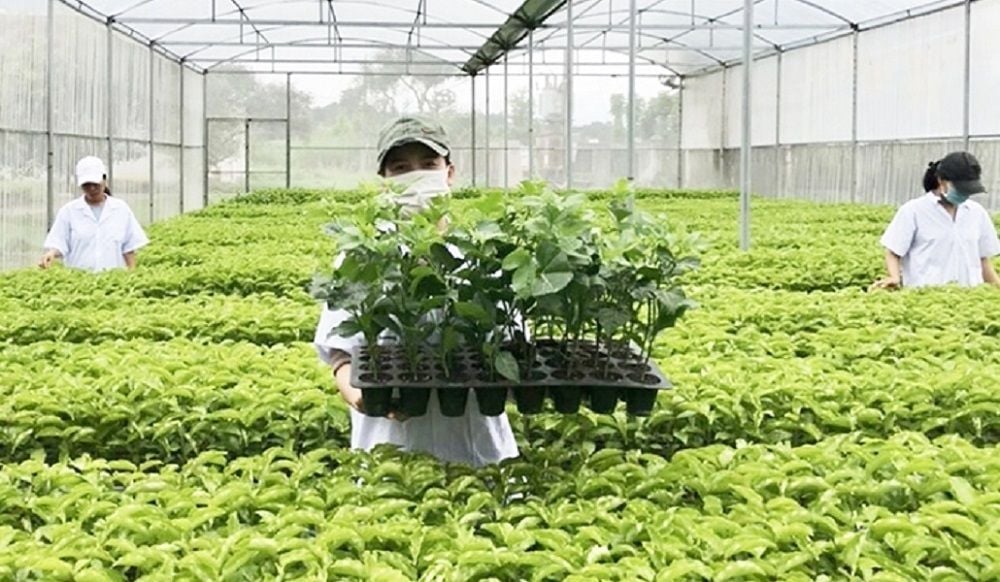
Vietnam’s seed industry, on average, supplies 500,000–550,000 tons of rice seed, 20,000–22,000 tons of maize seed, and hundreds of thousands of tons of seeds for vegetables, fruits, pepper, cashew, coffee, and rubber to support agricultural production. The progress is closely linked to enterprises involved in seed research and production, which has helped raise the value and international standing of Vietnamese agricultural products.
Despite notable achievements, Vietnam’s seed industry still faces challenges. Investment in breeding research is mainly concentrated on staple crops such as rice, maize, and beans, while fruit trees, perennial industrial crops, and forestry species with high value and export potential have not been developed at a comparable pace. The sector also continues to face copyright violations in the seed market, which affects reputation and reduces incentives for innovation.
In seed research, selection, and production, enterprises—alongside research institutes—play a particularly important role. According to Mr. Tran Xuan Dinh, Vice Chairman and General Secretary of the Vietnam Seed Trade Association (VSTA), many member enterprises are leading in seed production and supply, including Vinaseed, ThaiBinh Seed, ADI, Quang Ninh Seed, Southern Seed, and foreign-invested firms such as CP, Syngenta, Bayer, and the Mekong Delta Rice Institute. As a result, over the past five years there has been no shortage of seed for the main crops.
Most VSTA member firms have partnered with farmers to build seed-production zones and invest in modern processing, drying, and storage facilities. Even small and medium enterprises have equipped advanced sorting equipment to help ensure seed lots meet standards of purity, uniformity, and quality.
For vegetable and ornamental seeds that are not yet produced domestically in sufficient quantities, firms have imported high-yielding, short-cycling hybrid seeds from reputable foreign partners to improve economic efficiency. Many companies also participate in the rice value chain—linking production, procurement, and processing—to reduce costs and improve product quality.
In seed breeding, during 2016–2020, 57 new rice varieties were nationally recognized, including TBR225, BC15, Thien U, Dai Thinh 8, and RVT. In 2020–2025, VSTA members continued to recognize 53 new rice varieties and renewed nearly 30 previously released varieties. In the Mekong Delta, units have promoted a shift toward high-quality rice varieties, which occupy 70–80% of the area, contributing to higher value and improved international standing for Vietnamese rice.
Export rice prices have improved in recent years and, at times, have matched or exceeded those of leading exporters. Vietnam also has rice varieties that have won awards in international competitions such as ST24, ST25, and OM5451, and hundreds of rice varieties have been protected by authors’ rights.
Beyond rice, enterprises are developing glutinous and sweet maize to support cropping restructuring, while introducing new vegetable and flower varieties—including cauliflower, cabbage, tomato, cucumber, and pepper—to meet production demand and support industry restructuring.
Mr. Tran Xuan Dinh said the Vietnam Seed Trade Association (VSTA), founded in 2007, brings together voluntary member firms, organizations, and individuals involved in seed research, selection, production, and import/export. Over nearly 20 years, VSTA has become a conduit between members and government agencies, helping reflect policy gaps and improve policy practicality and feasibility.
VSTA has mediated seed-copyright disputes among members and, together with expert agencies, assessed the impact of climate change on production to provide timely information for localities to form objective views.
The IV term (2021–2025) took place amid difficulties including the Covid-19 pandemic, global political fluctuations, and consecutive natural disasters. Even so, VSTA reported progress in implementing the Seed Law, particularly during the transitional period (2022–2023), when it coordinated with agencies to hold conferences and seminars to address impediments.
In meetings with ministries and the National Assembly, key issues discussed included recognition and extension of seed-release validity, seed copyrights, mechanisms for seeds developed with state budget funding, and regulations for self-release of seeds. The association also contributed to policy development by revising Circular 15 of the Ministry of Agriculture and Rural Development (now the Ministry of Agriculture and Environment) and related standards for testing and quality of rice, maize, fruit trees, and industrial crops. VSTA also urged actions to address tariff coding and import duties on certain vegetable seeds, with initial reliefs achieved, though not fully.
VSTA has connected members with government bodies such as the Ministry of Finance, General Department of Customs, and the Vietnam Chamber of Commerce and Industry (VCCI) to advocate for policy support for businesses. It also said the process of self-declaring seed release has been gradually simplified, helping seed production and business beyond main crops become more stable.
The article also notes that related legislative and policy developments, along with ongoing industry reform efforts, are part of the broader context for Vietnam’s seed sector—covering seed research, copyright, and governance.
Premium gym chains are entering a “golden era” that is ending or already in decline, as rising operating costs collide with shifting consumer preferences toward more flexible, community-based ways to exercise. Long-term memberships are shrinking, margins are pressured by higher rents and facility expenses, and competition from smaller, more personalized…