Thanks to autonomy and improvements in craftsmanship, PNJ has continued to post after-tax profits exceeding trillions of dong for two consecutive quarters, even as higher gold prices weighed on purchasing power.
At PNJ’s annual shareholders meeting on April 22, a shareholder recalled the previous year’s meeting, when management delivered a cautious message before gold prices rose and affected purchasing power. Despite a difficult environment, the 2025 results were positive, prompting questions about how the company achieved solid profits.
In 2025, PNJ recorded after-tax profit of more than 2,828 billion dong, up about 34% from 2024. This was the record profit in the company’s history. Gross margin reached nearly 22%. In the first quarter of this year, PNJ again posted profit of about 1,467 billion dong, the best quarterly performance in the company’s history.
From the 2024–2025 shareholder meetings onward, leadership attributed challenges to a sharp rise in gold prices, which reduced consumer purchasing power and constrained supply.
Before the Q&A, Le Tri Thong, Vice Chairman of the Board, said the business had weathered a “storm” in 2025 as gold prices rose, reducing demand.
Responding to shareholders’ questions, Mr. Thong said PNJ had to “pilot through a very narrow gap.” He noted that consumer demand declined significantly. For example, with the same 6–8 million VND used to buy a gold product weighing about 1 chi in prior years, that amount today buys less gold, discouraging spending. At the same time, the company faced supply difficulties for raw gold.
To address demand and supply constraints, PNJ chose to upgrade technology, foster innovation, and enhance craftsmanship to produce more products with lighter gold weights while preserving finesse and visual appeal. Mr. Thong said this creates a competitive advantage for the company.
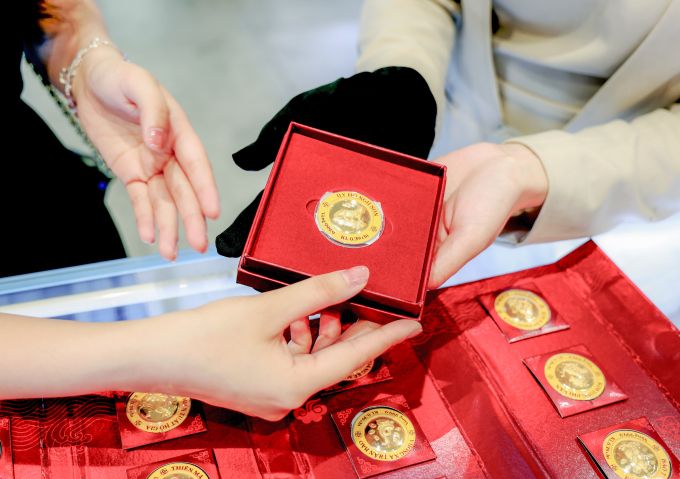
On the supply side, PNJ implemented a new policy of repurchasing products from customers. The company purchases jewelry with both low and high gold content at prices closely aligned with the market at the time of the transaction. Mr. Thong said this helps improve inventory, and the input material is then recycled into new products with varied designs to meet customer demand.
These measures helped PNJ maintain solid margins in recent periods. In the long term, the company aims to keep margins around 18–20% or higher if market conditions are favorable.
“Profit improvement does not come from a sudden spike but from a long-term process of building internal strength,” Mr. Thong assessed.
Cao Thi Ngoc Dung, Chairwoman of the Board, said she is confident in PNJ’s existing plants and in-house tooling. She noted that many firms in the industry previously sourced tooling from Italy, but PNJ has shifted to China. PNJ can control mold production in-house, which she said provides an edge in product design and innovation.
Ms. Dung also said PNJ is currently exporting products to Roberto Coin, a luxury jewelry brand known for valuing craftsmanship. She indicated that once the State Bank grants quotas for gold imports, PNJ will import more gold and boost exports.
In an end-March report, MB Securities said that in 2025, tightening invoicing and limited access to good sources of gold for storage constrained market supply. It also pointed to global gold price fluctuations driven by geopolitical tensions.
For 2026, MB Securities expects the raw-material problem to be resolved and PNJ’s jewelry retail segment to rebound. Transaction volumes per store are expected to rise significantly, with revenue per store growing about 18% year over year.
For this year, PNJ set revenue and after-tax profit targets of 48,660 billion dong and 3,409 billion dong, respectively—up 37% and 21% from 2025. The targets exceed many analysts’ projections.