•
•
•
•
•
•
•
•
•
•
•
•
•
•
•
•
•
•
•
•
•
•
•
•
•
•
•
•
•
•
•
•
•


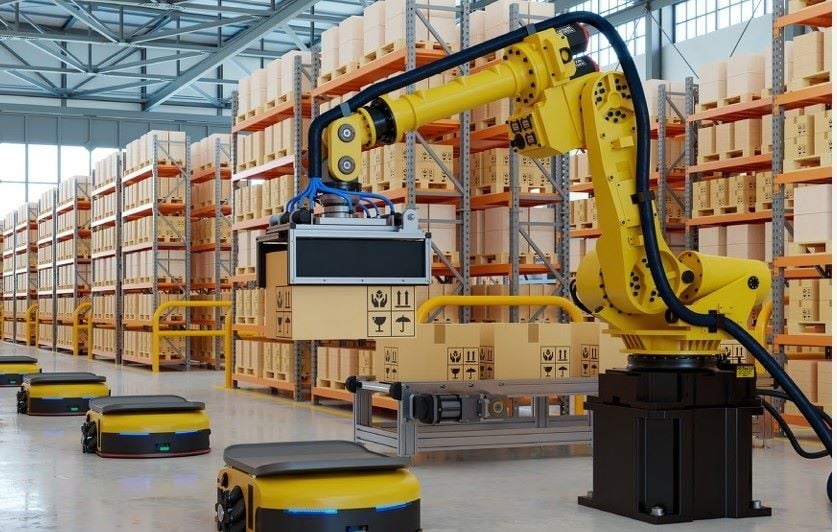
Vietnam’s logistics sector is at a historic turning point. With growth rates of 14–16% per year, the industry is no longer only a traditional back-end function. At the VALOMA LogTech Forum 2026, Associate Professor Dr. Nguyen Thanh Chuong, President of the Vietnam Logistics Human Resource Development Association (VALOMA), said technology is reshaping the entire supply chain and turning logistics into a core service industry supporting the digital economy, the green economy, and global trade.
Speakers said AI is increasingly embedded across logistics activities, from optimizing transport routes and forecasting demand to smart warehouse management, port automation, and reducing carbon emissions. The shift, they argued, is no longer a question of whether to adopt AI, but a requirement for competitiveness.
Associate Professor Dr. Nguyen Binh Minh, Director of the Institute of Technology and Digital Economy at Hanoi University of Science and Technology, highlighted international data indicating rising pressure on adoption. He said the share of supply-chain organizations applying AI is expected to rise from about 28% to 82% over the next five years. He also noted that around 71% of business leaders worry that delayed AI adoption could disrupt operations.
Financial benefits were also cited. A McKinsey synthesis, referenced at the forum, suggests AI could help optimize logistics costs by about 15%, reduce inventory by 35%, and improve service levels by up to 65%.
Nguyen Duy Hong, Chief Operating Officer of YCH Vietnam, said AI can make information flows more seamless by automating tasks that are often handled manually, such as calculating load, volume, and delivery points in spreadsheets. He said this addresses two operational problems—load optimization and route optimization—helping trim costs and accelerate execution.
In Vietnam, express delivery firms including J&T Express and Viettel Post were cited as recognizing AI as essential as the market expands beyond what experience alone can manage.
Viettel Post was presented as a representative case for addressing last-mile bottlenecks. Its AI system is described as autonomously segmenting routes, issuing early congestion warnings, and coordinating goods flexibly to help prevent breakdowns during peak periods such as holidays and New Year.
Despite AI’s potential, deployment in Vietnam faces obstacles. Speakers said most domestic logistics firms are still at basic digitization levels, and the number of entities using AI for data analytics and decision-making remains limited.
They emphasized that the biggest challenge is data quality and the mindset for transformation, rather than the technology itself. Data is often fragmented across departments, leading to linear, slow, and siloed operating models.
For small and medium-sized enterprises, the challenges are described as even greater. FreightPilot.Ai’s CEO Pham Khanh Linh said many freight forwarders effectively operate as “email forwarders,” relying on Excel and manual emails. At the same time, SMEs were noted to have an advantage in adaptability because they are not constrained by heavy legacy systems. By reorganizing processes and standardizing data flows, AI can be applied to automate operations.
Experts advised firms to begin now but with a structured roadmap to avoid scattered investment. Prof. Dr. Nguyen Binh Minh outlined a three-step approach: first, digitize and standardize data as a prerequisite; second, start with small projects capable of demonstrating KPI impact within about 90 days; and third, establish governance covering security, ethics, and risk management when deploying new technology.
Vu Hoang Nam, Business Director of DTK Logistics, recommended using ready-made technology platforms rather than building solutions from scratch to save resources. He also referenced Amazon’s example to stress that mastering tools and platforms is key to leading in forecasting and operations.
Nguyen Thanh Chuong said AI will not replace humans, but companies that apply AI effectively will outpace those that resist change, with the human element remaining central.
VALOMA Research Head Nguyen Thi Xuan Hoa said the education sector needs to move from raising awareness to building an AI usage strategy so graduates can gain practical technology skills.
Vietnam has set a target that by 2035, 100% of logistics enterprises will adopt digital transformation, aiming to reduce logistics costs as a share of GDP to 10–12%. Speakers described the goal as ambitious but feasible if psychological barriers are overcome and firms embrace AI earlier.
“Adopt first, then improve. If you don’t start early, firms will struggle to adapt when AI surges,” Viettel Post warned.









Premium gym chains are entering a “golden era” that is ending or already in decline, as rising operating costs collide with shifting consumer preferences toward more flexible, community-based ways to exercise. Long-term memberships are shrinking, margins are pressured by higher rents and facility expenses, and competition from smaller, more personalized…



