•
•
•
•
•
•
•
•
•
•
•
•
•
•
•
•
•
•
•
•
•
•
•
•
•
•
•
•
•
•
•
•
•


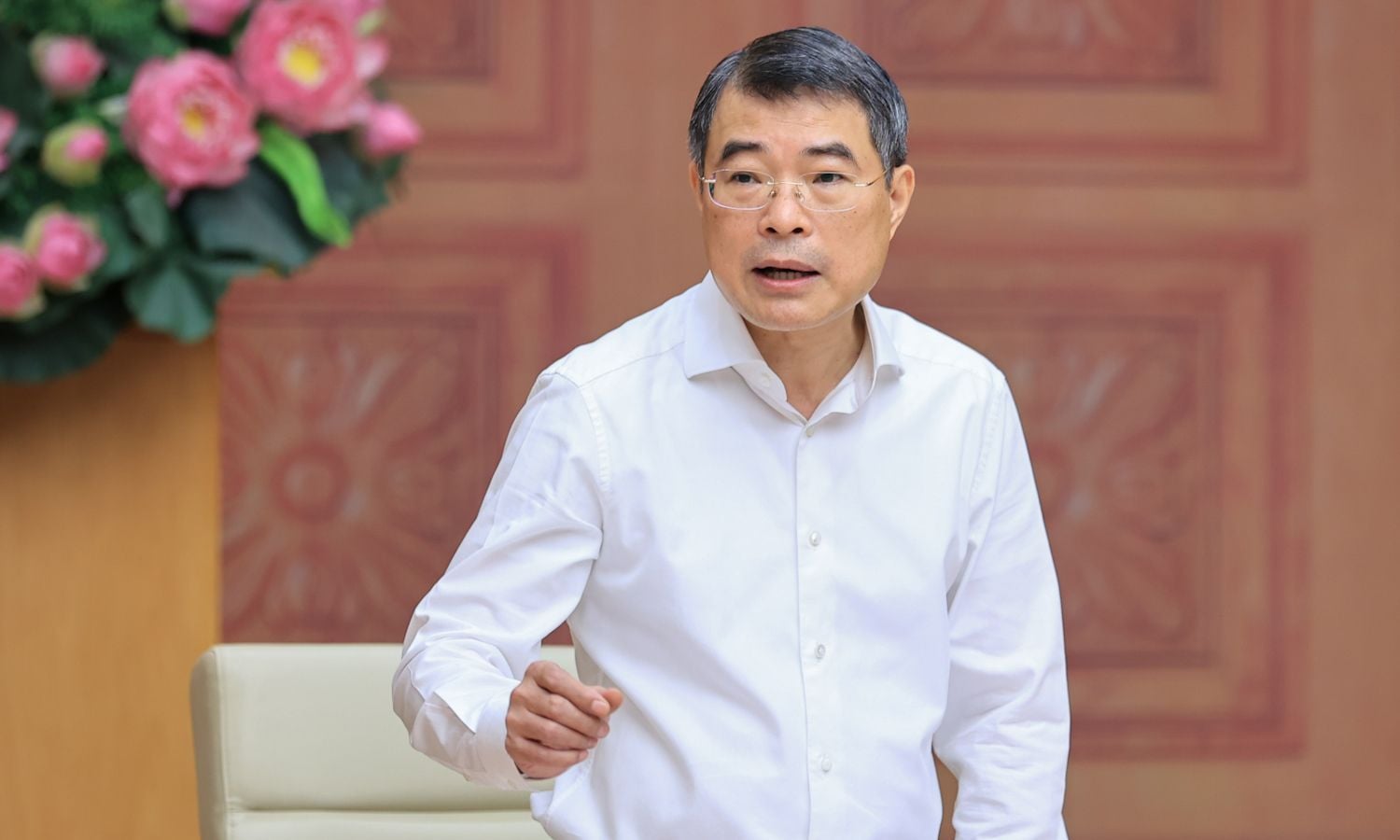
Prime Minister Le Minh Hung acknowledged and appreciated the Ministry of Industry and Trade’s efforts in implementing the tasks assigned for 2026, overcoming numerous difficulties and challenges, and achieving important results—particularly in presenting to competent authorities breakthrough decisions related to gasoline and oil amid difficult times. He said these efforts have contributed positively to the country’s overall achievements in recent times.
The Prime Minister noted that global and regional conditions are forecast to remain volatile, complex, and unpredictable, directly affecting targets for economic and social development and the ministry’s assigned tasks. He said the ministry and the industry face challenges including the risk of a global economic slowdown, pressures from technical barriers, trade protectionism from other countries, geopolitical tensions, constraints in domestic production capacity, requirements to ensure national energy security, and institutional and administrative barriers.
While he said the country’s development requirements in the new period are clear, he emphasized that the responsibility to deliver is large and heavy—especially to ensure two-digit sustainable growth. “Achieving the set targets, including the two-digit growth target, depends greatly on the quality and effectiveness of the sector’s operations. The Ministry of Industry and Trade must take the lead in addressing outstanding issues and promoting production and business activities to meet the targets,” the Prime Minister stressed.
Regarding upcoming tasks, the Prime Minister asked the Ministry of Industry and Trade to promptly operationalize and implement the Government Action Program pursuant to the XIV Party Congress, the Central Committee Conclusions No. 18, and other directions covering sectors under the ministry’s management, including energy, gasoline and oil, science and technology, innovation, exports, and the domestic market.
He requested the ministry to assign specific targets, tasks, and deadlines to each leadership level and unit within the ministry, state-owned corporations, and localities.
The Prime Minister also asked the ministry to focus on building a clean and strong party cell and ensuring unity, strengthening the workforce, and promptly replacing individuals who fail to meet requirements.
He emphasized several specific tasks, including ensuring energy security and a fair energy transition. The ministry, he said, bears responsibility for preventing electricity and gasoline shortages in all scenarios.
The Prime Minister directed the ministry to urgently review and update Power Plan VIII, add new power projects using new technology, and accelerate the progress of power projects. He also asked the ministry to cooperate closely with the Ministry of Agriculture and Environment to operate hydro reservoirs efficiently.
For gasoline and oil, he assigned the ministry to urgently develop a plan to restructure the gasoline distribution system to reduce intermediaries and costs, promptly implement the national gasoline reserve, and accelerate the use of E10.
On institutional reform, the Prime Minister asked the ministry to focus on finalizing draft laws to be submitted to the next session of the National Assembly, including: Petroleum Law (amendment); laws amending several commercial-related laws; Electricity Law; and the derivatives trading law.
He noted that the government has issued Resolution 82 approving a policy for key industries, and urged the ministry to expedite completing the drafts for submission to Parliament at the second session.
The Prime Minister also directed the ministry to coordinate with relevant ministries to review and clarify the ministry’s functions to avoid overlaps, with the guiding principle of “one task, one lead agency,” especially in management and exploitation of minerals, industrial zones, and state-owned enterprises in Industry and Trade.
He asked the ministry to continue implementing directives to decentralize, reduce red tape, and streamline business conditions—targeting completion by April. He also called for promoting genuine decentralization to localities and continuing to streamline the organizational structure.
Another priority, he said, is to restructure industrial and supply chains, promote deep manufacturing, and raise domestic self-reliance to contribute to a new growth model. He also emphasized building linkages between domestic enterprises and foreign direct investment, and encouraging Vietnamese firms to participate more deeply in global supply chains.
The Prime Minister instructed the ministry to improve export-import efficiency and diversify markets, and to prepare for negotiations on reciprocal tariffs with the United States. He also asked the ministry to organize evaluation and modernization of Vietnam’s trade offices abroad to ensure products are present and contribute concretely.




Premium gym chains are entering a “golden era” that is ending or already in decline, as rising operating costs collide with shifting consumer preferences toward more flexible, community-based ways to exercise. Long-term memberships are shrinking, margins are pressured by higher rents and facility expenses, and competition from smaller, more personalized…




