•
•
•
•
•
•
•
•
•
•
•
•
•
•
•
•
•
•
•
•
•
•
•
•
•
•
•
•
•
•
•
•
•


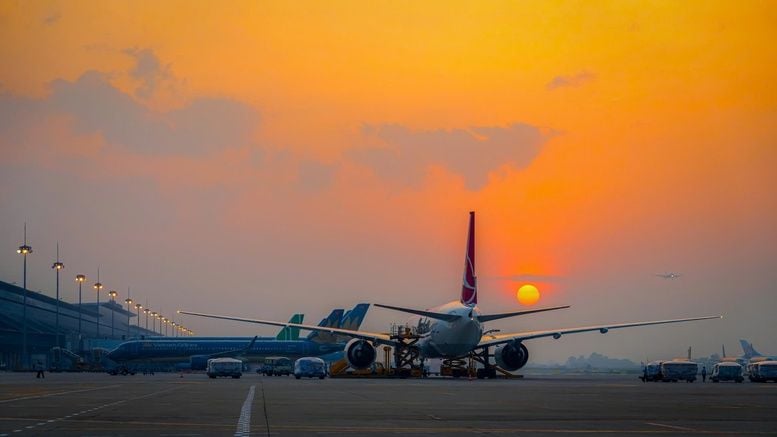
Vietnam’s Civil Aviation Authority said government support measures introduced in the recent period have helped airlines ease cost pressures amid volatile aviation fuel prices and related charges.
In a report, Vietnam Airlines said that under different fuel price scenarios, its additional costs in 2026 are estimated at 11,000 to 27,000 billion dong. The authority cited that environmental tax exemptions and import tax relief introduced in March and April helped reduce costs by about 105 billion dong.
The authority also noted that if the above measures are combined with a policy to reduce service charges and allow extensions of a fuel surcharge through 2026, the airline could receive cost relief of about 10% of the additional costs arising from higher fuel.
For VietJet, jet fuel prices around $195 per barrel pushed its costs in April 2026 higher by $24 million. Environmental tax exemptions and import tax relief for jet fuel reduced costs by about $4 million, equivalent to around 16% of the total cost increase due to higher fuel.
Similarly, VietTravel Airlines said that in April 2026, reducing import tax and environmental tax exemptions helped cut fuel costs by about 8%, equivalent to about 4% of the airline’s direct operating costs per flight.
Alongside fuel-related measures, the Civil Aviation Authority said airlines still require support to weather the period, maintain stable operations, and meet public travel demand.
As of now, VATM (Vietnam Air Traffic Management Corporation), ACV (Vietnam Airports Corporation), Phu Quoc International Airport and Van Don International Airport are receiving a 50% reduction in concession fees for airport operation rights until December 31, 2026. The authority estimated that in 2026, VATM revenue would be reduced by about 69 billion dong, ACV revenue by about 132 billion dong, and the two airports (Van Don and Phu Quoc) by about 8 billion dong.
To respond to fluctuations, the authority proposed reducing 15% of outbound flight operation charges for domestic flights and cutting 20% of take-off and landing charges for domestic flights for three months, until June 30, 2026.
Under the proposal, VATM’s revenue is expected to fall by about 30 billion dong (about 44% of the concession revenue reductions for 2026). ACV’s revenue is expected to fall by about 45.6 billion dong (about 34%). Phu Quoc and Van Don airports are expected to see revenue fall by about 2.7 billion dong (about 34%).
The authority cited ACV data showing that for airport infrastructure asset operations in 2023–2025, the average cost-to-revenue ratio was around 52%, with an average contribution to the state treasury of about 1,353 billion dong per year.
“Thus, the price reductions are essentially not expected to significantly affect the balance sheet of the state-owned airport asset-infrastructure operations,” the Civil Aviation Authority of Vietnam stated.
Based on overall feedback and to ensure balanced service provision and usage, the Civil Aviation Authority proposed that the Ministry of Construction issue a policy to reduce 15% of outbound flight operation charges and 20% of take-off and landing charges for domestic flights through June 30, 2026.



Premium gym chains are entering a “golden era” that is ending or already in decline, as rising operating costs collide with shifting consumer preferences toward more flexible, community-based ways to exercise. Long-term memberships are shrinking, margins are pressured by higher rents and facility expenses, and competition from smaller, more personalized…