•
•
•
•
•
•
•
•
•
•
•
•
•
•
•
•
•
•
•
•
•
•
•
•
•
•
•
•
•
•
•
•
•

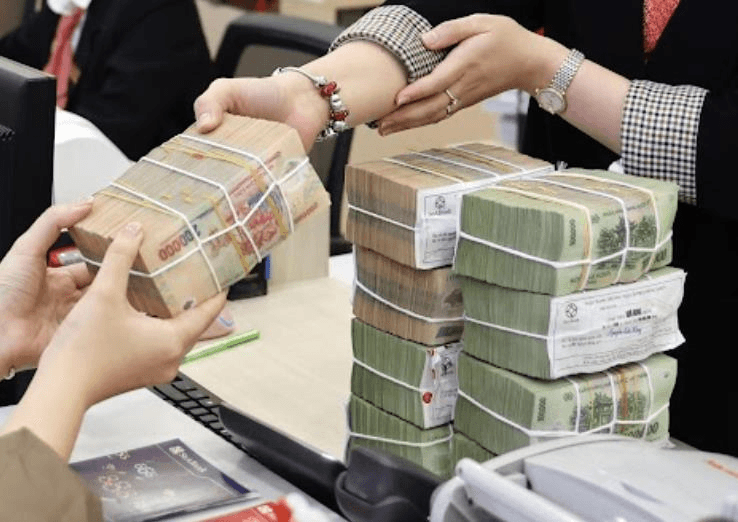
The State Bank of Vietnam (NHNN) has proposed raising the maximum share of short-term funds that banks can use to lend to mid- and long-term borrowers from 30% to 40%. The move is intended to unlock capital and support a new investment cycle for Vietnam in the 2026–2030 period, while maintaining a strong focus on risk control and system safety.
NHNN has published a draft amending Circular 22/2019, which regulates limits and safety ratios in banking operations. A key proposal is to restore the short-term funds ratio for lending mid- and long-term to 40%, matching the threshold applied in 2020–2021.
Under previous tightening measures aimed at ensuring safety, the ratio was reduced gradually from 40% to 37%, then to 34%, and officially to 30% effective October 1, 2023.
NHNN said the policy reversal is designed to implement Party and government directions on promoting growth and socio-economic development, and to carry out the medium-term public investment plan for 2026–2030. The stated objective is to target high growth in a “two digits” range while maintaining macroeconomic stability.
Nguyen Quang Huy, CEO of the Finance–Banking Department at Nguyen Trai University, said the change is not simply a loosening of credit policy. He described it as a flexible adjustment that creates more room for the economy to access capital in a period of strong demand for mid- and long-term funding.
He pointed to Vietnam’s shift into a new investment cycle, supported by infrastructure projects in transport, energy, digital transformation, manufacturing, and social housing. At the same time, the financial market structure still relies heavily on bank credit, while long-term funding channels such as the stock market, corporate bonds, and investment funds have not yet developed deeply enough to share the funding pressure.
NHNN data cited in the article shows that household deposits at credit institutions as of the end of March 2026 reached over 10.56 quadrillion dong, up 2.19% from the end of 2025 and the highest level to date. The article says this reflects continued confidence in the banking system and provides additional resources for lending activities.
On the macro side, the article notes that global crude prices have fallen sharply as Iran’s supply outlook improves and shipping through the Hormuz Strait resumes. As a result, domestic gasoline prices are expected to ease, which could help reduce input costs, support inflation control, and give NHNN more flexibility to conduct monetary policy in a way that supports growth.
Raising the ratio to 40% would give banks more capacity to provide mid- and long-term credit. The article says credit institutions can reduce the burden of long-term funding costs and better meet the economy’s capital demand.
Potential beneficiaries include infrastructure, energy, logistics, industrial zones, manufacturing, and viable real estate projects, particularly social housing and industrial real estate. The article also highlights that faster capital circulation into sectors that generate new productive capacity can support investment, job creation, and higher productivity.
The article also warns that using more short-term funds for mid- and long-term lending increases maturity risk. If market conditions change significantly or if saving behavior shifts, liquidity pressures could rise at some credit institutions.
It adds that short-term funding costs typically fluctuate faster than mid- and long-term lending rates, creating interest-rate risk that may affect banks’ profitability. In addition, if credit concentrates in sectors with long investment cycles and uncertain returns, bad-debt risks could increase when conditions change.
To inject capital while safeguarding the system, the article lists several measures banks should implement:
For the long term, the article says the fundamental solution is to develop a more comprehensive capital market, including the stock market, corporate bonds, government bonds, and local government bonds, while promoting the growth of long-term funds and non-bank financial institutions. As long-term funding channels expand, the article concludes that funding pressure on the banking system would ease, supporting high growth, macro stability, and sustainable development for Vietnam in the 2026–2030 period.
Ready Card users outside the European Economic Area have reportedly faced an abrupt service halt after a transition involving the card issuer disrupted the USDC spending product, according to user notices shared on X.
A notice shared…