•
•
•
•
•
•
•
•
•
•
•
•
•
•
•
•
•
•
•
•
•
•
•
•
•
•
•
•
•
•
•
•
•


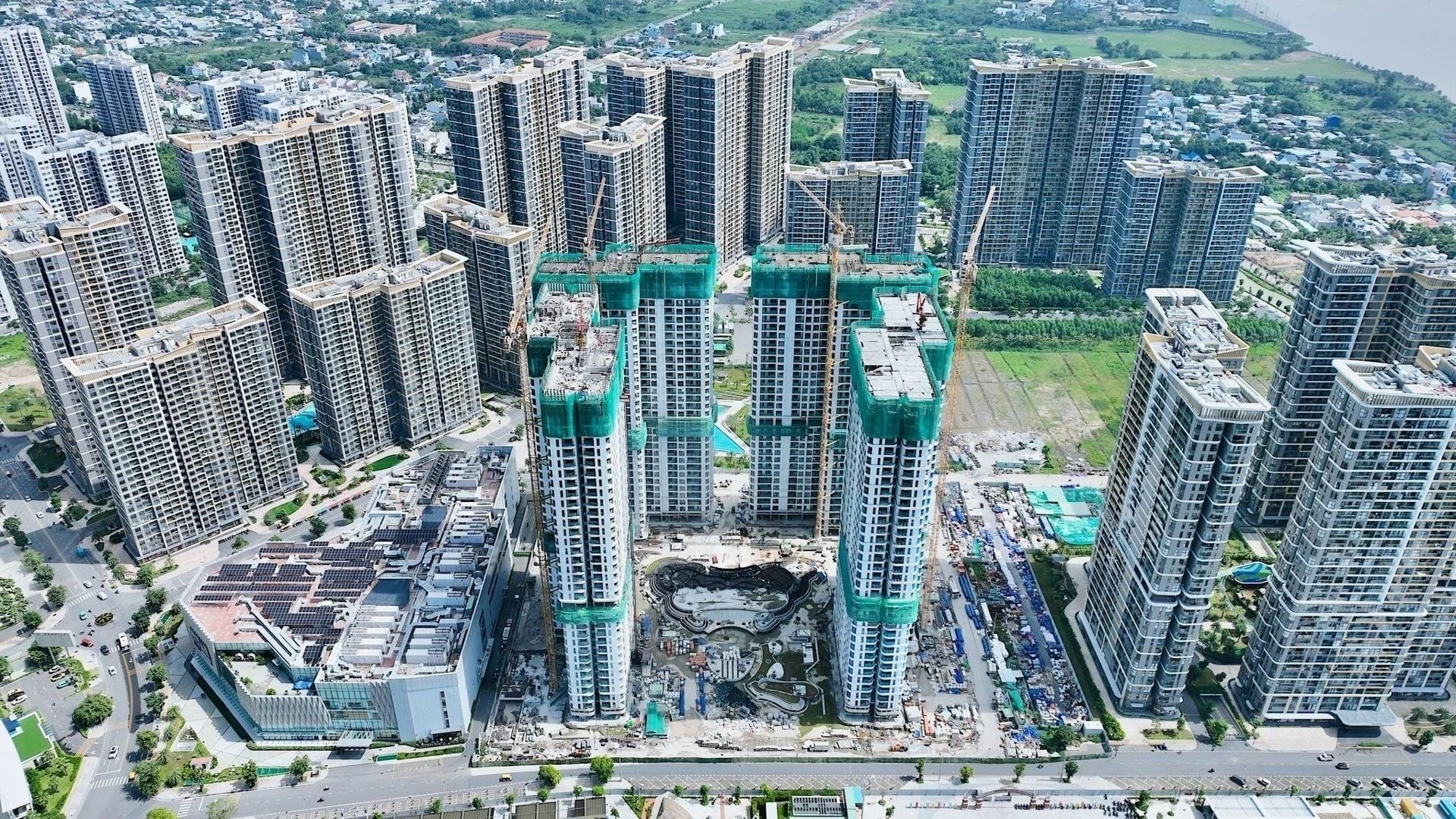
A number of Vietnamese real estate developers, including Thuduc House, DIC Corp and Sonadezi Chau Duc, are expected to present 2026 business plans to shareholders with profit targets revised downward from 2025.
Thuduc House plans consolidated revenue of nearly VND 249.7 billion for 2026, down VND 3.33 billion from 2025 results. After-tax profit is expected to be about VND 38.5 billion, down 64% year-on-year.
In 2025, the company posted consolidated revenue of over VND 253 billion and after-tax profit of over VND 108 billion. Thuduc House said 2025 profit mainly came from restructuring and cost-control measures, income from resolving legacy issues and ongoing legal matters, and gradual improvement in several business activities.
After strong growth in 2025, DIC Corp is preparing a more cautious 2026 plan. The company expects total revenue and other income to reach VND 3,000 billion, with pretax profit of VND 600 billion—down 37% and 27%, respectively, from 2025.
Despite the earnings decline, DIC Corp plans to spend more than VND 4,371.5 billion to invest in key projects including Nam Vinh Yen, Long Tan, the CSJ complex and the Chi Linh center. It also plans to borrow about VND 1,400 billion to implement projects, alongside restructuring, divesting and disposing of underperforming investments to improve cash flow.
Becamex IJC targets 2026 revenue of VND 2,454 billion, up 36% from 2025. However, after-tax profit is forecast at VND 541 billion, down 9%.
Sonadezi Chau Duc is trimming its 2026 plan more aggressively than peers. After recording a profit in 2025, the company targets 2026 revenue of about VND 518.1 billion and after-tax profit of more than VND 56 billion.
These figures imply after-tax profit down 54% and up to 84% respectively, according to the plan summary provided in the source content.
While some developers are scaling back, others are still expected to grow in 2026. VCBS forecasts Khang Dien Investment and Development (KDH) to reach VND 6,768 billion in net revenue and VND 1,840 billion in after-tax profit in 2026, up 44.8% and 12.6% from 2025.
Nam Long Investment (NLG) is expected to surpass VND 6,500 billion in revenue and around VND 1,273 billion in after-tax profit in 2026, up 15% and 35%.
VCBS also projects Hà Đô Group (HDG) to achieve more than VND 3,100 billion in revenue and over VND 1,200 billion in after-tax profit in 2026, up 11% and 28% respectively.
After legal relief, a wave of projects is restarting and new developments are being launched, pushing the market into a cycle of larger supply from 2026 onward. Mid-range apartments are expected to account for a significant share in major urban areas, increasing competitive pressure as developers accelerate sales to secure cash flow and meet financial obligations.
The emergence of megacities spanning thousands of hectares with investment scales of hundreds of trillions of dong is expected to reshape local price conditions and intensify short- to mid-term competition. Large-scale investments and high financial leverage mean these projects require sustained sales momentum.
Interest rates are rising, but buyer sentiment is not significantly affected because real demand remains stable, particularly in the mid-market segment that is affordable for many. However, from a corporate perspective, the profitability picture is less favorable than last year as demand for mid- to long-term borrowing increases with project implementation cycles.
Financing costs—especially for land and compensation—are likely to rise and could directly affect margins and development strategies going forward. Overall, 2026 is viewed as a challenging period for balancing cash flows in the real estate sector, with supply increasing again and capital costs higher.
Companies that can maintain project timelines, manage leverage and secure sales liquidity are expected to have a competitive edge, while profit dispersion across the sector is forecast to widen further.
Premium gym chains are entering a “golden era” that is ending or already in decline, as rising operating costs collide with shifting consumer preferences toward more flexible, community-based ways to exercise. Long-term memberships are shrinking, margins are pressured by higher rents and facility expenses, and competition from smaller, more personalized…