•
•
•
•
•
•
•
•
•
•
•
•
•
•
•
•
•
•
•
•
•
•
•
•
•
•
•
•
•
•
•
•
•


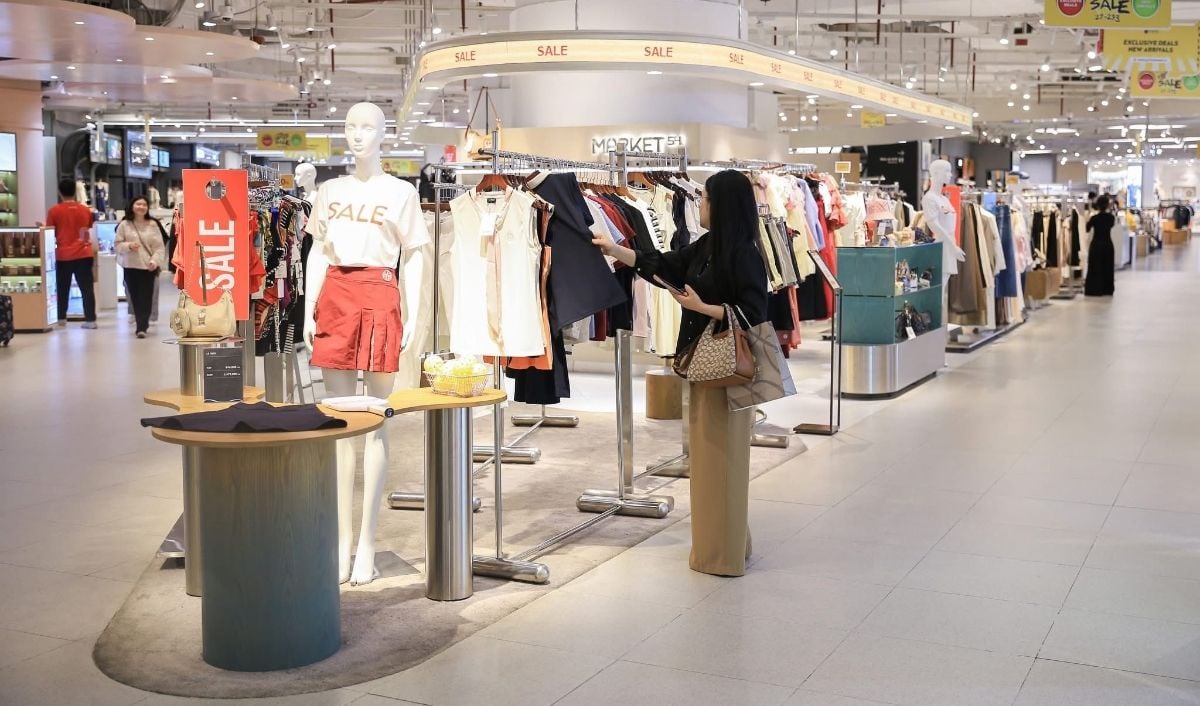
Retailers are shifting from discount-driven sales to demand-based strategies, with upgrading in-store experiences and applying technology becoming central to capturing and retaining customers while improving profitability. In Vietnam—one of the region’s largest retail markets—rising incomes and a young demographic base are increasing competition and raising expectations for faster, more personalized service.
About 73% of consumers in Vietnam shop across multiple channels, requiring retailers’ IT systems to process data in real time and be ready for AI-enabled decision-making. Collaboration among technology providers and retailers is already underway. WinCommerce (WCM) said it is addressing operational challenges through technology, with a focus on four core questions: where to sell, what to sell, how much to sell, and at what price.
WCM stated that it has applied a machine-learning model to forecast ordering demand, helping free up human resources. It also reported that around 20% of products at WinMart are now ordered through centralized processes, with a plan to reach 90% by the end of 2026. The company said the new ordering approach has saved about 300 billion VND in costs and has given store staff 30% more time to serve customers.
At a recent event, FPT Retail highlighted how AI can help manage costs without passing them to customers. Nguyen Do Quyen, Deputy General Director of Digital Retail at FPT, said: “At FPT Retail, one person works as two; no new hires. Each employee must write a personal plan on how to apply AI in their work.”
Nguyen Bach Diep, Chair of the Board, added that productivity gains through AI are essential amid business challenges. FPT Retail said it has integrated an AI application to boost team productivity by about 20%, without recruiting new staff even as stores expand.
At the Asia Retail Summit Vietnam 2026, Karim Noui, CEO of Dien may Nguyen Kim, said competition in Vietnamese retail is moving toward AI-driven decision-making and turnkey service models. He pointed to omnichannel platforms, AI tools, financing, and after-sales services such as delivery and installation.
Noui also noted that consumers increasingly use AI tools to get product advice before purchase, citing platforms including ChatGPT, Copilot, and Gemini. He said about 50% of customers have used AI in some form, and about 60% rely on these tools for product guidance.
On the consumer side, AI can help retailers present products and estimate costs—for example recommending air conditioning units based on apartment size and estimating energy costs. Retailers are also moving from discount-driven selling to demand-detection models using AI.
According to Zebra Technologies’ 18th annual Global Shopping Study, APAC retailers plan to apply GenAI to inventory management within five years. Christanto Suryadarma, VP of Southeast Asia, Korea at Zebra Technologies, said AI adoption is accelerating in APAC due to highly tech-savvy consumers who research information, compare prices, and read reviews before visiting stores. He said AI can help businesses forecast demand and ensure product availability, and that when implemented effectively it can strengthen customer loyalty. Suryadarma also emphasized that AI can be applied beyond chatbots across operations.
Demographic shifts are also shaping retail transformation. Gen Z, a growing share of APAC customers, shows different shopping behaviors and is influenced by social commerce. The group prioritizes speed, convenience, and seamless experiences, and is less willing to wait in lines.
In Vietnam, AWS research from early September 2025 reported that about 18% of businesses had deployed AI (roughly 170,000 entities), up 39% year-over-year. Most deployments remain at basic task levels such as operational optimization.
Visa-commissioned YouGov research, State of Digital Commerce in Asia Pacific 2025, found that 83% of consumers currently use AI to discover products, with the figure projected to reach 93%. The research also reported that Vietnam and India tie at 42% of consumers willing to let AI assistants perform shopping on their behalf.
Despite fast adoption, trust is a major constraint across the region. Hesitation to share personal data or skepticism about AI recommendations remains a significant barrier. Vietnamese user data indicates willingness to experiment with new technology, but suggests that trust will go to platforms that transparently demonstrate security and give users control over their data.
While other sections also discuss price stabilization for OCOP agricultural products and related retail trends, the central theme remains AI-driven efficiency and deeper consumer engagement in Vietnam’s retail sector.
Premium gym chains are entering a “golden era” that is ending or already in decline, as rising operating costs collide with shifting consumer preferences toward more flexible, community-based ways to exercise. Long-term memberships are shrinking, margins are pressured by higher rents and facility expenses, and competition from smaller, more personalized…