•
•
•
•
•
•
•
•
•
•
•
•
•
•
•
•
•
•
•
•
•
•
•
•
•
•
•
•
•
•
•
•
•
For more than 11 centuries since King Alfred the Great established the Royal Mint in 886, the UK’s mint has been defined by a single mission: stamping and supplying currency for the economy. But as Britain moves deeper into the cashless era, the Royal Mint has faced a new reality—cash usage has fallen to a record low, and domestic coin production demand has declined year by year.
In response, the Royal Mint’s leadership, led by CEO Anne Jessopp, has pursued a countercyclical strategy: shifting away from traditional coin-pressing and toward mining gold from waste. The pivot centers on a large-scale electronics waste (e-waste) recycling plant in Wales, positioning the company for a circular-economy business model.
Electronic waste—including mobile phones, laptops, broken TVs, and old appliances—contains high concentrations of precious metals that can exceed those found in natural ore. The key challenge has been extracting gold without contaminating the environment. Traditional approaches used in some countries rely on energy-intensive smelting or highly toxic chemical baths such as cyanide and mercury.
The Royal Mint partnered with Excir, a clean-tech company from Canada, to develop a closed-loop, green-chemistry process. The method operates at room temperature and uses no heating or high pressure. In about four minutes, it selectively dissolves gold-bearing fractions and pulls gold molecules into the liquid, leaving base metals such as copper, iron, or nickel behind.
The Royal Mint’s approach is framed as “urban mining,” comparing e-waste recovery with conventional extraction from mined ore. The article cites that a ton of ore yields only 5–10 grams of gold, while a ton of scrap electronic boards can contain up to 165 grams—roughly 15 to 30 times richer.
It also highlights speed and energy use. Rather than the long, energy-intensive steps of crushing rock, flotation, and chemical leaching, the Royal Mint’s organic solution extracts gold in about four minutes. The process is described as largely automated, with reactions occurring at ambient temperature, supporting energy savings.
On environmental risk, the article states that replacing toxic acids such as cyanide or mercury with a reusable green solution reduces hazardous waste handling and brings emissions close to zero.
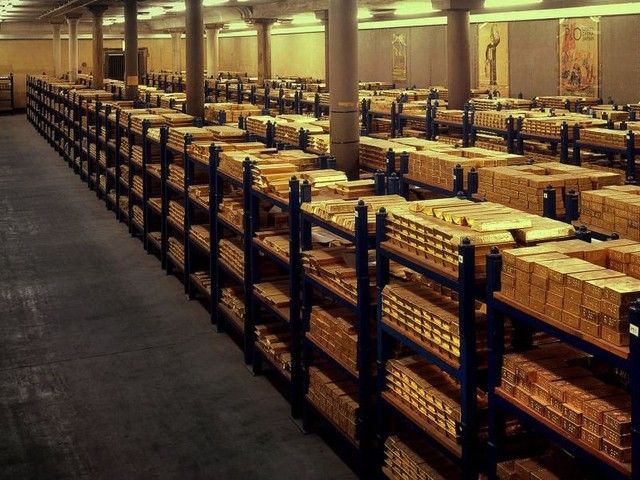
The 3,700-square-meter Welsh plant can process up to 4,000 tons of e-waste per year and yield about 450 kilograms of pure gold annually. The article estimates the open-market value at roughly £27 million (about VND 870 billion).
Rather than selling the gold purely as a commodity, the Royal Mint has positioned the project as a strategic asset—securing exclusive supply of 100% recycled gold for its own luxury jewelry line branded “886,” a tribute to the factory’s founding year.
Under creative director Dominic Jones, the “886” jewelry line—described as minimalist and luxury-focused—includes bracelets, rings, and chains. The article says the firm does not conceal the origin of its gold, marketing it as sustainable gold with negligible carbon emissions.
It also notes that younger, wealthier consumers—particularly young elites—are buying for both the product and the ethical story, and that the 886 jewelry line and limited-edition gold bars from e-waste have shown revenue growth.
The diversification into sustainable metals is described as helping Royal Mint reverse its fortunes, delivering operating profit of £17.7 million. The article adds that the project has saved hundreds of jobs for coin-makers facing layoffs due to the cashless shift, with retraining into green-technology engineering roles.
From the hammering of coins in Alfred’s era to an AI-powered plant extracting gold from broken smartphones in Wales, the Royal Mint’s shift is presented as an example of resilience—combining legacy craftsmanship with a technology-driven circular economy approach.