•
•
•
•
•
•
•
•
•
•
•
•
•
•
•
•
•
•
•
•
•
•
•
•
•
•
•
•
•
•
•
•
•


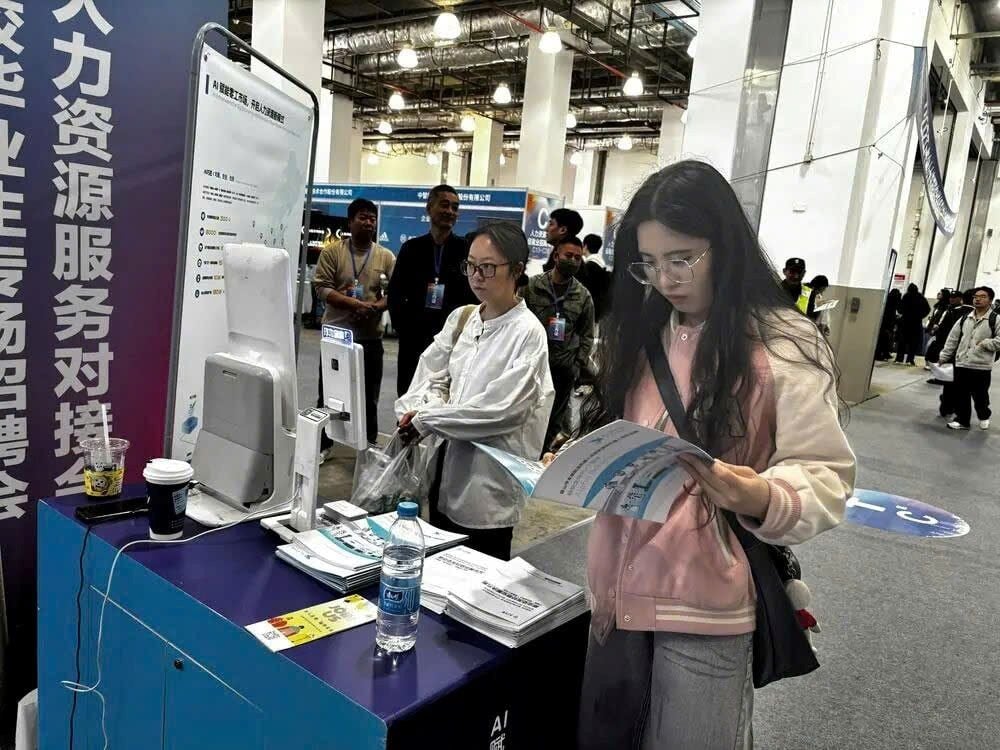
Against the backdrop of a hot market driving starting salaries to about 250 million VND per month, the 2026 recruitment season is witnessing a dramatic shift in the talent landscape.
According to 36Kr, at the end of April 2026 the technology job fair hosted by East China Normal University drew intense interest from tech giants such as Huawei and Ant Group, along with a slew of AI startups. The data were stark: the share of applicants for high performance computing (HPC) engineers fell to a record low of 0.15, meaning that for every candidate, seven companies were competing to hire. For positions in SLAM algorithms or autonomous control, the share was around 0.21, implying about four firms were vying for each talent.
At counseling booths, wherever the keywords AI, Agent, or Robot appeared, the area was packed. Students were joined by many veterans from the automotive and traditional software sectors who were rushing to switch careers.
Anh Phan, a PhD applicant for the role of Algorithm Researcher, said that despite six years of experience in industrial software, he faced barriers due to a lack of real-world experience with large language models (LLMs). He added that accumulated experience can still be an advantage: AI can restructure the software industry, but it must ultimately meet human needs, and real-world knowledge from daily life is something AI cannot easily learn.
Ly, a PhD in the Internet of Things (IoV), said that requirements for computational power and real-world data in the AI era are more stringent than in the past. “The numbers show a harsh truth: the deeper the sea, the bigger the fish,” he said.
Recruiters and AI researchers also noted a two-part shift: those who do not know how to use AI will be replaced, but those who only know how to use AI will struggle to advance.
In Shanghai, a headhunter said AI-related roles increased from 50/50 to 70/30 compared with luxury goods in Q1 2026. Data from the MAIMAI recruitment platform showed the number of AI jobs rising roughly 12-fold year on year, far outpacing general economic growth.
Experts said the speed of change is a key challenge. A tech blogger described the pace of updates: “In just 24 hours, four new models are released; by the time you finish writing about one, the next update is out.” The resulting talent paradox is that there is an abundance of know-how to use AI, but a shortage of people who understand underlying principles.
One employer said the gap is not simply about basic usage: “We do not need people who only run off the shelf code; we need people who understand dozens of algorithm variants and can identify cost-effective and high-performing options for specific projects.”
The real talent gap, recruiters said, lies in the ability to master cutting-edge tools and fully grasp the technical systems behind them so they can be applied to business contexts. The most important skill today is no longer pure coding, but the “language” of communicating with machines. In this view, the human role shifts toward structuring processes and conveying ideas clearly.
Associate Professor Thoi Van-Van emphasized: “Understanding the machine language and clearly expressing human intent is the key.” He added that large corporations currently favor students who can communicate well and decompose complex tasks into components that AI can handle.
Source: 36Kr

Premium gym chains are entering a “golden era” that is ending or already in decline, as rising operating costs collide with shifting consumer preferences toward more flexible, community-based ways to exercise. Long-term memberships are shrinking, margins are pressured by higher rents and facility expenses, and competition from smaller, more personalized…