•
•
•
•
•
•
•
•
•
•
•
•
•
•
•
•
•
•
•
•
•
•
•
•
•
•
•
•
•
•
•
•
•


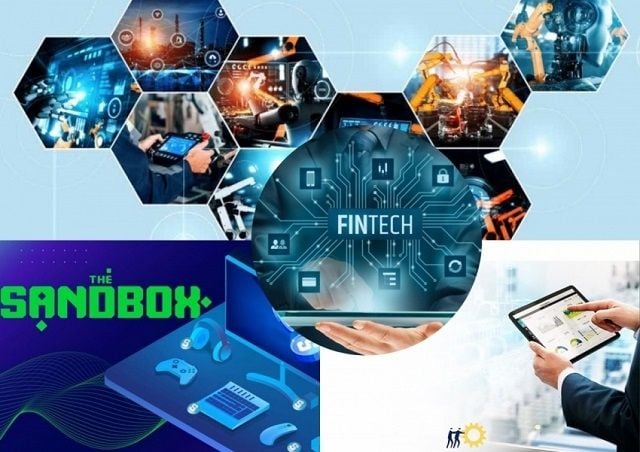
Behind the sandbox concept lies not only product testing, but a larger question: how quickly can a financial system absorb new financial models while maintaining systemic safety.
In the context of digital transformation and intensifying financial competition in the region, Vietnam’s fintech sandbox story is no longer merely a policy testing exercise. In a broader sense, it could become a key tool to shape the ability to attract future flows of capital, technology, and business models into a financial hub such as Ho Chi Minh City.
On the surface, a sandbox is a mechanism that allows companies to test financial products within a limited scope. If its role is defined correctly, the sandbox can function as a gateway between technological innovation and the formal financial system—where decisions are made about whether a country can become a fintech destination.
Vietnam’s financial structure remains heavily bank-based, with bank lending at the center. While this has helped stabilize the system for many years, it also constrains the system as demand for capital and technological innovation grows. Fintech—ranging from payments and peer-to-peer lending (P2P) to alternative credit scoring—requires a more flexible environment in which risk can be tested and controlled rather than eliminated from the outset.
And if designed properly, the sandbox is intended to address this challenge.
However, the issue is not whether a sandbox exists, but how it is operated. Early experiments in Vietnam with P2P lending or e-wallets have shown a paradox: sandbox frameworks can increase transparency, but they can also create risks of misuse if oversight is insufficient.
Some P2P lending models previously operated in a “semi-legal” state. Even with a sandbox, there have been cases where activity scaled beyond testing limits and funds were raised outside the test scope. This suggests that a sandbox does not automatically create market discipline. Without post-monitoring and transparency, the boundary between testing and real operations can blur, turning governance into a gray area.
International experience highlights that this risk is not theoretical. In China, the P2P lending boom was once viewed as a step forward in financial innovation. But due to insufficient supervision, many platforms expanded excessively and mobilized public funds through high-risk structures. The result was a wave of failures that led regulators to tighten rules and nearly terminate the model.
Such an outcome could be replicated in Vietnam if sandbox initiatives are not paired with strong post-checking mechanisms. When the line between “controlled testing” and “expansion under the banner of testing” is erased, risk can undermine not only individual firms but also market confidence.
On the other hand, models such as e-wallets and QR payments illustrate a more positive scenario. Testing within a controlled scope has supported cashless payments and financial inclusion. Still, new risks can emerge, including data security concerns, unclear delineation of responsibilities among parties, and the tendency to extend features beyond the initial scope.
These experiences indicate that sandbox frameworks, without standardization and supervision, can add to system complexity.
The discussion implies that sandbox is not only about testing products, but also about testing governance capacity.
Strategically, a more important question is what role sandbox can play in the ambition to build an international financial center in Ho Chi Minh City. In places such as Singapore and the United Kingdom, sandbox is not only a management tool but also part of a strategy to attract global fintech. Regulators do not merely permit testing; they also create a transparent and predictable environment so participants understand entry criteria, obligations, and exit plans when needed. This signals that risks exist but can be identified and controlled.
In that context, a Vietnam sandbox limited to domestic testing may face challenges in attracting real fintech. Conversely, if designed as part of an ecosystem—such as within Ho Chi Minh City’s IFC framework—it could become an initial entry point for regional fintechs to test business models in a fast-growing market.
To achieve this, the article highlights several requirements:
More importantly, sandbox should be linked to a strategy to attract capital and technology. An international financial center needs not only capital but also new financial models. In this view, sandbox acts as a bridge between global innovation and the domestic market.
At the same time, expanding sandbox does not mean loosening market discipline. Even if it attracts international fintech, effectiveness still depends on the system’s ability to absorb change—from enterprise capacity to regulator oversight.
In other words, sandbox is not a destination; it is a test of both corporate capacity and governance capability.
If Vietnam wants sandbox to become a gateway for fintech to Ho Chi Minh City’s IFC, international players are expected to focus on three factors:
If these conditions are met, sandbox could help bring Ho Chi Minh City closer to the regional financial center goal. If not, it risks remaining only a policy experiment with limited impact.
The article by PGS. Truong Quang Thong (Truong Quang Thong, PhD) of the University of Economics Ho Chi Minh City provides additional context and policy considerations for the sandbox’s future role within the broader financial ecosystem.







Premium gym chains are entering a “golden era” that is ending or already in decline, as rising operating costs collide with shifting consumer preferences toward more flexible, community-based ways to exercise. Long-term memberships are shrinking, margins are pressured by higher rents and facility expenses, and competition from smaller, more personalized…


