•
•
•
•
•
•
•
•
•
•
•
•
•
•
•
•
•
•
•
•
•
•
•
•
•
•
•
•
•
•
•
•
•


Global energy pressures remain high, and Vietnam’s policy buffer is widening as Parliament implements a 0% special consumption tax on gasoline from April 16 to June 30, 2026. While the measure is designed to ease short-term costs, it does not resolve the underlying challenge: long-term energy self-reliance must be built on science, technology and innovation.
To stabilize macroeconomic conditions, Vietnam has expanded its fiscal and fuel-supply “buffer.” The Ministry of Industry and Trade has raised fuel reserves from 15 to 26 days. In parallel, reducing or zeroing certain taxes—such as the environmental protection tax, VAT and excise tax—has been used to support market sentiment, control inflationary pressures and help production maintain reasonable margins.
However, OECD and IMF warnings cited in the article note that extending price-support measures could strain the budget, distort market signals, reduce incentives to save energy and slow structural reforms. The article also emphasizes that tax cuts and fee reductions, or reliance on the Oil Stabilization Fund, are short-term tools.
Although Vietnam has two refineries—Dung Quat and Nghi Son—it currently self-supplies about 70% of fuel demand. The remaining 30% still depends on imports from ASEAN and the Middle East, leaving the economy exposed to global supply shocks.
The article frames energy dependence not only as a price risk but also as a national security risk, arguing that energy is increasingly tied to geopolitical order. It concludes that the strategic focus should shift from “shock reduction” to “increasing resilience,” strengthening domestic capacity through science and technology.
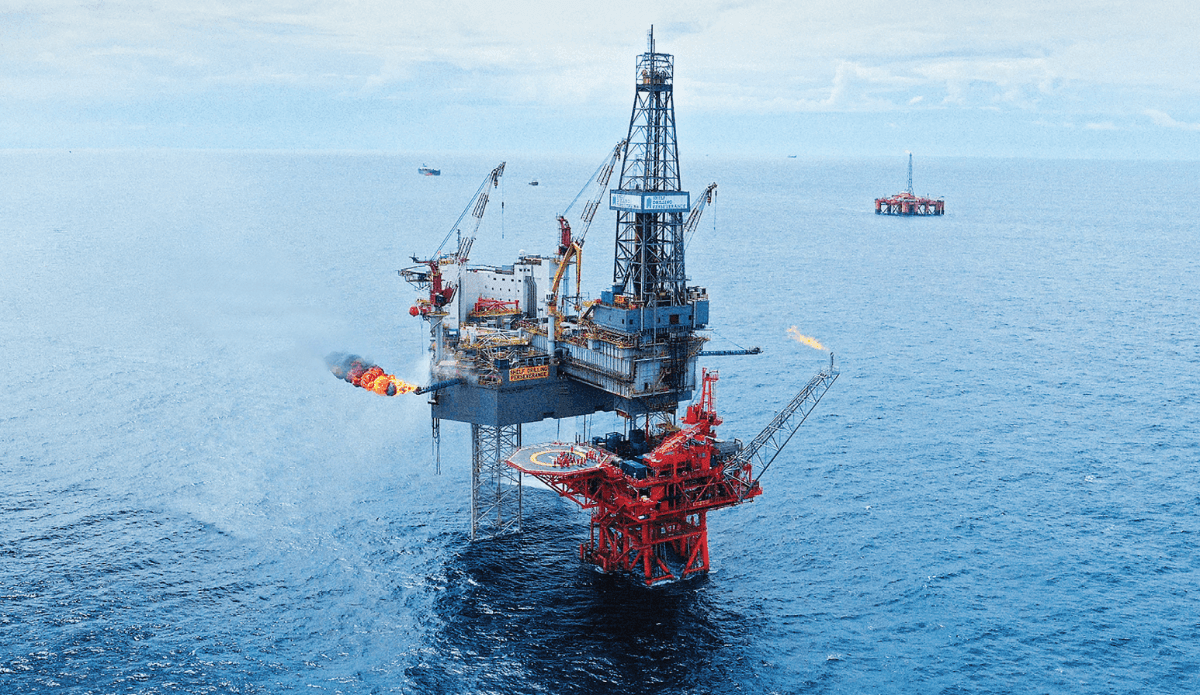
The Dai Hung oil field complex is presented as a case study of domestic technological capability in Vietnam’s oil and gas sector. The field was discovered by Mobil Oil in 1974 and reidentified by Petrovietnam in 1988. From 1993 to 1996, an international consortium—including BHP, Total, Sumitomo, Petronas and PVEP—invested over $400 million to develop the field, with BHP as operator. Due to complex geology, harsh offshore conditions and underwhelming financial returns, foreign partners withdrew.
In 1999, the field was transferred back to Petrovietnam for a symbolic $1. Petrovietnam then entrusted Vietsovpetro to maintain operations and carry out additional exploration. A major turning point came in 2003, when operations were handed to domestic units. From a near-zero starting point, Vietnamese oil and gas engineers gradually mastered relevant technologies—optimizing drilling designs, applying enhanced oil recovery techniques, and improving offshore processing and transportation—moving toward international standards.
The article says the Dai Hung field has revived strongly, delivering cumulative revenues of over $4 billion and becoming a symbol of domestic technological capability and a strategy grounded in internal strength.
It further highlights Phase 3 development as a historic step: for the first time, the entire project is designed, constructed and operated entirely with domestic resources. The Petrovietnam ecosystem is described as working in coordination, with PVEP playing a central coordinating role.
The project includes the WHP-DH01 wellhead platform at depths exceeding 110 meters, connected to the central processing platform via a 5.2 km offshore pipeline. The article notes that implementation faced difficult conditions, including disruptions from the Covid-19 pandemic, geopolitical volatility that increased material costs, and an offshore worksite located 265 km from shore.
Completing the project with 100% domestic labor is described as both an economic efficiency gain and a capability milestone—placing Vietnam among nations able to independently design, construct and operate deep-water offshore facilities. The article links this to improved production and faster supply recovery, reinforcing energy self-sufficiency as a pillar of economic sovereignty and Vietnam’s maritime space through modern facilities.
The article argues that the lessons of technology-driven energy self-reliance extend beyond oil and gas. It points to Vietnam’s transition toward renewable energy, digital transformation and green growth, describing energy and geopolitics as key forces shaping the new order.
When short-term price-support policies end, the focus should shift to optimizing energy across the system. Digital transformation is said to be improving operational efficiency, governance transparency and forecasting capacity. Petrovietnam is described as applying AI, IoT and big data to reduce costs, improve production efficiency and adapt more effectively to global fluctuations.
For energy-intensive sectors such as cement, steel and chemicals—accounting for 50–60% of total energy demand—the article states that adopting new technologies, smart grids and automation can save 10–20% of costs. It also argues that price pressures should be used to drive restructuring, technological upgrading and reductions in the economy’s energy intensity.
The article adds that mastery of deep-sea facilities like Dai Hung supports Vietnam’s implementation of the VIII Electricity Plan, particularly for offshore wind development. It frames the shift from exploiting finite underground energy toward harnessing wind and solar resources as part of a longer-term sustainable energy pathway.
In the context of stricter ESG standards and carbon-border adjustment mechanisms, the article argues that a self-reliant, green and technology-driven energy system can serve as a “passport” to attract high-quality FDI and integrate more deeply into global supply chains.
In sum, the article concludes that energy self-reliance is not only about supply. It is presented as the culmination of science-and-technology capability, strategic vision and sustained investment in domestic capacity.
(*) Director of the Institute for Policy Management and Strategy Development and head of the National Project From Policy to Life. The full content of all articles is published in Vietnam Journal of Economics No. 16-2026, issued 20/04/2026.




Premium gym chains are entering a “golden era” that is ending or already in decline, as rising operating costs collide with shifting consumer preferences toward more flexible, community-based ways to exercise. Long-term memberships are shrinking, margins are pressured by higher rents and facility expenses, and competition from smaller, more personalized…