•
•
•
•
•
•
•
•
•
•
•
•
•
•
•
•
•
•
•
•
•
•
•
•
•
•
•
•
•
•
•
•
•


SK hynix Inc. reported first-quarter results under K-IFRS, posting 52.5763 trillion won in revenue, 37.6103 trillion won in operating profit (72% operating margin), and 40.3459 trillion won in net profit (77% net margin).
The company said revenue exceeded 50 trillion won for the first time on a quarterly basis. Operating profit and operating margin reached record highs at 37.6 trillion won and 72%, respectively. SK hynix noted that operating profit nearly doubled compared with the previous quarter, reflecting improving profitability.
SK hynix said that while the first quarter is typically a seasonal downturn, demand remained strong due to expanded investments in AI infrastructure. It attributed the performance to higher sales of high-value-added products, including HBM, high-capacity server DRAM modules, and eSSDs.
The company also linked the outlook to the evolution of AI from large model training to agentic AI, where systems perform repeated real-time inference across service environments. It said this is expanding the underlying memory demand across both DRAM and NAND flash.
Cash and cash equivalents at the end of the first quarter increased by 19.4 trillion won from the previous quarter to 54.3 trillion won. Interest-bearing debt totaled 19.3 trillion won, down 2.9 trillion won from the previous quarter, enabling SK hynix to reach a net cash position of 35 trillion won.
SK hynix forecast that the spread of memory efficiency technologies will improve the economic viability of AI services, expanding overall service scale and further supporting memory demand. Based on this, the company said favorable pricing conditions are expected to continue for both DRAM and NAND flash.
To meet diversifying memory demand, SK hynix plans to continue rolling out new products across DRAM and NAND flash.
For HBM, the company said it will strengthen capabilities across performance, yield, quality, and supply stability. In DRAM, SK hynix plans to fully ramp shipments of LPDDR6 using a 1cnm process (the sixth generation of 10-nanometer technology), and the 192GB SOCAMM2, also based on the same process, which began mass production this month.
For NAND flash, SK hynix said it will flexibly address AI demand with CTF-based 321-layer QLC cSSD PQC21 and an eSSD lineup of high-performance TLC and high-capacity QLC. It added that leveraging synergies with Solidigm—citing Solidigm’s strengths in high-capacity QLC eSSDs—will help strengthen competitiveness in AI data center and AI PC storage markets.
SK hynix emphasized that securing stable supply amid demand exceeding capacity is a key competitive advantage in the AI era.
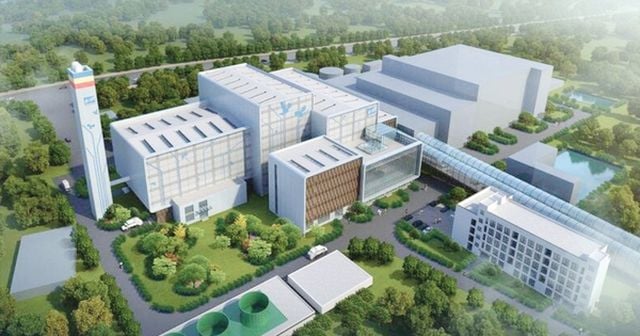
The company said this year’s investment scale will increase significantly compared with the previous year. It will focus on ramping up M15X, preparing infrastructure on the Yongin cluster, and securing key equipment such as EUV.
SK hynix added that it will secure both stable supply and robust financial conditions through investment aligned with demand, and will strategically expand production bases to proactively respond to long-term demand growth.




Premium gym chains are entering a “golden era” that is ending or already in decline, as rising operating costs collide with shifting consumer preferences toward more flexible, community-based ways to exercise. Long-term memberships are shrinking, margins are pressured by higher rents and facility expenses, and competition from smaller, more personalized…



